For Bellator Champ Will Brooks, Greatness Is in Range
The wrestle-boxer is pretty common in MMA. Its prevalence demonstrates how well a good wrestler is positioned for success. The flip side, though, is that, at its core, the style has become predictable.
Will Brooks belongs in a different category. It's fair to say that his blend of wrestling and striking is prototypical in nature. It could be on full display when the 29-year-old defends his lightweight championship against Marcin Held (21-3) Friday at Bellator 145.
In a way, Held is the polar opposite of Brooks. An excellent young fighter in his own right, Held is an international-level grappler, with submissions accounting for 12 of his pro MMA wins. Maybe that's why Brooks has been putting in extra training and drilling for defending leg locks and knee bars—Held's bread and butter.
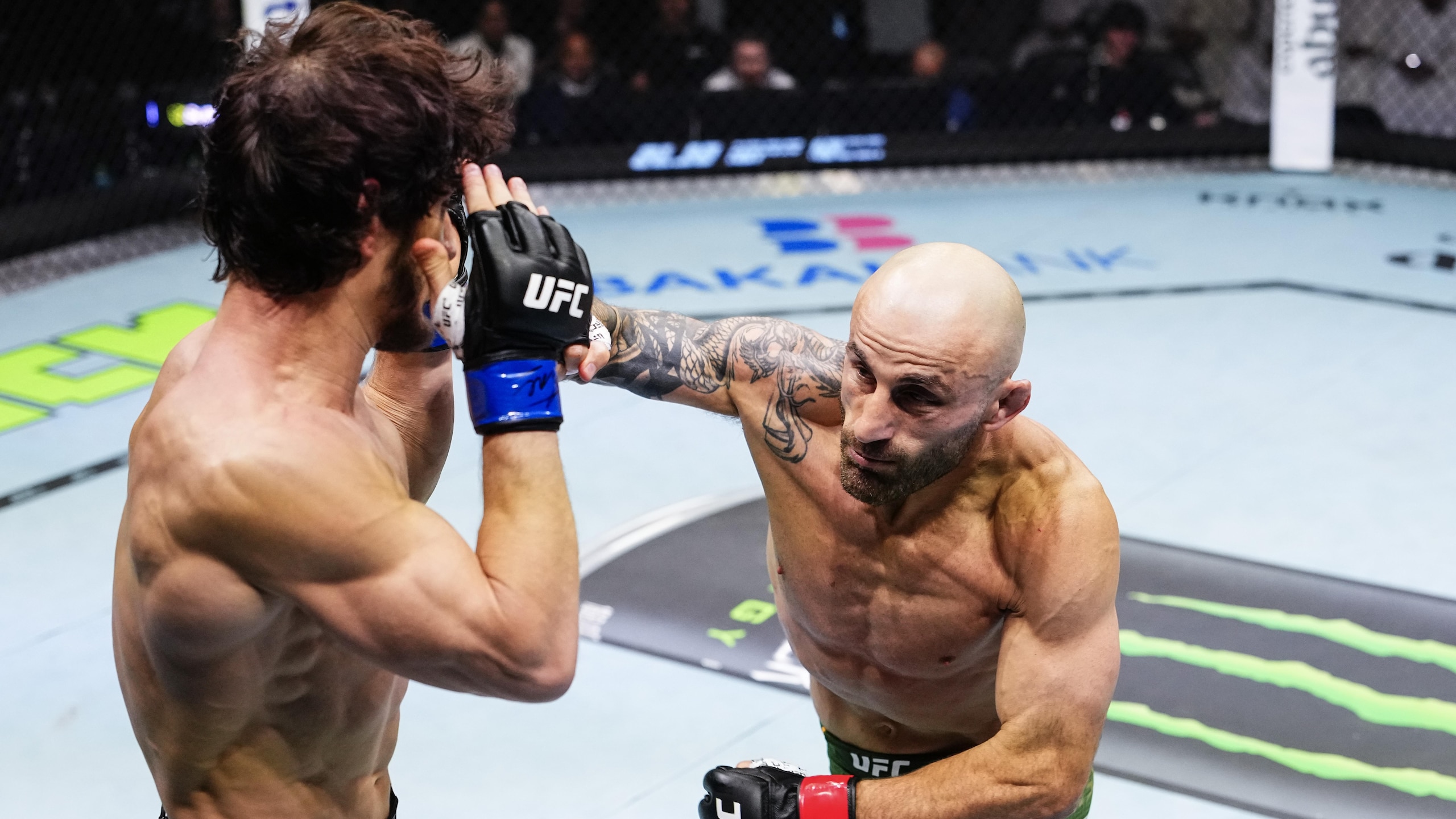


“I recognize his grappling," Brooks said in an exclusive interview with Bleacher Report. "It’s hard to recognize anything else. He’s really one-dimensional, and he’s committed to that one dimension. He does the same thing every single fight. He is who he is.”
For the most part, though, Brooks has been focusing on his own specialty.
A standout wrestler in high school, Brooks caught the MMA bug in college and was soon fully dedicated to the sport. Brooks was a good wrestler but not an Olympian or All-American, as more than a few others are. So it didn't take long for Brooks to realize he would need more in order to turn fighting into a job. In Brooks' case, that realization served as a kind of mandate to avoid the wider path, that of the wrestler who works for takedowns (or uses skills to avoid them) and clinches with and pounds on opponents at every opportunity.
“I started out as a wrestler, but I started realizing you had to evolve," Brooks said. "I started trying to figure out what works well for me: unorthodox, long, rangy kicks. I started to put in boxing and going through and taking my time.”
"Rangy kicks" is the key phrase there, because it's key to the evolution Brooks mentioned. Most wrestle-boxing types fight inside, or at close range; all the better for clinching and slugging. In order for those kicks to be effective, though, Brooks had to fight from farther out. He had to be a long-range wrestler. The extra distance quickly provided opportunities for more than just kicks.
“In a typical fight, at more of a range, it forces guys to overcommit to techniques," Brooks said. "To hit me, you really have to drive in. That opens up a lot of things in my arsenal."
Brooks' striking attack is sophisticated, especially compared with other wrestling-based fighters. You can see the polish gained by working with American Top Team, the Florida gym that has cultivated top fighters for years.
The longer range doesn't mean that Brooks has sloughed off wrestling for good. It's still a valuable skill set, after all, and takedowns (and takedown defense) are big parts of his game. In fact, Brooks said the opposite is true: the longer range helps him get more mileage out of the sport's fundamental moves, including a straight right hand that has become a Brooks signature.
"It opens up my jab a lot more," Brooks said. "You run right into a jab [from outside], it lands harder now. It's easier for me. I don't have to overwork for a double leg.”
The principle—capitalizing on the momentum an opponent generates when he or she moves to close distance—is one well known to practitioners of another famous martial arts discipline.
“It's a lot like judo," Brooks said. "You use a lot of their leverage and impatience against them. It’s about making things easier for me."
Maximizing efficiency and attacking from distance may work well against Held, who will be looking to submit Brooks as quickly as possible, per his unadulterated game plan. A longer fight may play right into Brooks' hands, as could the fact that Held, not a great wrestler, often charges in wildly to lay hands on and bring down his opponent.
When Brooks discusses the issue, he seems to fully trust the unusual style he's cultivated: a bit of bottled lightning to counter Held's straight-ahead thunder.
"Instead of working harder," Brooks said, "I’d rather work smarter.”
Scott Harris writes about MMA for Bleacher Report. For more stuff like this, follow Scott on Twitter. All quotes obtained firsthand.

.jpg?w=2560 "Latest Peyton-Colts Rumors")

.jpg?w=2560 "Ugly Jets Scoring Stat 😳")
.jpg?w=2560 "Landing Spots for Trade Candidates 📍")