

Building a Better Rotation for the Los Angeles Lakers
The latest Los Angeles Lakers roster offers an interesting amalgam of established veterans and young talent. Balancing the rotation, however, is no simple task.
Starting the 2015-16 season with no wins and three losses, the writing is already on the wall. If this team doesn’t plug the defensive sieves, they’ll be heading toward another historically bad record.
The problem isn’t only a shortage of two-way players, or even a lack of young talent. Instead, it’s a combination of factors and it starts at the top, with a Lakers head coach who is already pointing fingers rather than offering solutions.
TOP NEWS

LeBron's Special Helicopter Deal

MJ Makes Record-Setting Donation 🙌
Shams: KAT, Hart Could Be Trade Names
“We sucked, simple as that,” Byron Scott offered per Lakers.com video, after his team was steamrolled by the Sacramento Kings Friday night. “Transition defense was terrible, the guys didn’t get back, lack of communication. I’ve never seen 80 points in the paint.”
As Forum Blue and Gold’s Darius Soriano noted:
"As the old saying goes, a team is often the reflection of their coach. Do not mistake this to mean I am calling Byron Scott soft. What I am saying, though, is that the characteristics he rails against in his post game pressers are, at least somewhat, a product of his own coaching. How can they not be?
"
Point Guard

One of the biggest disappointments so far has been Scott’s over-shuffling of the point guard platoon. This year’s No. 2 draft pick, D’Angelo Russell, was chosen for his potential as the Lakers' floor general of the future. So far, however, he has been used inconsistently at both guard positions and with too few minutes overall.
In the Lakers’ season opener, Russell was primarily used off-ball—a curious debut indeed. Scott switched the 19-year-old back to the point against the Kings but still subbed him out early, shifting sophomore Jordan Clarkson over to the lead guard slot and bringing Lou Williams in at the 2.
That changed ever so slightly during Sunday’s loss to the Dallas Mavericks, with Russell showing some added poise. Still, he only had a single dime to show for in 27 minutes.
Meanwhile, 32-year-old Marcelo Huertas has started at the point at the beginning of the second and fourth quarters but is being used sparingly—just 14 minutes per game. It’s a conservative approach for a Euroleague legend known for court vision and laser passes.
The season is still in its embryonic stages, but Russell, Clarkson, Williams and Huertas have each served double duty at both backcourt positions. There’s no reason for such democracy. Russell and Huertas are natural point guards—it’s time to use them as such, even if it is inevitable that Williams will still handle the rock at times.
Scott needs to keep things simple—give Russell and Huertas the minutes and freedom to be successful. This also means more high pick-and-roll, and less quasi-Princeton sets.
Shooting Guard
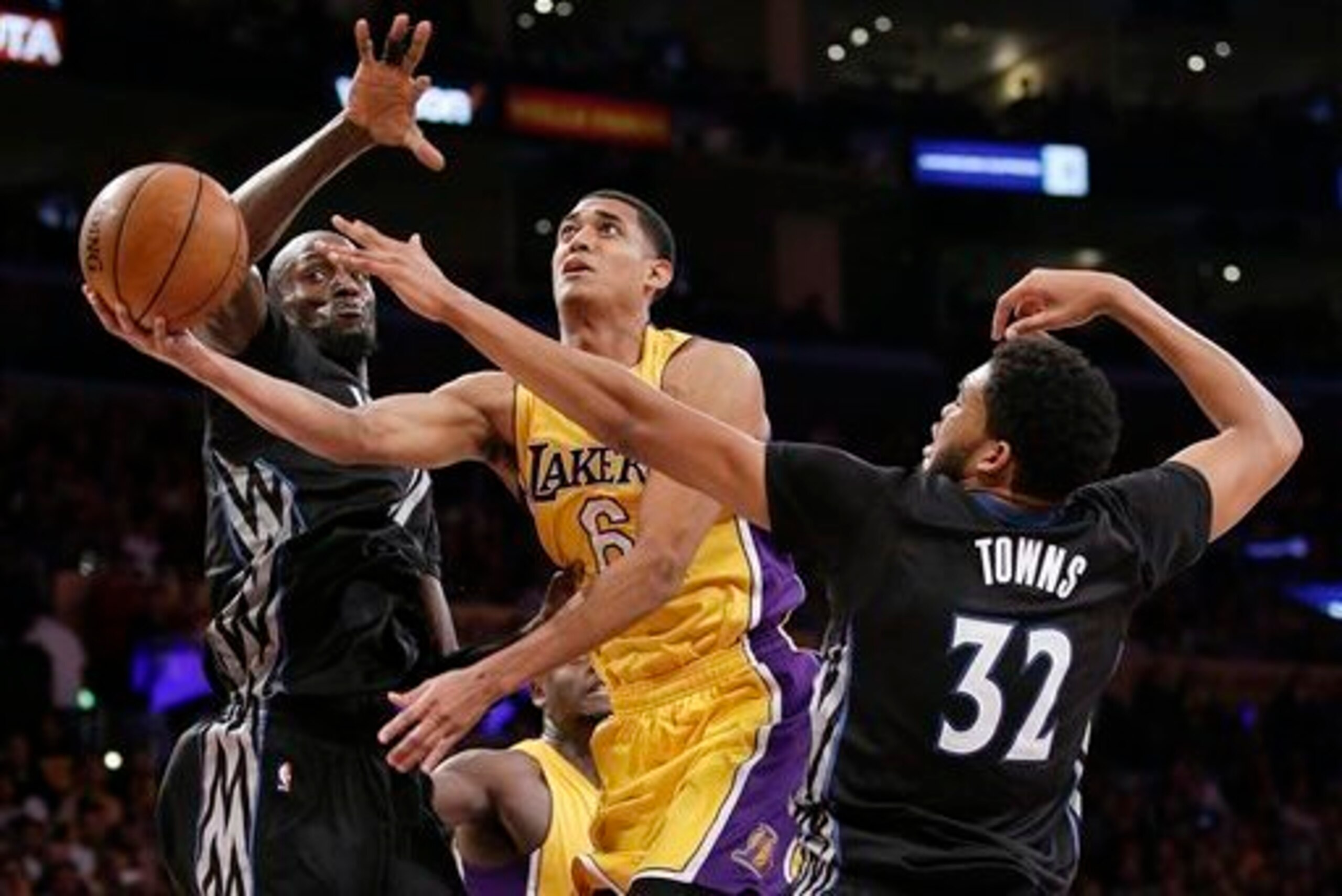
Clarkson has wasted no time picking up where he left off last season—with confident, aggressive play. The 23-year-old has been leading the team in minutes played, using his size and athleticism to attack the basket and score at will, with a crisp overall field-goal percentage of 48.6 percent.
But as mentioned above, the second-year man is also being asked to perform double-duty by shifting between on- and off-ball responsibilities. The First Team All-Rookie honoree started at the point for 38 games last season. But Clarkson seems to prefer attacking from a shooting guard role, with Russell initiating the offense.
“I feel like it makes us more comfortable in terms of using our weapons,” Clarkson said, per Joey Ramirez of Lakers.com.
Reigning Sixth Man of the Year Lou Williams has been the first man off the bench, hoisting up 11.6 shot attempts per game and converting a modest 36.5 percent from the field and a career-low 20 percent from beyond the arc.
The season is in its infancy, and the unrepentant gunner’s accuracy could quickly improve. But should he be logging the second-most minutes on the entire team?
Alternatives could include bringing Nick Young in to get some burn at the 2—the swingman is primarily playing on the wing this season but has spent 69 percent of his time as a shooting guard over the course of his career, per Basketball-Reference.com.
Furthermore, Young—who had a dreadful 2014-15 campaign—has shown much more consistency so far this season, shooting 50 percent overall along with an even stronger 50 percent from downtown.
This isn’t to say that Young, currently averaging 20.5 minutes per game, should be eclipsing Williams. But Scott has been playing the two scorers side-by-side so far, often with Huertas directing traffic, plus Ryan Kelly at the 4 and Brandon Bass as an undersized 5. That’s not a recipe for defensive stops.
Small Forward
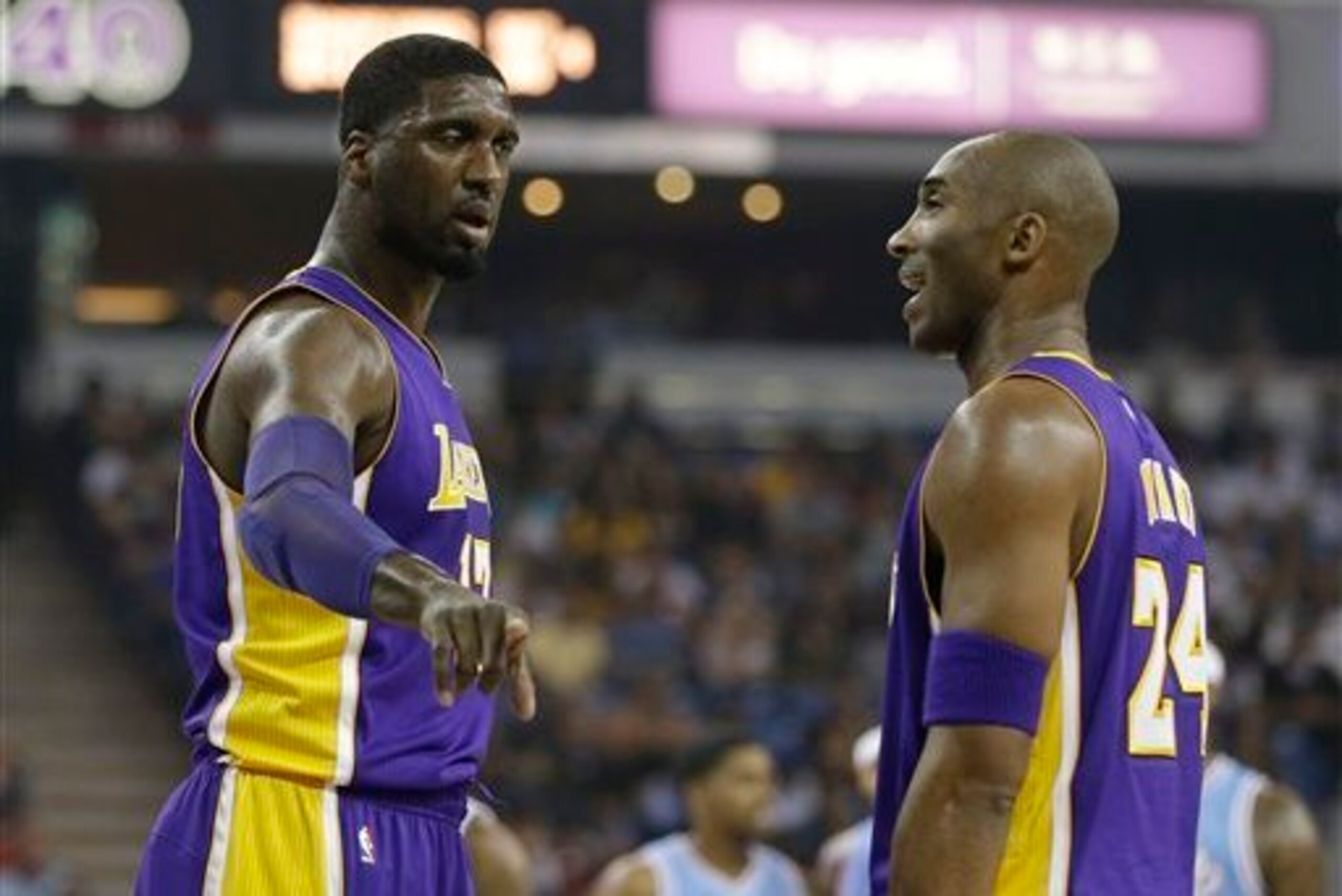
The Lakers sorely need defense at the small forward position. Instead, Kobe Bryant—now in his 20th season and coming off a slew of devastating injuries—has been plugged in to fill the void. The move makes some sense, in that it saves wear and tear on the aged legs of the legendary shooting guard. But Bryant isn’t the two-way player he was in his prime and can’t provide the necessary help once dribble-penetrators slip past the guards—an all-too-often current scenario.
Bryant has also been hoisting up a blizzard of outside shots and not converting nearly enough. That’s bound to change as he gets his legs and timing back. The 37-year-old is also aware of the need to let the next generation develop and grow into leadership positions, as noted by ESPN’s Baxter Holmes:
"I'm really wanting to let the young guys, especially D'Angelo, let him call the game. Let him call the game. Let him organize the game. Let him read the game. Let him read the flow. Let him make those decisions. Which is part of me taking a step back, which needs to be done. You have to let the young guys make those reads, and you have to be able to help them and support them with those reads.
"
But allowing the young guards to take more responsibility doesn’t fix the defensive lapses at the 3, and Young as Bryant’s primary backup isn’t a solution.
Then what? Anthony Brown was drafted in the second round as a potential next-generation 3-and-D guy, but the Lakers can only put so many developing players on the floor at the same time. There’s also Metta World Peace, now in the twilight of his career but once one of the most feared sentries in the Association.

Peace isn’t the player he once was. But he can still inject some much-needed toughness into the second unit.
As ESPN’s Holmes noted, it might be time to “give World Peace a chance.” When queried about this point, Scott said per Holmes, “Probably later on.” Asked to elaborate, the L.A. coach responded:
"Later on means that I’m not going to panic after two games and all of the sudden change everything that we’ve been doing. We’ve just got to do it better and it’s something that we’ve been working on for a little over a month. We’re going to stick to it. Our philosophy is still the same. We’re going to keep pounding it into guys’ heads. Sooner or later, they’ll get it. If not, then I will make changes.
"
Power Forward
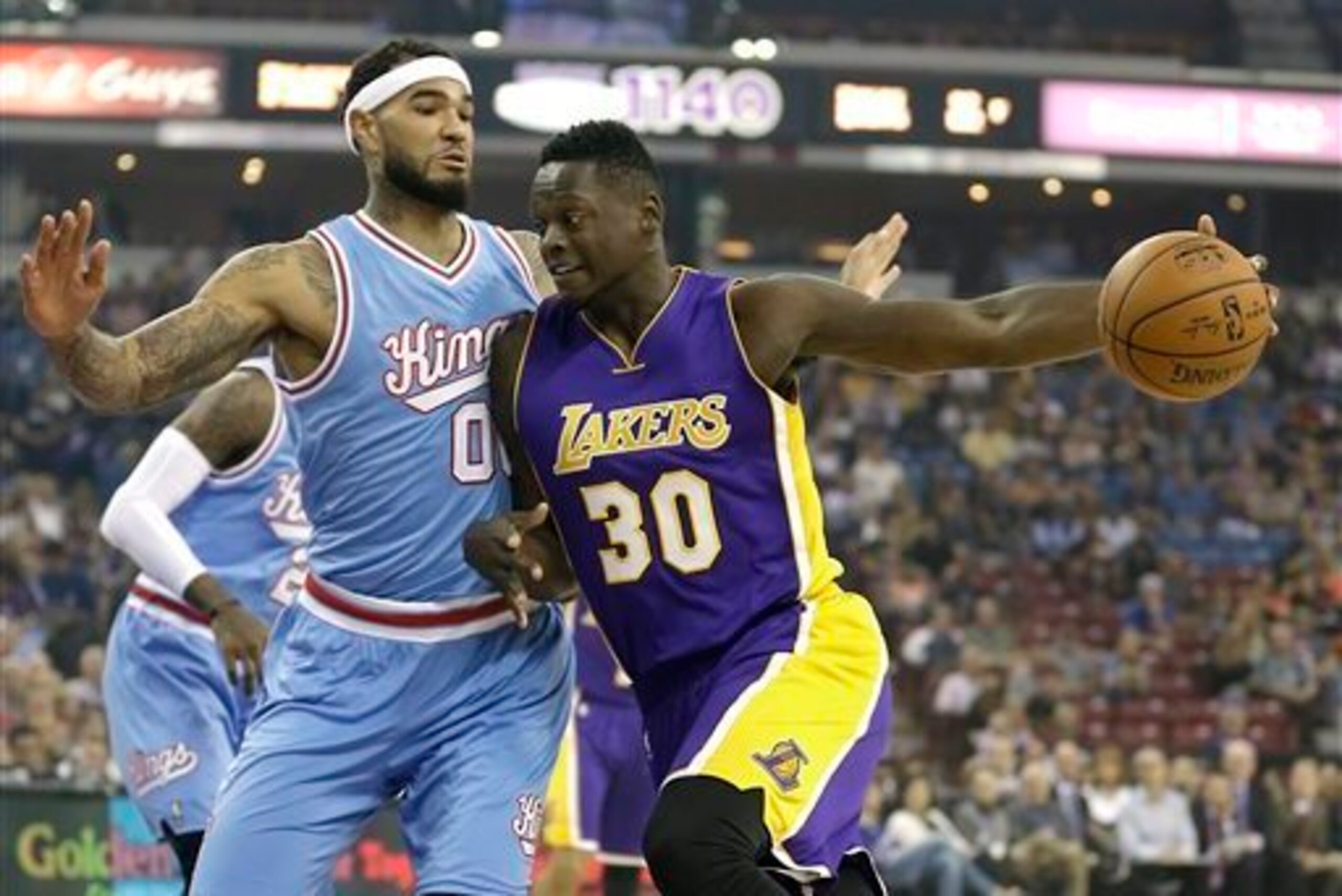
Julius Randle played only 14 minutes in his rookie debut before breaking his leg and sitting out the rest of the 2014-15 season. The former No. 7 draft pick is now trying to make up for lost time, showing plenty of aggression offensively. Despite the loss Sunday, Randle put up a stat-stuffing preview of what he can mean to the franchise long-term.
But the youngster is also prone to giving up too many points on the other end. Still, he’s only four games into his NBA career and will get better with time and experience.
Scott’s second option in the rotation has been Kelly, a third-year stretch-4 who was mostly used out of position as a small forward last season. That move was an unmitigated disaster, and Kelly has generally played well since being moved back to his natural slot. But as mentioned above, the issue is a second-unit lineup that offers little resistance to opponents.
Ultimately, the 20 minutes per game Kelly averages is half again too many.
One solution is to move Bass back to power forward, rather than his current role as an undersized, backup center. Kelly could then be used in more specialized situations. Or, Kelly could be paired with tougher players, such as Peace.
Larry Nance Jr. is also waiting in the wings. The late-first-round rookie has a high motor and a defensive intensity. But getting him minutes, with so many other young players on this roster, will be tricky.
Center
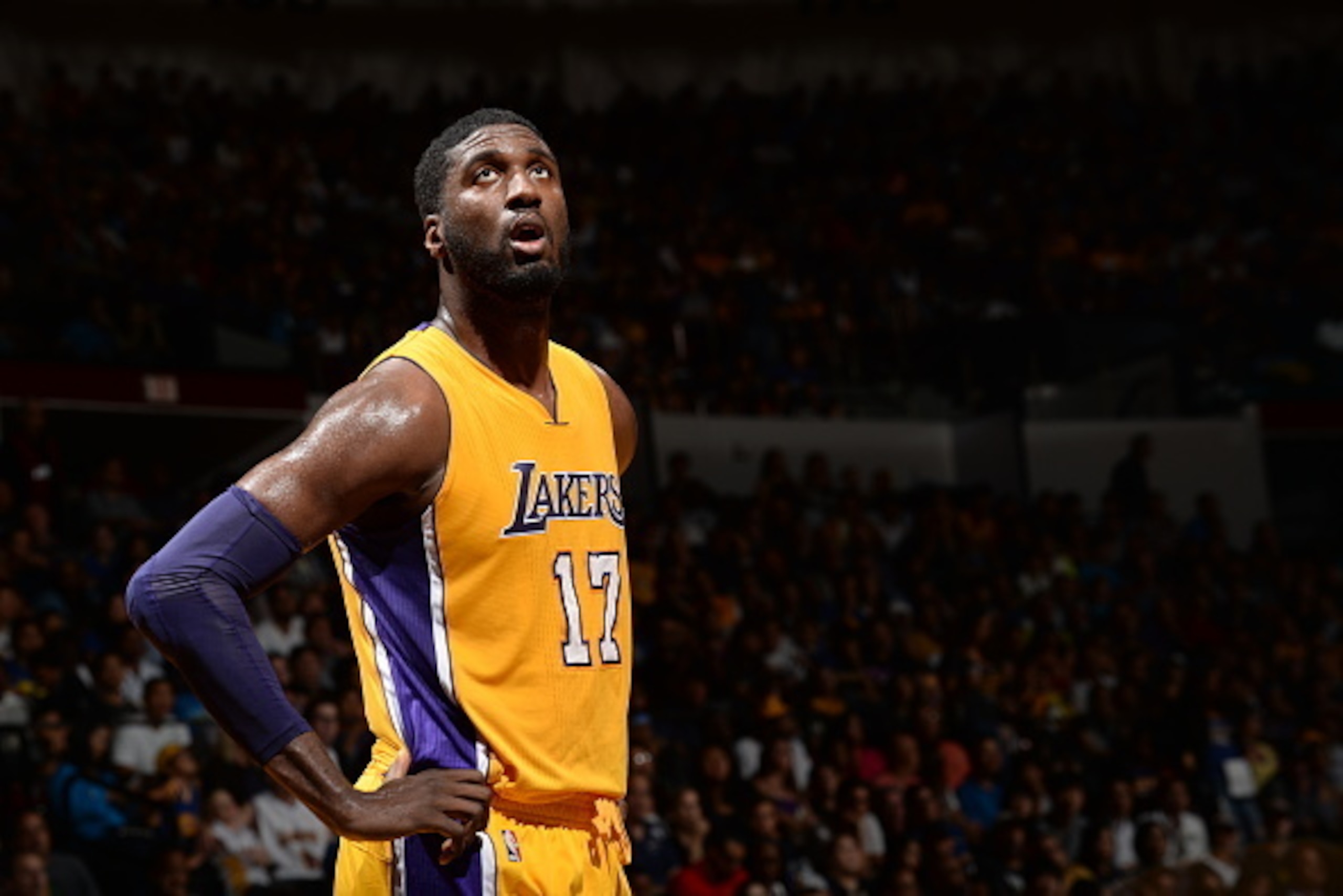
Roy Hibbert is the man-mountain in the middle for the Lakers. At 7’2”, the 29-year-old has been swatting shots and showing determination to return to the perennial paint presence he was with the Indiana Pacers for many years.
But Hibbert has never been a heavy-minutes guy, and he’s also not a particularly good fit with younger, faster teammates who play an open-court style. Scott has compensated by using Bass as an undersized backup center, hoping to augment a free-flowing second unit. But Bass against bigger and stronger opponents can be a disaster—case in point being the woeful minutes he spent matched up against DeMarcus Cousins Friday night.
This brings up the question of Tarik Black who has mostly stayed on the pine during the early part of this campaign. The second-year big was a pleasant surprise last season after being picked up off of waivers from the Houston Rockets. He’s got a lunch-bucket mentality and also has a nice degree of mobility.
Using Black as Hibbert’s main backup while using Bass in more of a combo 4/5 role is a move worth exploring. There is also the candidacy of Robert Sacre—the dead-last pick in the 2012 draft. But the 7-footer has never been a strong rebounder or blocker—he’s more of an insurance policy than a reasonable fix for any of the Lakers’ current problems.
Also worth mentioning is Robert Upshaw—the shot-swatting savant who went undrafted in June. After getting cut from the Lakers’ training camp roster, Upshaw signed with the team’s D-League affiliate, the Los Angeles D-Fenders. The giant paint patroller is a raw work in progress, however, and needs seasoning to be consistently effective.
Overall
There’s only so much tinkering that can be done with the Lakers’ current roster—the starting lineup should remain in place for now. But there needs to be better decision-making from Scott when it comes to delineating his guard roles. And, juggling the bench mob so as to offer some degree of intestinal fortitude is an absolute must.
While the depth chart below totals 240 minutes, actual substitutions are fluid and staggered things. It’s way too early in the season to set any numbers in stone. But adding some stopping power to the mix needs to happen. With that in mind, it might also be worthwhile switching Nance for Kelly at some point.
| Position | Starters | Bench | Fill-in minutes |
| PG | Russell 24 mpg | Huertas 17 mpg | Williams 7 mpg |
| SG | Clarkson 28 mpg | Williams 13 mpg | Young 7 mpg |
| SF | Bryant 25 mpg | Young 13 mpg | World Peace 10 mpg |
| PF | Randle 26 mpg | Bass 12 mpg | Kelly 10 mpg |
| C | Hibbert 25 mpg | Black 15 mpg | Bass 8 mpg |
Would any of these musical chairs actually result in a fearsome Lakers rotation? That’s highly doubtful—L.A. doesn’t currently possess enough quality puzzle pieces to put together anything resembling perfection.
But absent creative coaching and with the players currently on hand, some switches with an eye on ball-stopping might at least give this collection of guppies and vets a chance to crawl out of the Western Conference cellar.

.jpg?w=2560 "Grading WWE Raw 🔠")

.jpg?w=2560 "Viral Rams Coach Vid 🖕")
.jpg?w=2560 "Bijan's INSANE 1st Half 🤩")

.jpg?w=2560 "Injury-stricken Seahawks signing veteran RB")
.jpg?w=2560 "2 NFL Officials Suspended")