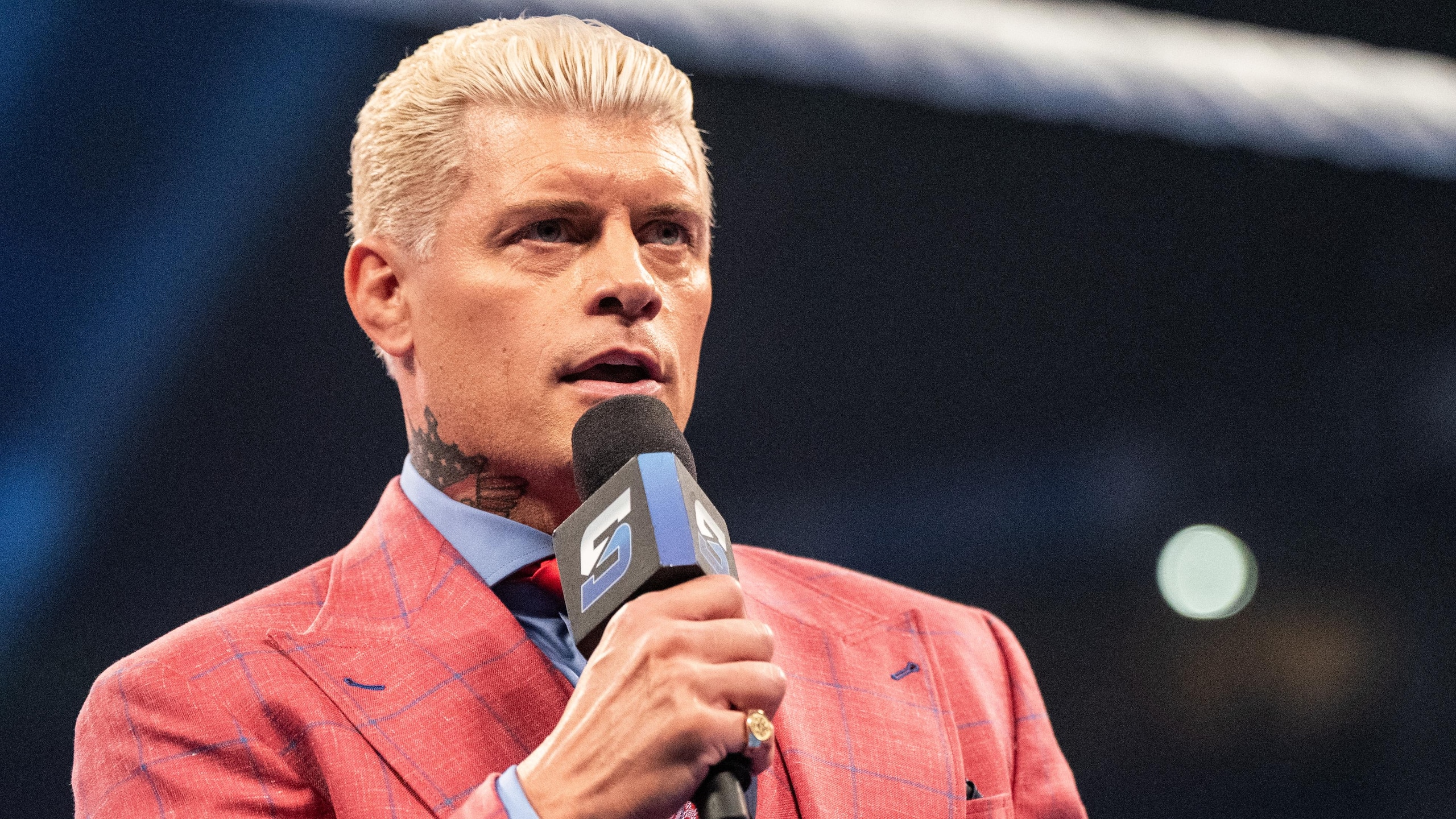


Cody Rhodes is one of professional wrestling's most recognizable faces, one of WWE's top stars, and one of the best main event workers in the company. Beloved by millions, he has headlined the industry's biggest shows and reached heights even his legendary father, Dusty, and brother, Dustin, did not.
Yet, as 2026 comes to a close, WWE finds itself facing a growing problem surrounding the American Nightmare, through little fault of the future Hall of Famer's own.
What do ya wanna talk about?
Let's take a look.
A Perception Problem
1 of 3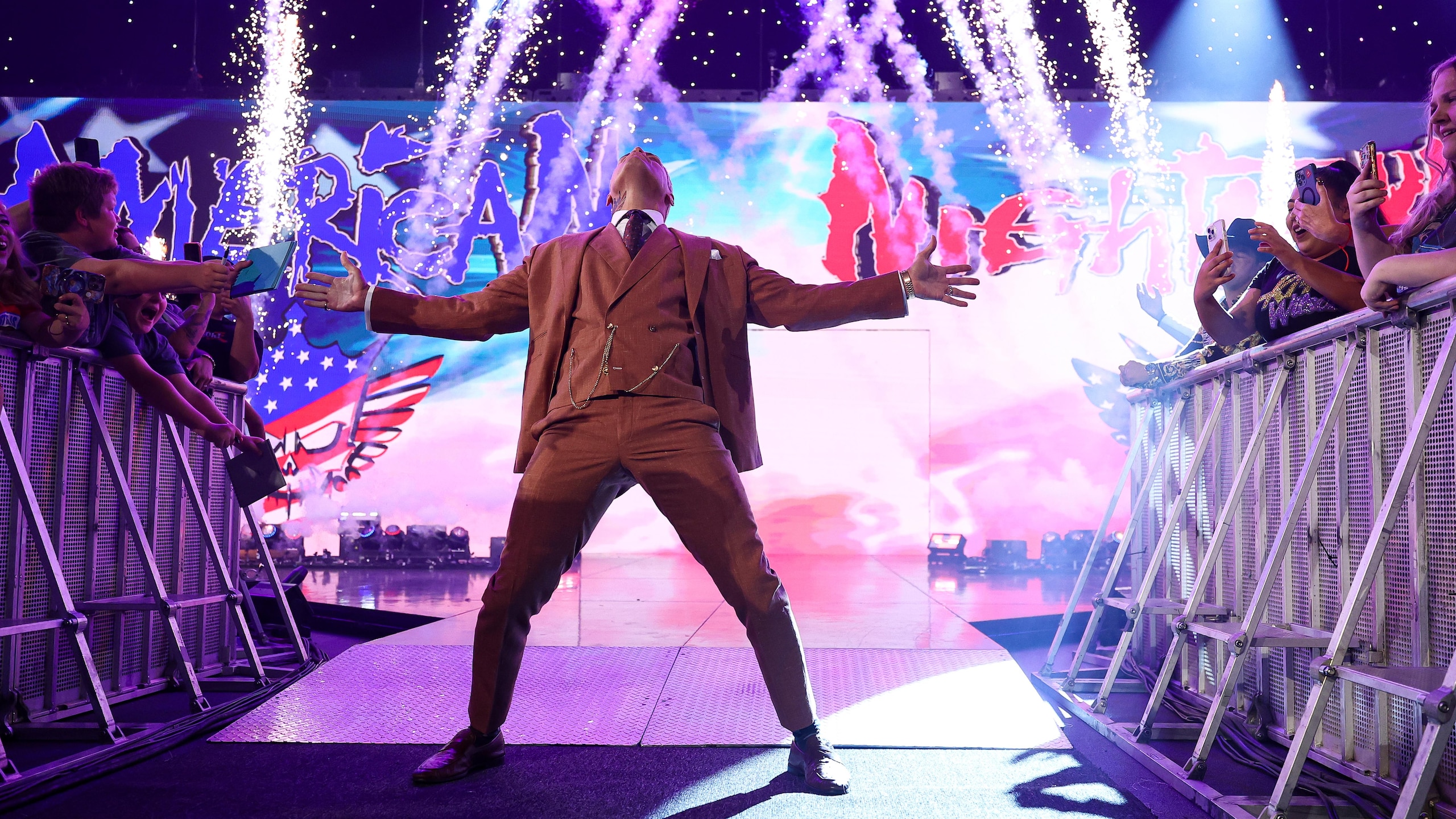
For two years, Rhodes steadily built towards becoming the top star in professional wrestling, beating Seth Rollins in a trilogy of five-star matches, surviving a questionable WrestleMania 39 outcome, winning back-to-back Royal Rumbles, and finally finishing his story by beating Roman Reigns to win the WWE Championship in the main event of WrestleMania 40.
He was a made man, the face of both pro wrestling's No. 1 company and its new era.
So where's the problem?
Well, when one reaches such heights and then spends two years in and around the WWE title picture, a certain perception sets in. Rhodes is a champion, has been a champion, and anything he does outside the realm of the championship feels like a step down.
Even if it is a feud with a fellow future Hall of Famer and the man who was instrumental in Rhodes' early development as an on-screen presence and in-ring worker, Randy Orton.
Rhodes had become so synonymous with the gold that involving him in a storyline that does not involve it, or at least feature it in the periphery, feels less than for a star of that magnitude.
At the same time, fans had begun to express their displeasure with the second-generation star's constant presence in the title picture, so it was clear WWE Creative had to do something to right the ship rather than allowing Rhodes to face the backlash of an audience who wanted something different.
Perhaps devising a way to keep him in the title picture without holding the gold, all while combating the great threat of Orton, would have been a better way to have one's cake and eat it, too.
Regardless, Rhodes has reached such heights within WWE that, like Attitude Era "Stone Cold" Steve Austin and The Rock, when he is not battling for the top prize in the company, it feels like a step down for the performer, not to mention an empty feud, devoid of stakes.
That is where Rhodes finds himself, and no forcing a different story is going to convince the audience otherwise.
A Manufactured Edge
2 of 3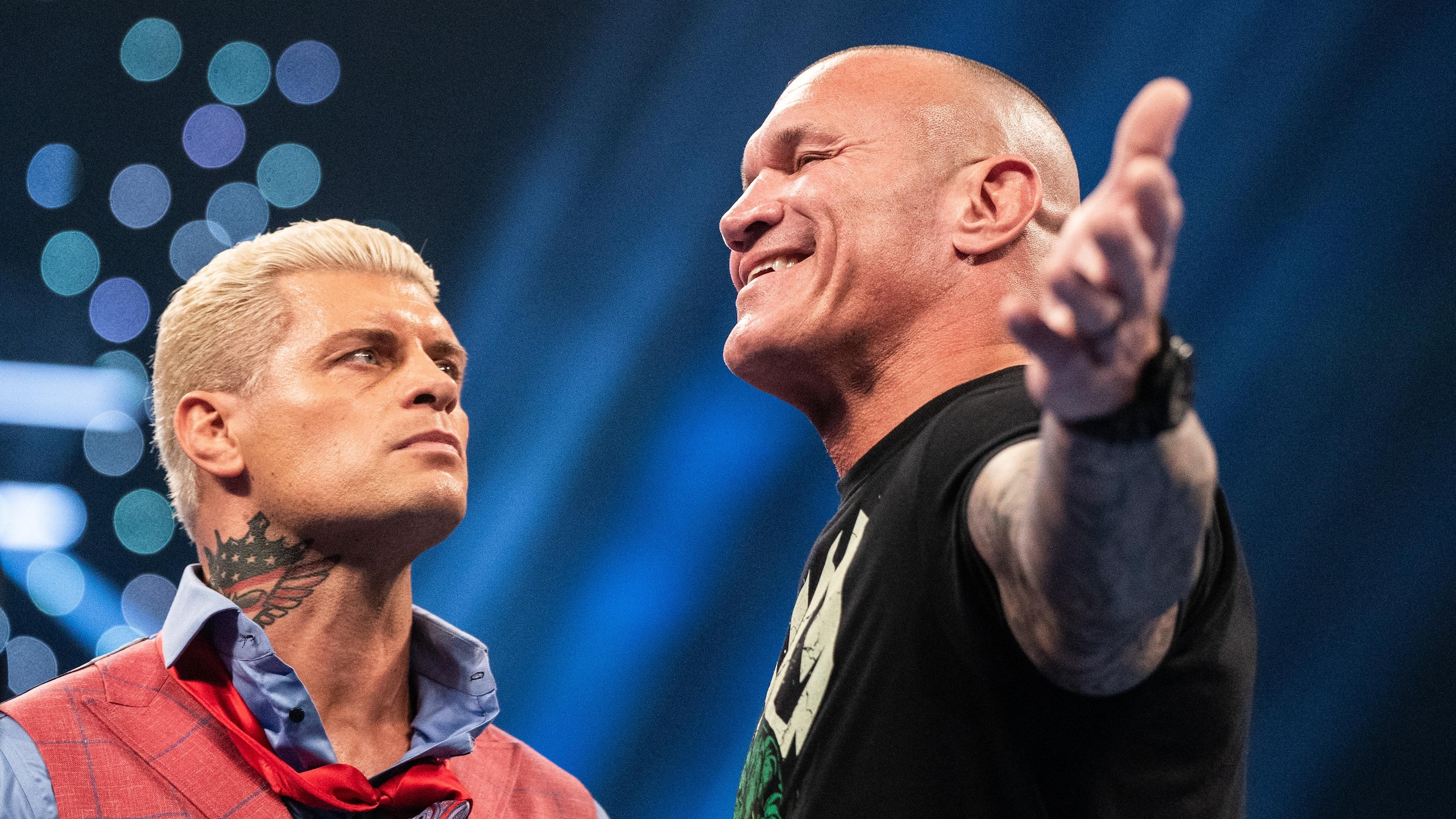
The heart of the Orton story is The Viper's attempts to conjure a new, edgier side of Rhodes through taunting and manipulation. It is almost certainly a response from WWE Creative to the vocal portion of the audience demanding more than the clean-cut babyface side of the former WWE champion.
Except if the company's own history has dictated anything, it is that the edginess fans demand out of their top stars cannot be manufactured in a scripted storyline.
Case in point: John Cena.
In 2014, the creative team produced a feud in which Bray Wyatt actively attempted to drag the top babyface to new depths, to unleash a side of himself that fans had never seen before, all so he could prove to the world that everyone had a dark side.
Cena resisted, and the feud never quite hit like fans had hoped for, even if it did provide a cool visual or moment a few times.
In fact, the times Cena showed the greatest edge to his character came nearly a decade earlier, when he fought through pain, suffering, and blood to defeat JBL and Umaga in grueling I Quit and Last Man Standing matches, respectively.
They appreciated his toughness and willingness to fight fire with fire, without the creative team hammering home that he needed to do so to be accepted by the audience or to retain his WWE title.
Fast forward, and we have a similar scenario, where Rhodes finds himself on the receiving end of Orton's schemes, all so the company can manufacture some edge for its biggest babyface.
Except we have already seen said edge in much more natural environments.
Edgy was Rhodes fighting through a torn pectoral muscle to beat Rollins inside Hell in a Cell; it was him standing up in the face of the almighty Rock and not backing down when his opportunity to finish his story was at stake. It was telling that same iconic figure to go eff himself when presented with an offer to sell his soul.
Hell, Rhodes beat Brock Lesnar two out of three times, and one does not slay The Beast without a little edge.
Fans already know Rhodes can turn it up a notch and show a different side of himself. Anyone who followed him through the independents and into AEW knows there is a different side of Cody if and when the time calls for it.
The audience does not need to be hammered over the head with it in a manufactured storyline that eats up time and concludes with something that could have been achieved by letting him find that inner beast in a match or by letting him cut loose on the mic.
Then again, creative meddling is as much responsible for the Rhodes problem as anything.
Creative Meddling
3 of 3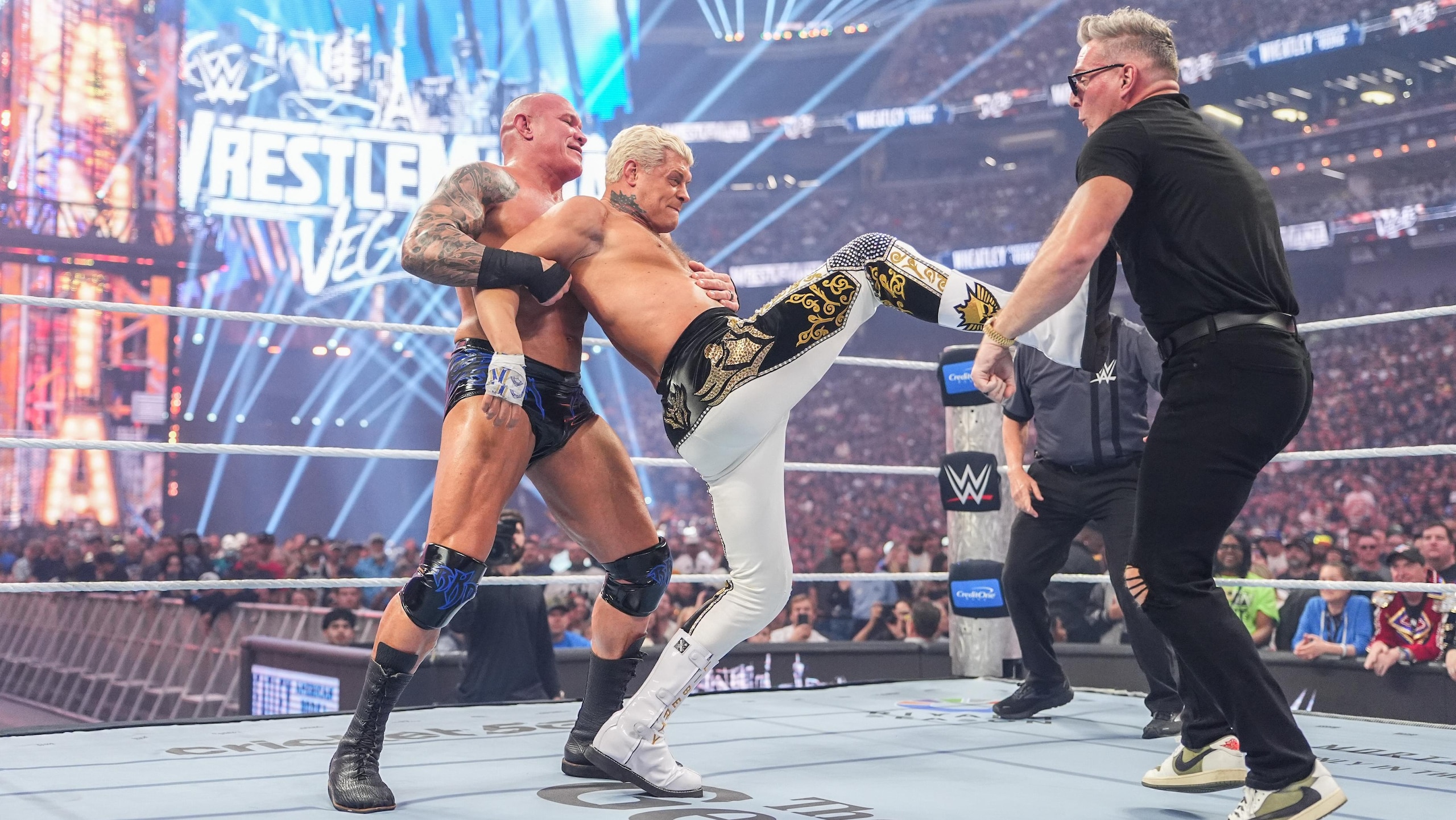
Rhodes should have won the WWE Championship at WrestleMania 39, but a last-minute creative decision prevented that. Luckily, whoever called for it had their intuition pay off as the year-long journey back to the most important match of the year, for the top prize in the company, paid off.
That has not been the case for Rhodes at other points in his run.
The Rock returned in 2024 to set up a match with Roman Reigns that damn near cost Rhodes his WWE Championship rematch on the grand stage.
Then there was the ill-fated John Cena heel turn, after Rhodes rebuked The Rock's offer to sell his soul, which unarguably hurt the American Nightmare's story arc. The Travis Scott interference in the WrestleMania 41 main event did not help, either.
There was a flurry of championship changes at the end of 2025 involving Drew McIntyre that hurt Rhodes' standing with the audience, really for the first time.
Oh, and the Pat McAfee debacle that ruined what was the easiest WrestleMania main event to book in years between Rhodes and Orton. What should have been a layup ended with fans intensely booing QB1, even as he fought through blood and nearly lost his eye.
Rarely, if at all, has Rhodes' journey as the guy in WWE felt like it has stayed on track and been everything that it could be, thanks in large part to meddling in his creative, mostly from above the Chief Content Officer's head.
Rather than a legendary run to accompany a two-year journey to the top of the company, Rhodes and his fans have been subject to what feels like a creative fever dream.
The constant interference with his creative, resulting in abrupt changes, alterations, nonsensical twists and turns, and WrestleMania disappointments when he is more than capable of delivering classic encounters, has done more damage to Rhodes and his run as the face of the company than anything.