
Every MLB Team's Top Priority at 2026 Trade Deadline
With Major League Baseball's August 3 trade deadline rapidly approaching, all 30 front offices are busy putting together plans and back-up plans for all of the forthcoming wheeling and dealing.
Buy like there's no tomorrow to try to win the World Series in a few months?
Accept it isn't in the cards this year and embrace a seller's market by unloading at least the impending free agents?
Try to delicately thread the needle between those two extremes?
What follows is the likely top priority for all 30 teams, broken up by division and presented in order of current standings.
AL East
1 of 6
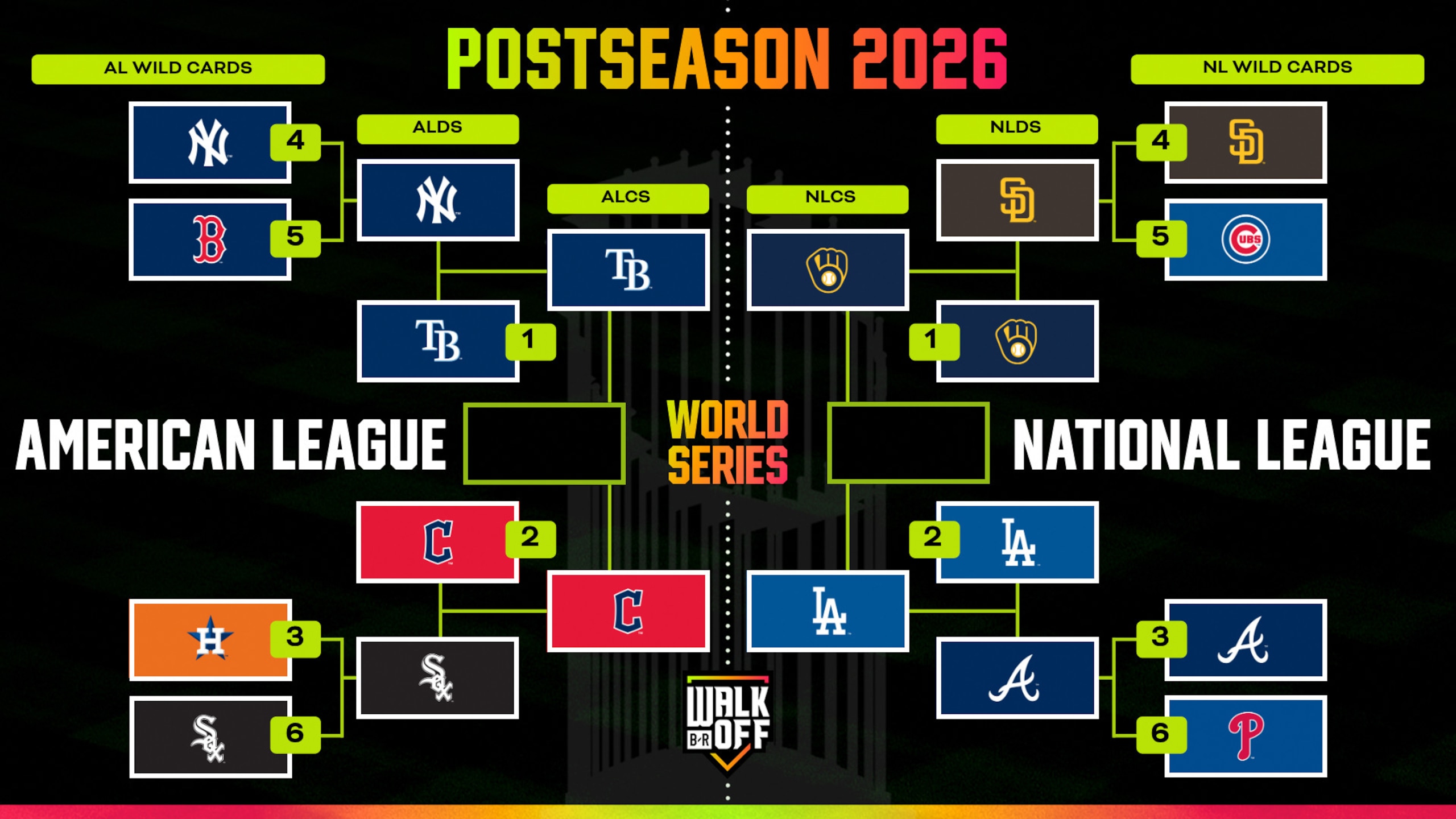
Tampa Bay Rays (59-42, current No. 1 seed)
Top Priority: Add some offense
One option on this front is calling up outfield prospect Jacob Melton, who has been hitting the cover off the ball at Triple-A since returning in late June from nearly two months on the IL with an ankle sprain.
That would be a half measure, though, for a team that hasn't gotten consistent offense beyond its big three of Junior Caminero, Yandy Díaz and Jonathan Aranda. (Both Chandler Simpson and Victor Mesa Jr. have been making major contributions thus far in July, but entered the month with paltry numbers.)
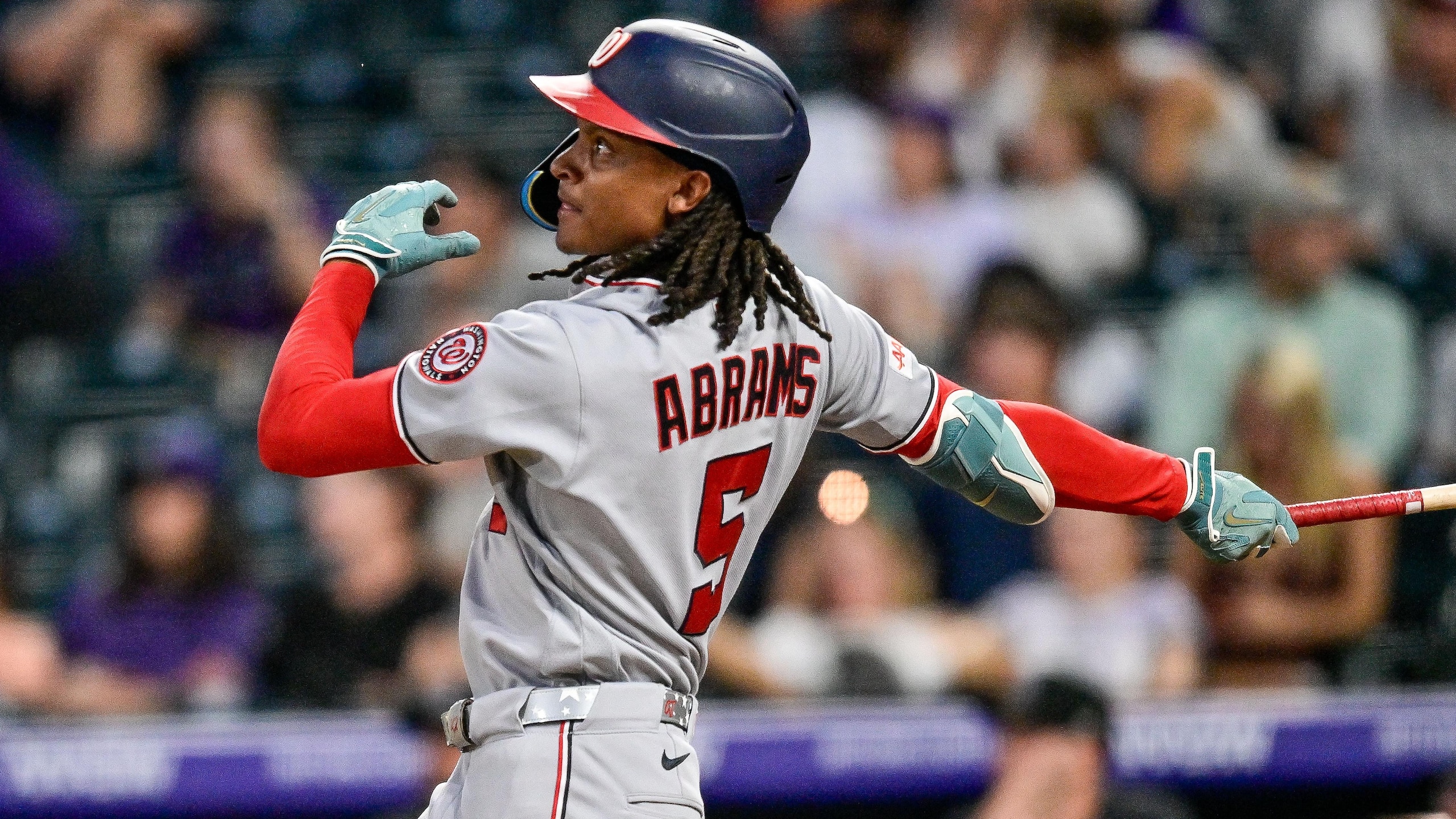
Could Tampa Bay put together a blockbuster for someone like Shea Langeliers or CJ Abrams? Will they at least get Luis Arraez for a couple of months?
New York Yankees (57-45, current No. 4 seed)
Top Priority: Do what it takes to win this division
Here's your fun fact of the day: In the 10 times the New York Yankees have made the postseason as a wild card team, they have yet to reach the World Series.
In fact, in eight of those 10 Octobers, they were eliminated either in the wild card round or in the ALDS. And losing last year's AL East on a tiebreaker ended up being a dealbreaker, succumbing to Toronto in the ALDS.
As such, getting back in front of Tampa Bay is a must for them, and we're expecting some type of substantial splash in their quest to do so. Whether that's Hunter Goodman, Mason Miller or maybe even Tarik Skubal remains to be seen, but get ready for a big swing.
Boston Red Sox (52-49, current No. 6 seed)
Top Priority: Turn this comeback into an all-time redemption story by bolstering the offense
One month ago, the Red Sox were 32-46. Only the 32-49 Colorado Rockies had a worse record.
But now, they are the hottest team on the planet, more than capable of winning a World Series.
Still, this offense could use a facelift via the trade deadline. Catcher has been a season-long weak point. Same goes for both middle-infield spots. And even during this recent tear of 20 wins in 23 games, Jarren Duran has gone from bad to worse with a .437 OPS over the past 30 days.
Best of luck trying to fix all of the above, but they have to at least get Willson Contreras some lineup support in order to see this thing through.
Baltimore Orioles (50-53, 3.0 GB for No. 6 seed)
Top Priority: To be determined
At the start of July, it looked like the Orioles would be putting Taylor Ward, Trevor Rogers and more on the trade block as a seller. But after a recent seven-game winning streak, not so fast, my friends. Baltimore just might be hanging around in this wild-card mix after all.
We shall see how these next nine games—3 vs. ATL, 3 @ DET, 3 vs. PHI—go for the O's. Win at least five of them and perhaps they'll end up as a buyer in pursuit of some bullpen help? Between Ryan Helsley's struggles and injuries, their closer situation has been a mess as they wait for Félix Bautista to maybe return to the mound late in the regular season.
Toronto Blue Jays (46-56, 6.5 GB for No. 6 seed)
Top Priority: Recoup some money and reload for 2027
At an estimated $63M above the luxury tax threshold, there's no scenario in which the Blue Jays shed enough payroll to avoid paying a tax. But if they accept that the jig is up and simply move (without retaining any money) impending free agents George Springer, Kevin Gausman, Daulton Varsho and Shane Bieber, it would reduce their payroll by slightly more than $20M, while also reducing their estimated tax bill by about $16M. That's not nothing.
This isn't a "fire sale before a rebuild" situation, though, and it would be surprising if they move anybody who is under team control beyond this season. Their quest to repeat as AL champions has gone miserably, but they'll give it the ol' college try again next year.
AL Central
2 of 6
Chicago White Sox (54-47, current No. 2 seed)
Top Priority: Upgrade the pitching staff without mortgaging the future
Simply put, the White Sox didn't embrace a three-year run as a farm system-restocking dumpster fire to then go for broke as soon as they got a whiff of possible October baseball.
They'll look to add some pitching, both in the rotation and the bullpen. But unless they're getting someone like Reid Detmers with multiple years of team control remaining, it's hard to imagine they'll be willing to part with any of their top 10-15 prospects. They're still playing the long game here.
Cleveland Guardians (54-49, current No. 5 seed)
Top Priority: Add inexpensive but productive bats
Save for the Blue Jays, Cleveland has the lowest scoring offense in the majors this season. In fact, the Guardians don't have a single player with more than 11 home runs, and it's a minor miracle they've been able to tread water alongside the White Sox for the past six weeks while José Ramírez recovered from his broken hamate.
But we know better than to expect Cleveland to do much or spend much at the trade deadline. That just isn't the Guardian way. They figure to be looking for budget / buy-low bats, though.
Minnesota Twins (50-53, 3.0 GB for No. 6 seed)
Top Priority: Don't do anything drastic
The Twins have been better than anticipated, tied for a wild card spot less than a week ago. However, they arguably are not in a position to go all-in to try to win right now, and they only have three impending free agents—of whom, only Ryan Jeffers has any particular trade value.
If they don't think they can re-sign Jeffers, maybe see what the Red Sox and Yankees are willing to pay for him. But with Pablo López (Tommy John) hopefully returning in mid-2027 and several top prospects (Walker Jenkins, Kaelen Culpepper and Emmanuel Rodriguez) who could bolster next year's offense, the Twins are probably going to more or less let it ride, keeping Joe Ryan and Byron Buxton.
Detroit Tigers (48-54, 4.5 GB for No. 6 seed)
Top Priority: Pick a lane and pray it's the right one
To fire sale or not to fire sale. That is the question.
Tarik Skubal is the talk of the trade block, but the Tigers have a stockpile of players slated for free agency this winter, including Casey Mize and Gleyber Torres. They could get a decent haul of prospects for that trio, with the asking price for Skubal believed to be astronomical.
Do they admit defeat or do they make a big splash in the opposite direction by upgrading their outfield?
Say this much: Detroit knows as well as anyone from the past two seasons how drastically things can change in either direction over the final two months.
Kansas City Royals (43-60, 10.0 GB for No. 6 seed)
Top Priority: Win a World Series in Bobby Witt Jr.'s prime
The big question the Royals are facing right now is when they envision becoming a legitimate contender again.
The core of Bobby Witt Jr., Jac Caglianone, Maikel Garcia, Vinnie Pasquantino, Seth Lugo, Michael Wacha and Cole Ragans is under team control through at least 2028, but only the first three of those seven are locked up beyond that.
So, do they trade away Wacha (a 2026 All-Star), Lugo and Pasquantino for prospects now in order to be better equipped to win it all in 2029-30? Probably not, but it will depend on how substantial those offers are.
AL West
3 of 6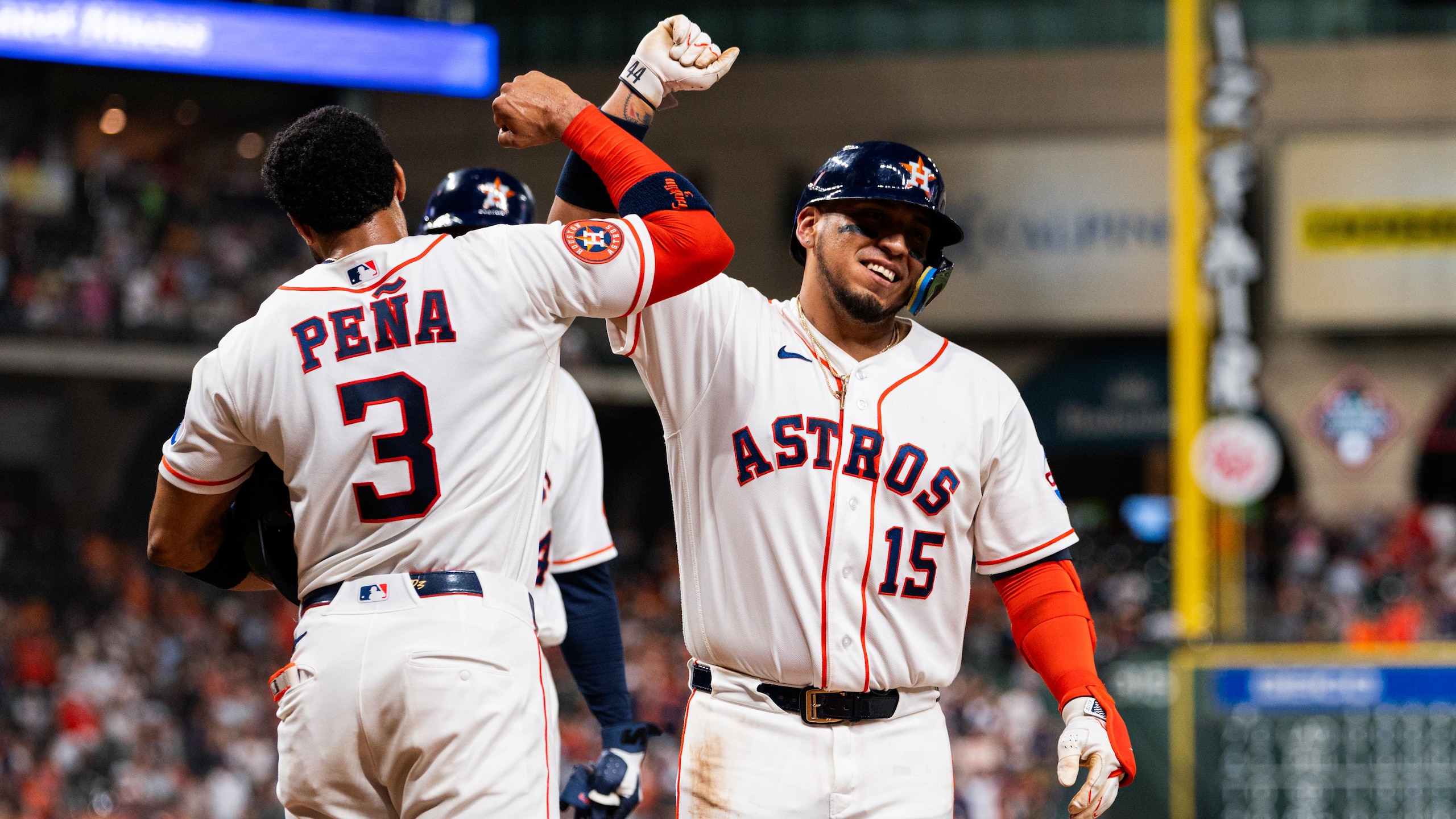
Texas Rangers (51-51, current No. 3 seed)
Top Priority: Bolster the bullpen better than they did last year; win first AL West crown since 2016
Aside from likely untouchable top prospect Sebastian Walcott, Texas' farm system is pretty underwhelming. The Rangers also already have a payroll north of $200M after making an intentional effort to cut costs this past winter, and presumably won't be looking to take on much money in any trade.
Not exactly a one-two punch that screams "aggressive buyer" there, but the Rangers ought to be looking to upgrade their bullpen, ideally adding a right hander with good strikeout stuff. From there, getting Corey Seager, Jordan Montgomery and Cody Bradford back from the IL might be enough to hang onto first place in this mess of a division.
Seattle Mariners (51-52, 2.0 GB for No. 6 seed)
Top Priority: Escape from Mediocre-ville, surge into October as AL West champs
Seattle will be buying. The M's reloaded this past offseason after coming ever so close to the first World Series appearance in franchise history, and you can take it to the bank that they are hoping to repeat last year's September surge of 17 wins in 18 games.
The unknown is just how desperate this front office has become amid the team's four months of mediocrity.
While it's hard to imagine top pitching prospects Kade Anderson or Ryan Sloan will be going anywhere, Seattle has one of the deepest and highest-rated farm systems, more than capable of putting together a serious blockbuster. Maybe this is where Mason Miller lands?
Houston Astros (50-54, 4.5 GB for No. 6 seed)
Top Priority: Contending without increasing spending
Houston is in a tricky spot on multiple levels, close enough in both the AL West and wild card races to justify buying, but disappointing enough that it'd be hard to argue with turning the page to 2027.
That said, if they do sell, their most intriguing impending free agent is middle reliever Steven Okert, so it's not like they stand to gain much without making non-rentals like Isaac Paredes or Jeremy Peña available.
Conversely, if they buy, they are relatively close to the luxury tax threshold and would be a three-time offender if they get there. That wouldn't much impact their bottom line for this year, but that could factor into their offseason spending plans.
It will probably be a relatively quiet deadline for the Astros, but we shall see.
Athletics (43-59, 9.5 GB for No. 6 seed)
Top Priority: Upgrade the long-term pitching staff
J.T. Ginn's breakout has been a pleasant surprise, and rookie Gage Jump looks like he could be a fixture in this rotation into the 2030s. However, this pitching staff needs some serious work, allowing more runs per game than every team except for the Colorado Rockies.
There has been talk of All-Star catcher Shea Langeliers possibly being on the trade block with two years of arbitration eligibility remaining, and the A's are presumably going to insist upon getting multiple MLB-ready pitching prospects in order to move him. (Which, for what it's worth, the Yankees have in Elmer Rodríguez and Carlos Lagrange.)
Los Angeles Angels (41-62, 12.0 GB for No. 6 seed)
Top Priority: Find a way to matter again
Barring the comeback of all comebacks, the Angels are headed for an 11th consecutive losing season, still searching for their first postseason victory since 2009. And after more than a decade of refusing to embrace a rebuild, they presently have both one of the worst MLB teams and one of the worst-rated farm systems.
With two years of arbitration eligibility remaining on each, they could trade Reid Detmers and José Soriano for quality prospects. But it'd be swell if they could show some semblance of a five-year plan beyond "refuse to even discuss trading Mike Trout."

.jpg?w=2560)
NL East
4 of 6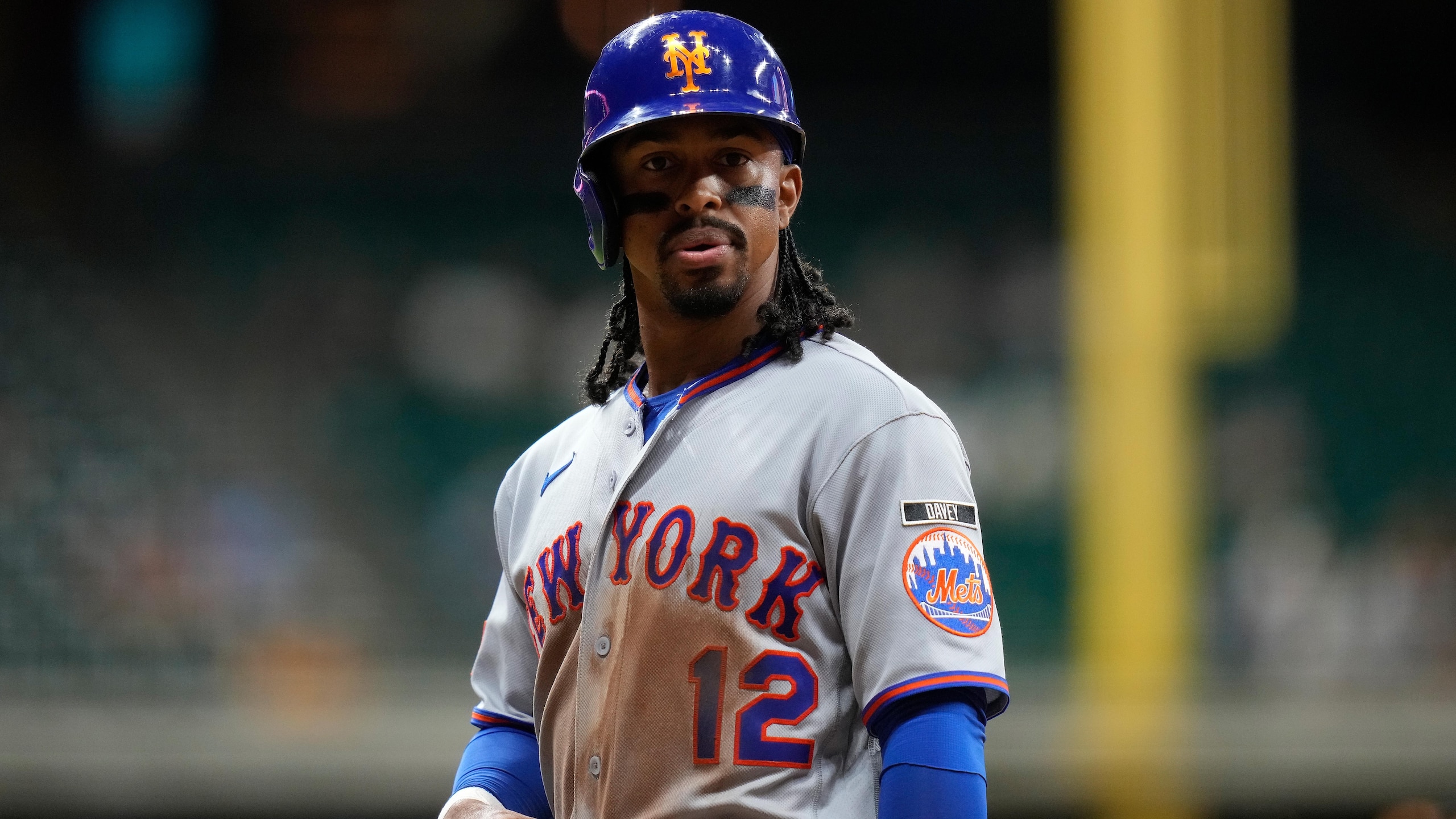
Atlanta Braves (59-42, current No. 3 seed)
Top Priority: Add controllable starting pitching
It's a broken record at this point, but Atlanta's starting rotation is a mess beyond Chris Sale.
While the 2024 NL Cy Young winner has a 2.06 ERA and 2.72 FIP, everyone else who has made multiple starts for this team has a FIP of 4.43 or worse, with Bryce Elder and Grant Holmes presently looking like Atlanta's Game 2 and Game 3 starters, by default.
The Braves could be in the mix for a Tarik Skubal rental, but it's much more likely they'll want someone like Joe Ryan, Michael Wacha or Reid Detmers with at least one, if not two years of team control remaining.
Philadelphia Phillies (56-47, current No. 5 seed)
Top Priority: Add at least one more trustworthy arm to the bullpen
Over the past four postseasons, only the Dodgers (40) have played in more games than the Phillies' 38. But while the Dodgers have blown one save and won two World Series, the Phillies have blown 10 saves, crashing out in painful fashion year after year. (Wear a Craig Kimbrel or Jeff Hoffman jersey on your next trip to Citizens Bank Park at your own peril.)
They do have a darn good one right now for the ninth inning in Jhoan Duran, but bridging that gap from Zack Wheeler and Cristopher Sánchez to the elite closer is a clear weak link to be addressed. And given how often the bullpen has failed this aging nucleus in the past, the Phillies might be super aggressive about it.
Miami Marlins (52-51, 1.5 GB for No. 6 seed)
Top Priority: Strategically add, improving for both 2026 and 2027
The Marlins have gone from the brink of death at the end of May to postseason position in early July back into no-man's land via the active nine-game losing streak.
Here's the thing about the Marlins multi-year payroll situation, though: They have just one unrestricted free agent this winter in Pete Fairbanks, who has been so dreadful (7.42 ERA) on his one-year, $13M deal that it's unlikely they would get anything of value for him.
They also have Sandy Alcantara with a $21M club option for next season. He would be a highly coveted trade chip.
But if that's all they're going to sell, why sell?
Why not instead give up one of their three pitching prospects who rank top 75 overall on MLB.com's pipeline in exchange for a bat (with some pop) that is controllable through at least next season?
Washington Nationals (52-51, 1.5 GB for No. 6 seed)
Top Priority: Improve the pitching staff
Are the Nationals going to stick around and try to make the postseason for the first time since winning the World Series in 2019? If so, they simply must do something about a pitching staff that is allowing north of five runs per game. Foster Griffin and Cade Cavalli have been solid, but just about every other arm on this staff has been replacement level, at best.
Or if they sputter a bit through the next 10 days and decide they're willing to move Griffin, Luis García Jr. and maybe even CJ Abrams amid a sale, well, they would still be looking to improve the pitching staff—it would just be the Double-A Harrisburg and/or Triple-A Rochester staffs getting an influx of talent instead.
New York Mets (43-60, 10.5 GB for No. 6 seed)
Top Priority: Forget this season ever happened
Talk of Francisco Lindor being on the trade block with well over $150M remaining on his contract feels a bit far-fetched. However, if any front office is liable to take a flamethrower to its roster in advance of the trade deadline, it's probably the Mets, who have been hands down the biggest disappointment of this season.
Most likely, though, they'll stick to unloading their impending free agents, namely Freddy Peralta, Clay Holmes, A.J. Minter, Brooks Raley, Luis Robert Jr. and Tyrone Taylor. Maybe Luke Weaver, too, with one year left on his deal. And if anyone wants to take the $15M+ 2027 salaries of Sean Manaea, Jorge Polanco or Kodai Senga off their hands, they would almost certainly oblige.
NL Central
5 of 6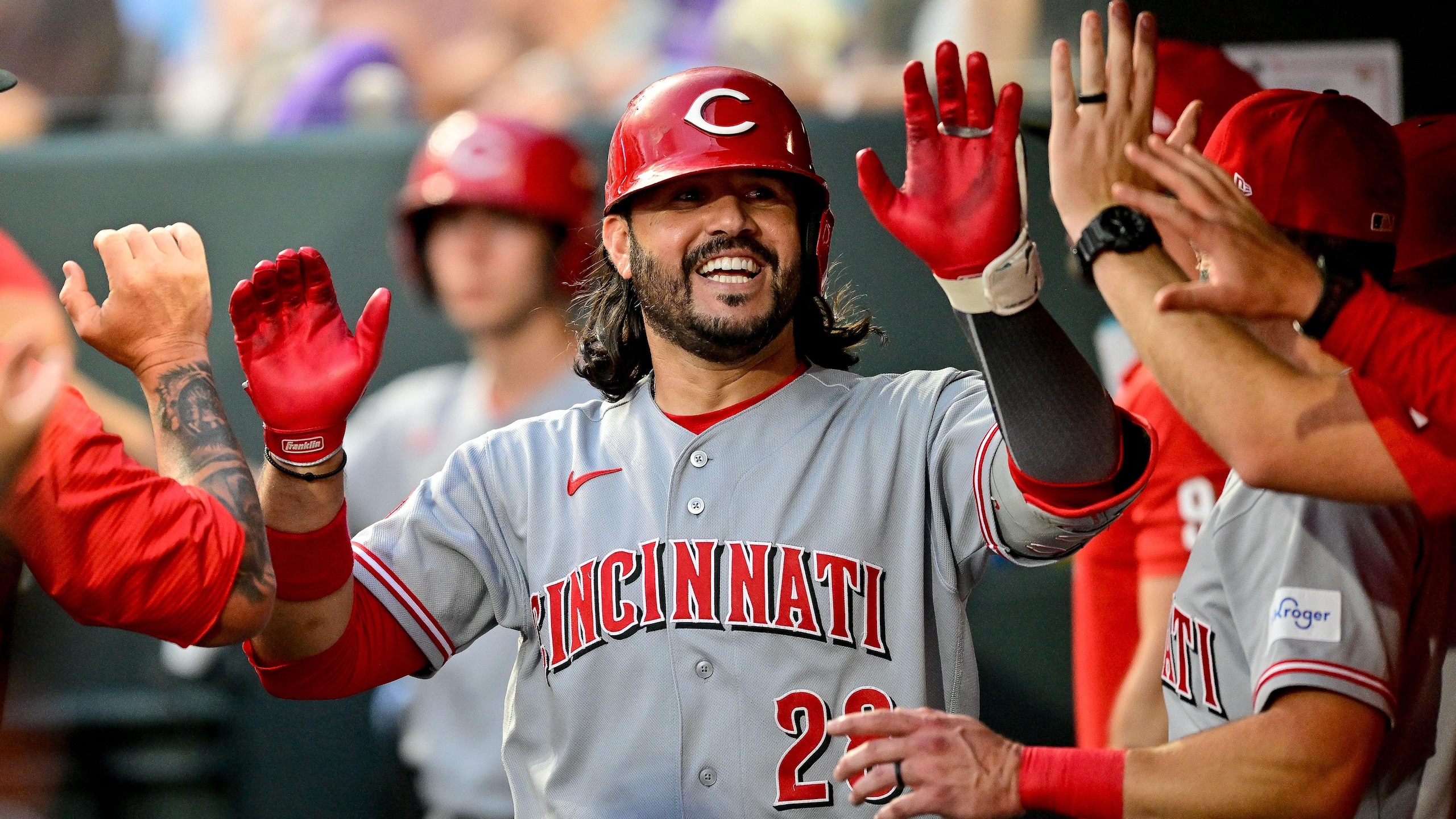
Milwaukee Brewers (64-38, current No. 2 seed)
Top Priority: Beat the Dodgers in the NLCS
As things presently stand, it's the Brewers and the Dodgers and then 28 other teams with less realistic hopes of winning the World Series.
And if we are headed for a repeat of last year's NLCS pairing, what can the Brewers do to ensure they don't endure another 4-0 sweep with four total runs scored?
Perhaps to beat the Dodgers in October, Milwaukee needs to beat them now in the great bidding war for Tarik Skubal. Would be great if they could also add a power bat.
Chicago Cubs (57-45, current No. 4 seed)
Top Priority: Add enough pitching to be taken seriously as a World Series threat
The Cubs have 10 players on their active roster who will be free agents at the end of this season. We're talking significant names, too, such as Seiya Suzuki, Ian Happ, Matthew Boyd, Shota Imanaga, Carson Kelly and more.
That isn't to say it's an "all-in, do or die" season for the Cubs, but they might be one of the most motivated buyers out there, desperate to patch up a pitching staff that rates among the worst in baseball.
Ideally, they won't need to part with either Jefferson Rojas or Josiah Hartshorn to make it happen, but they could use multiple starters and multiple relievers.
Pittsburgh Pirates (53-50, 0.5 GB for No. 6 seed)
Top Priority: Beef up the bullpen
Pittsburgh's offense has been insatiable, and teams could do a whole lot worse than lining up Paul Skenes, Braxton Ashcraft and Jared Jones to start the first three games of the postseason.
But this bullpen has been problematic, handing out walks like they're candy bars on Halloween and lacking for anyone you'd feel great about handing the ball with the season on the line.
After decades of earning a reputation as a team that's always looking to sell, could the Pirates be the buyer that puts together the offer for Mason Miller that San Diego can't refuse? They do have a deep enough farm system to make some serious noise.
St. Louis Cardinals (52-49, 0.5 GB for No. 6 seed)
Top Priority: Upgrade the lineup within reason
St. Louis probably won't do much of anything about the deadline.
The Cardinals only have a couple of impending free agents, two of whom (JoJo Romero and Ramón Urías) are on the IL anyway. And after unloading Sonny Gray, Nolan Arenado, Willson Contreras and Brendan Donovan this past winter in the name of shedding payroll, getting younger and restocking the farm system, it'd be a bit nonsensical to now trade away a decent chunk of said farm in pursuit of what is maybe a 30 percent chance at a wild card spot.
However, if they can get a buy-low bat that is controllable beyond this season, that's worth exploring.
Cincinnati Reds (47-54, 5.5 GB for No. 6 seed)
Top Priority: Make the most of a solid crop of impending free agents in a seller's market
Cincinnati has low-key backed its way into what could be a lucrative fire sale of rentals.
Eugenio Suárez struggled for most of the season, but he has five homers in his last 11 games and might be a coveted bat once more. Similarly, Brady Singer had a rough run through the first couple months of this season, but he has a 2.92 ERA and five quality starts in his nine appearances since the beginning of June. At this point, he might ignite a bidding war.
The Reds also have Tyler Stephenson, Nathaniel Lowe, Caleb Ferguson and Brock Burke among their soon-to-be free agents, each of whom should at least fetch something decent on the trade block.
NL West
6 of 6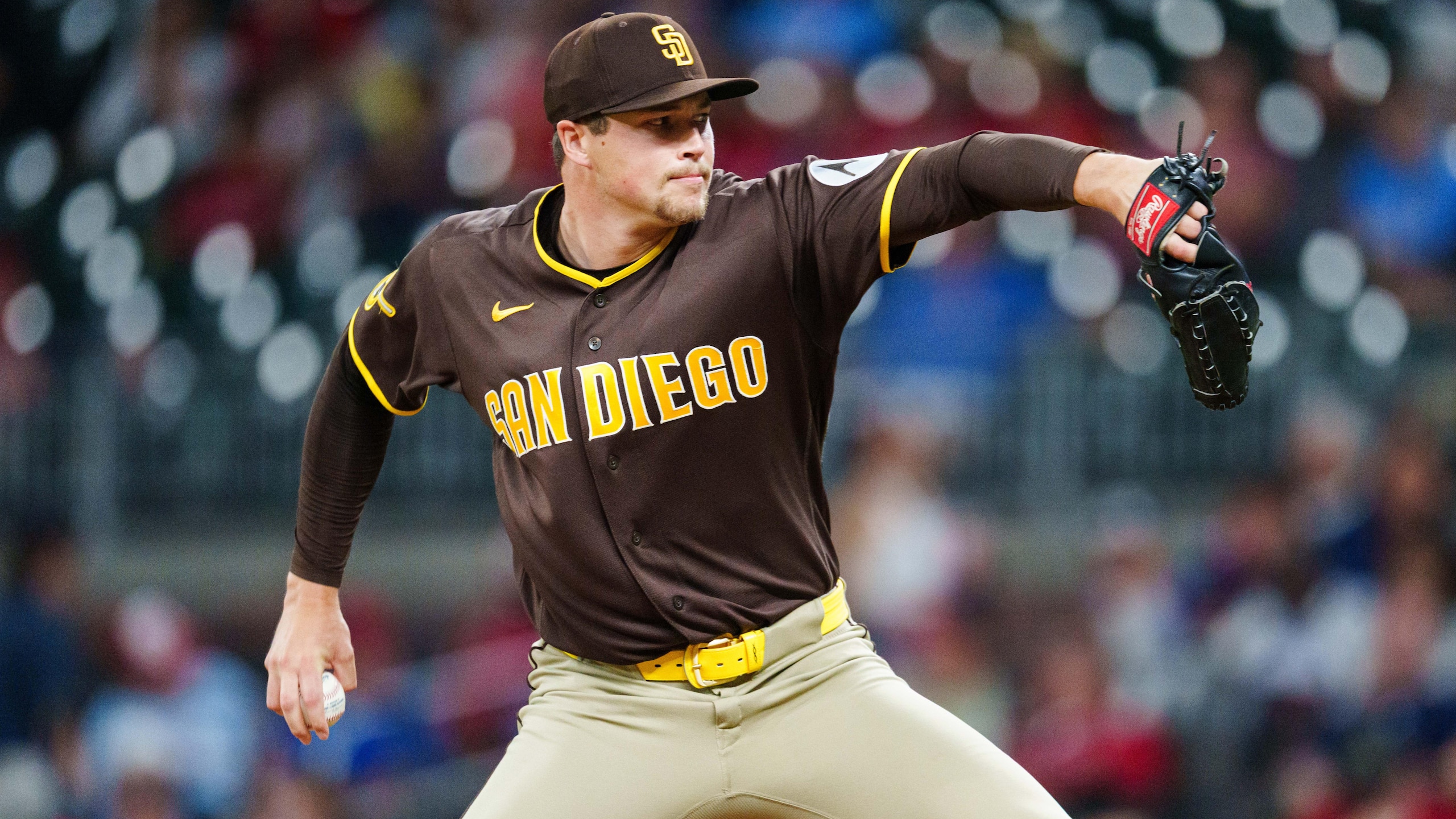
Los Angeles Dodgers (65-38, current No. 1 seed)
Top Priority: Complete the three-peat by restocking the starting rotation
The Dodgers are leading the majors in run prevention, but the current state of this rotation leaves a lot to be desired.
Yoshinobu Yamamoto has been great, per usual, and Justin Wrobleski blossoming into a legitimate No. 2 starter has been one of the more unexpected developments of this entire MLB season.
But with Blake Snell and Tyler Glasnow still out indefinitely and Shohei Ohtani presently on a hiatus from pitching due to a knee issue, the twice reigning champions are otherwise filling out their rotation with Roki Sasaki's 4.98 ERA, Emmet Sheehan's 5.13 ERA and Eric Lauer, who the Blue Jays DFA'ed in mid-May with a 6.69 ERA.
Maybe they ride out the storm and bank on those three currently missing arms playing a big role in October once again. But with the highest rated farm system, they can go get the best arm available, if they want it.
Arizona Diamondbacks (53-49, current No. 6 seed)
Top Priority: Add a first baseman and pray to the injury gods for some help
The D-Backs dodged a bullet with Corbin Carroll's hyperextended elbow only resulting in a one-game absence, but they have otherwise had some rough luck on the injury front between Jordan Lawlar playing in just 12 games, Corbin Burnes' setback in Tommy John rehab and Michael Soroka missing the past month with a glute issue.
With any luck, though, Lawlar, Soroka and flame-throwing closer Justin Martinez will be back soon, Burnes will return around Labor Day and the Diamondbacks will surge into the postseason, possibly even overtaking the Phillies and Cubs to earn the No. 4 seed.
Upgrading at first base sure would help them make that dream a reality, as getting less than nothing out of that spot in the lineup since early May might be the biggest reason Arizona isn't already in front of Philadelphia and Chicago.
San Diego Padres (50-52, 3 GB for No. 6 seed)
Top Priority: Wait and see
The Padres are three games back right now in the jam-packed race for the final NL wild card spot, but their last nine games before the deadline are a three-game set at ice-cold Miami and six home games against the hapless Rockies and Giants.
They reasonably could go 8-1 through that stretch, and maybe along the way they'll get some positive news on the rehabs of both Nick Pivetta and Joe Musgrove. That could push them to make a big splash to upgrade what has been one of the lowest scoring offenses.
Conversely, if they sputter to a 4-5 (or worse) record against this 10-day gift from the schedule makers, Mason Miller could be the headliner of a fire sale that enables the Padres to restock a farm system that needs a lot of help after all the future mortgaging this team did at last year's deadline.
Don't expect a hybrid buy-and-sell approach, though. They might wait until the last minute to pick a lane, but the Padres figure to steer hard in that direction once they do.
San Francisco Giants (42-60, 11 GB for No. 6 seed)
Top Priority: Tear it down and start over
Impending free agents Luis Arraez and Robbie Ray are the big ones who are going to generate a ton of interest. But with the exception of Logan Webb, everyone from this roster who is over the age of 27 is probably on the trade block—similar to where the St. Louis Cardinals were at this past offseason.
Willy Adames, Matt Chapman and Rafael Devers are each owed at least another $100M beyond this season. If the Giants can move any of those contracts and actually get something in return, they may well do so.
Colorado Rockies (41-63, 13 GB for No. 6 seed)
Top Priority: Find a way to matter again
It's the same top priority that we assigned to the Angels, but they are kindred spirits in the basement of MLB's standings, yet again.
Since the beginning of 2019, the Rockies are 443-692, suffering 44 more losses than the next-worst team. They aren't nearly as terrible as they were en route to 119 losses and a minus-424 run differential last year, but they're roughly on pace for a fourth consecutive season of at least 100 losses.
With nary a pitcher worth building around, it's hard to see any way out of this hole. But there is a whole lot of interest in Hunter Goodman with three years of arbitration eligibility remaining on his contract. If they're willing to move their top slugger, they could perhaps fetch two arms and a leg to assist in their incessant rebuild.


.png?w=2560 "Shocking CFB Top 25 Shakeup 🔢")
.png?w=2560 "Week 6 Winners & Losers 📊")
.jpg?w=2560 "Cardinals Finalizing MHJ Trade")
.jpg?w=2560 "Grading Wild MITB PLE 😮💨")
.jpg?w=2560 "DK Shades Sauce Gardner 👀")
.jpg?w=2560 "Report: Cowboys Open to More Trades")