Dwyane Wade, Miami Heat Keep Evolving Together in Order to Breed Success
The Miami Heat have taken many shapes over the years, changing their roster makeup on both deliberate and involuntary whims with, for the most part, the frequency of a franchise that hasn't made five NBA Finals appearances and won three championships in the last decade.
But the Heat have made five Finals appearances in the last decade. They've won three titles. They've posted the league's fourth-best record since 2005.
Of all those responsible for their continued success and the indelible belief that they're always on the path toward that next championship score, it's Dwyane Wade, one of Miami's few constants, who has become synonymous with the Heat's ability to find lasting security amid recurring turnover.
TOP NEWS
KAT's Contract News Quote 😬

1 Player Every Team Should Trade 🔀
Most Fascinating Players This Season 😲
There is also team president Pat Riley, the NBA's incumbent front-office godfather, as well as the mastermind behind Miami's many iterations over the last 20 years. But there's something different about Wade.
He has outlasted every wholesale mutation on the court, adapting to each new product Miami has peddled since 2003.
Various teammates have come and gone. Wade's role has changed. His salary has fluctuated. But his importance to the Heat and their vision, even now, remains the same.
The Alpha Years (2003-10)
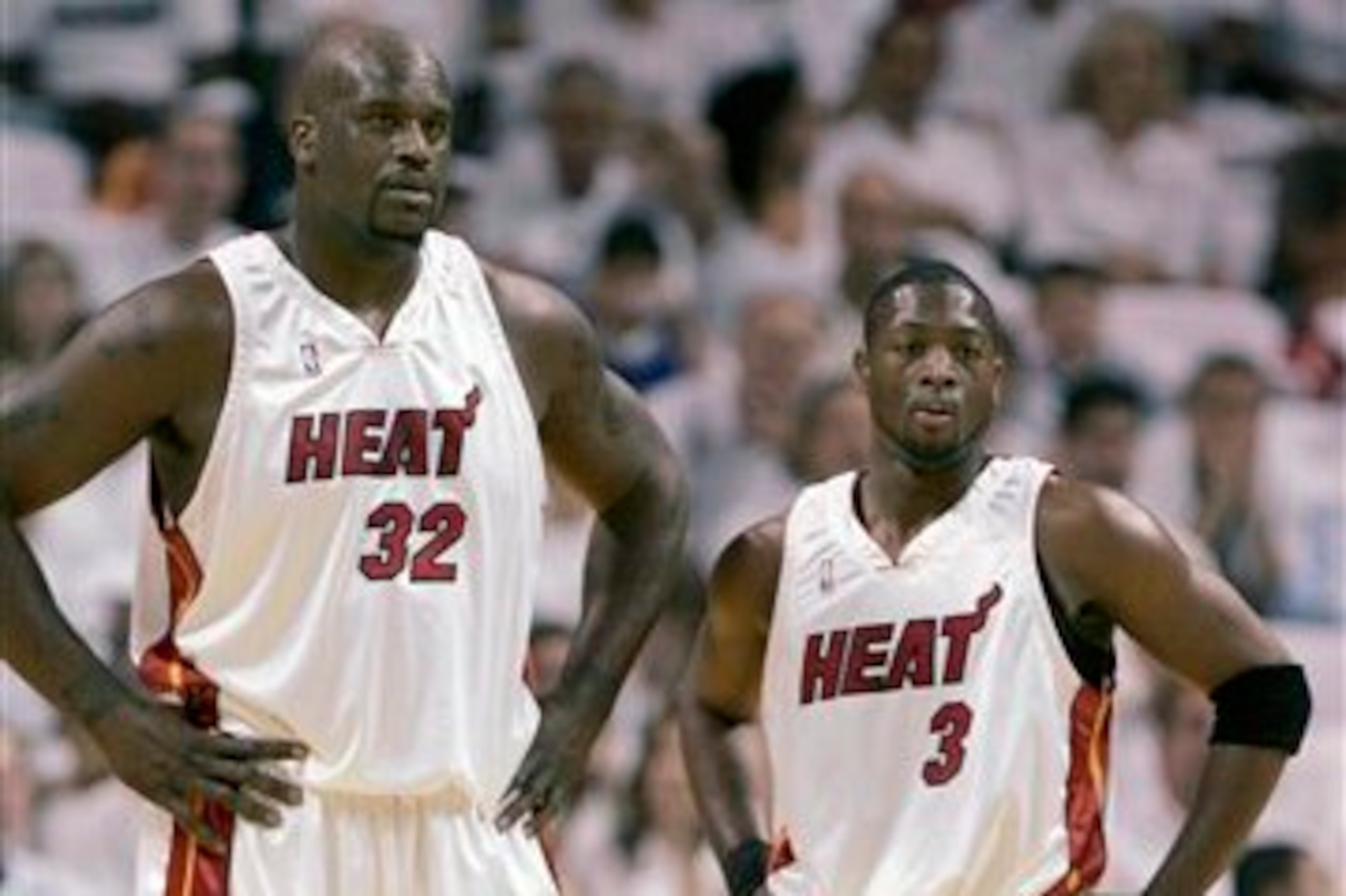
Despite being a surefire first-ballot Hall of Famer, Wade isn't often associated with the alpha dog role.
He joined the Heat as a rookie in 2003 and immediately emerged as one of the best players for a team otherwise headlined by Eddie Jones. Even though he missed 21 games that first season, setting the stage for the rest of his career, he still left his mark, becoming just the fifth qualified rookie in league history at the time to average 25 points, six rebounds, seven assists and two steals per 100 possessions.
Still, after that, there always seemed to be someone overshadowing Wade. Not in function or value, but in status and personality.
The Heat traded for Shaquille O'Neal prior to Wade's sophomore campaign. Wade also spent time alongside greats such as Alonzo Mourning, Gary Payton and Penny Hardaway, albeit at the tail end of their careers.
Latching on to waning stars became something of a modus operandi for the Heat during the initial stage of Wade's tenure. It didn't stunt his development, but when combined with his missing nearly 20 percent of all possible regular-season tilts through his first seven seasons, it opens him up to some atypical criticism.
As O'Neal put it in 2014, per Bleacher Report's Ethan Skolnick:
That's not exactly true.
When Wade and O'Neal won a title together in 2006, the Heat were Wade's team. He had a higher usage rate than O'Neal through both the regular season and playoffs, and his 4.8 postseason win shares tripled O'Neal's 1.6.
And, at the time, that was the apex of Wade's supporting cast. He never played with another superstar in his prime prior to 2010. Declining dignitaries are the closest he came; an over-32 O'Neal is the best he ever had.
| 2003-04 | Eddie Jones | 9.1 | Lamar Odom | 8.4 |
| 2004-05 | Dwyane Wade | 11.0 | Shaquille O'Neal | 11.0 |
| 2005-06 | Dwyane Wade | 14.4 | Udonis Haslem | 7.0 |
| 2006-07 | Dwyane Wade | 8.8 | James Posey | 5.2 |
| 2007-08 | Dwyane Wade | 3.3 | Chris Quinn | 2.6 |
| 2008-09 | Dwyane Wade | 14.7 | Udonis Haslem | 5.7 |
| 2009-10 | Dwyane Wade | 13.0 | Udonis Haslem | 6.0 |
Only once through his first seven campaigns did Wade fail to lead the Heat in win shares, and that was in 2003-04, when he was a rookie. Twice he led the charge (2006-07, 2007-08) while missing more than 30 games.
Just seven other players amassed more win shares than Wade during that time: LeBron James, Dirk Nowitzki, Kevin Garnett, Chauncey Billups, Kobe Bryant, Tim Duncan and Steve Nash. Wade appeared in at least 34 fewer games than any one of them.
To argue that he has seldom, let alone never, played the part of an alpha dog is absurd. He's been Miami's primary lifeline for most of his career, all while battling injuries.
Some seasons were more impressive than the others. Though he appeared in just 51 contests, Wade was part of the 15-win faction from 2007-08. The Heat also peaked in the first round three times through six playoff berths, and they ranked a middling 12th in regular-season winning percentage during that seven-year span.
But that, again, was when a significant gap existed between Wade and his second in command. That was the Heat's reality, and Wade, on both an individual and team scale, helped them make the most of it.
Second Fiddle (2010-14)
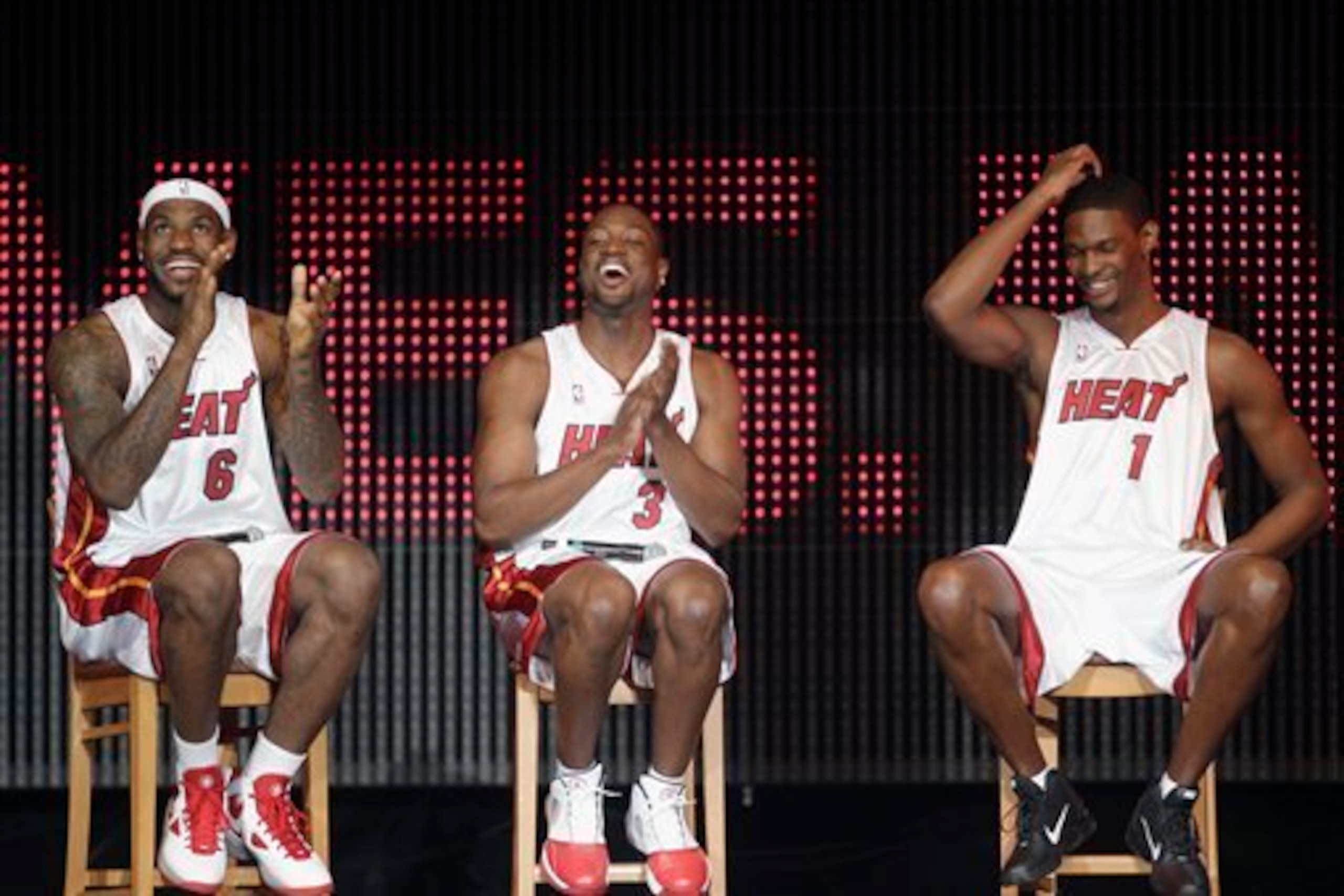
Transitioning into a secondary role while in the thick of your glory days isn't easy. It's one of those things that sounds better in theory than practice.
Kevin Love didn't seamlessly adjust to complementary capacity upon joining the Cleveland Cavaliers. The Los Angeles Lakers have had trouble getting Kobe Bryant to do the same, and he's years removed from actual superstardom.
Wade made that sacrifice in 2010 when the Heat completed one of the biggest free-agency coups ever, signing Chris Bosh and, most importantly, James.
Those three accomplished some special things together. Four straight Finals appearances. Two consecutive championships. The second-best regular-season winning percentage among all 30 teams.
None of which would have been possible without Wade ceding control to James. Both are ball-dominating superstars, and yet they still coexisted. Wade is nearly three years James' senior, and yet he still willingly, if not gladly, accepted the role of second fiddle in his own town.
"I just had some time to sit back and think a lot," Wade said during the Big Three's first championship run in 2012, per ESPN.com's Israel Gutierrez. "I just realized what we're playing for, and what I'm playing for. ... It's kind of like I told him, 'Listen, I'll find my way. Don't worry about me. I'll be there. But you go out and be the player that we want you to be.'"
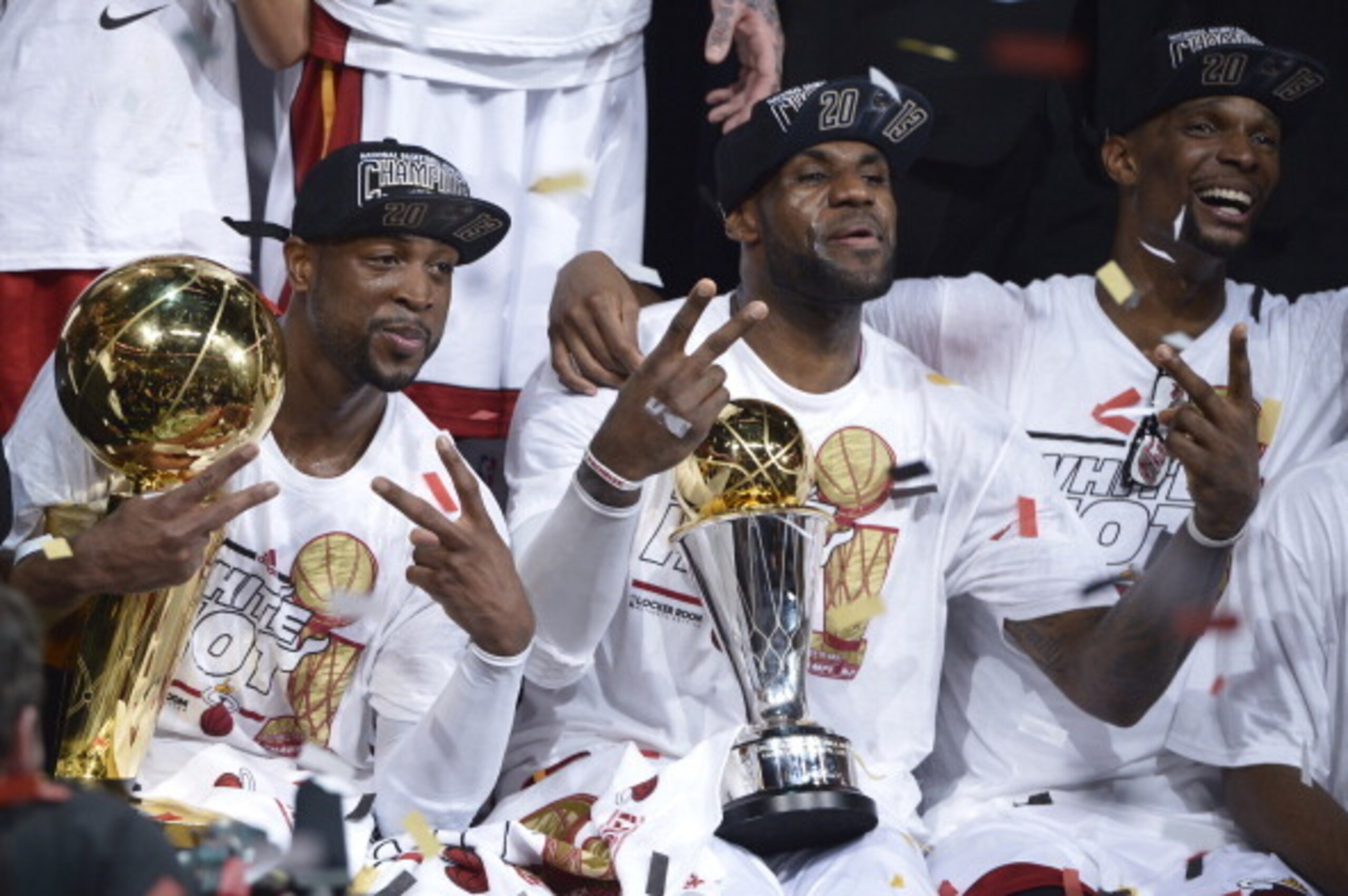
Taking a step back no doubt became easier, almost an afterthought, with time. The Heat implemented a maintenance program for their shooting guard, handicapping his ability to contend for Batman and, sometimes, Robin status by default.
Wade missed 17 games in 2011-12, 13 games in 2012-13 and 28 games in 2013-14. Most of those absences would have been necessary with or without James. Wade has been laboring through knee issues since his days at Marquette.
Viewed that way, Wade's dip in status was equal parts self-serving and selfless, as Jonathan Auping wrote for Vice Sports:
"At some point, he had to give up his alpha dog status to James, but handing over the burden of carrying a team through the regular season allowed Wade to take games off and rest his body for the playoffs and possibly prolong his career. He also has one more championship than James. Things happen in the NBA, but to suggest that Wade didn't deftly manage his career's arc is to deny an undeniable track record.
"
Calculated or not, the on-court sacrifices Wade made beside James weren't any less significant:
Shot attempts are a difficult thing to relinquish. They translate directly into scoring, and scoring is the sexy, superstar-y part of basketball.
Here Wade was, though, watching his numbers fall across the board, often to the point where pundits pondered whether Bosh was more important or if No. 3 was even still a superstar:
These sacrifices weren't just limited to in-game pecking orders either. Wade's most charitable acts, relative to the rest of the NBA's players, have come off the court, where he's repeatedly structured his contracts to Miami's benefit in both length and worth.
As Bleacher Report's Kelly Scaletta underscored earlier this summer:
James earned more than Wade in each of his four seasons with the Heat. Bosh has taken home more than Wade in each of his five campaigns with the Heat.
Last season, Bosh's salary exceeded Wade's by more than $5.6 million.
Wade has never been the Heat's highest-paid player.
This despite the fact that neither James nor Bosh was a champion before joining forces with Wade. This despite Wade being eligible for a Kobe-style agreement since at least the summer of 2014.
This despite Wade, even through stints on the sidelines, joining James and Russell Westbrook as the only players to eclipse 34 points, seven rebounds, seven assists and two steals per 100 possessions since 2010.
Consistent concession, however seemingly slight, will forever be part of Wade's legacy—both for what he gave up (money, status) and for what it got him (championships).
Inter-Era Bridge and Mentor (2014-Present)
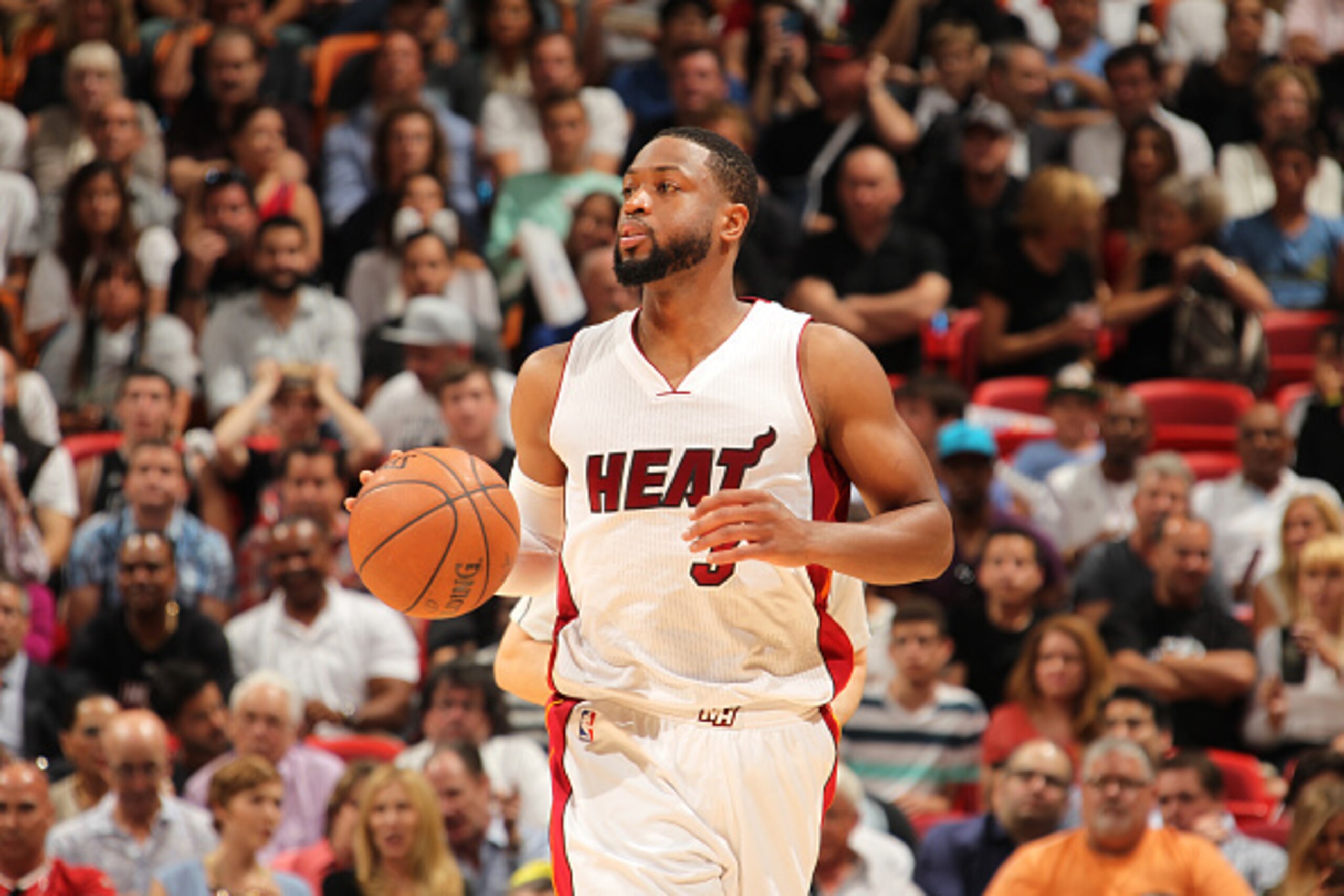
Few teams could have rebounded as well and as quickly from James' exodus. The Cavaliers spent four years in NBA purgatory after he first left, failing to ever reach 35 victories or return to the postseason. In their first season without James, the Heat finished one game shy of a playoff appearance.
Now, as we look ahead to 2015-16, they're once again positioned to make another run in the wide-open Eastern Conference.
Goran Dragic put pen to paper on a five-year deal at below-max value. Bosh is locked up for the next four seasons. Luol Deng exercised his player option. Hassan Whiteside looks like a legitimate NBA player.
Justise Winslow, a top-five prospect, fell to Miami at No. 10 in this year's draft. The Heat scooped up free agents Gerald Green and Amar'e Stoudemire for pennies on the dollar. Josh McRoberts should be healthy to start the season.
All signs once again point toward the Heat catering to the now. But, for the first time in 12 years, they're also forced to seriously consider life after Wade.
Hence the drama that unfurled before Wade signed his one-year, $20 million deal. The Heat—as previously detailed by Skolnick—equivocated on offering a lucrative long-term contract, and Wade sought to recoup some of the money he's left behind over the years.
It all resulted in an unanticipated standoff. But it was never one that felt truly real. Wade is a Heat lifer, and the idea of his donning a different jersey is unfathomable.
Returning to Miami on a mutually beneficial contract that pays him well without compromising Riley's ability to court superstars in 2016 (Kevin Durant) and in 2017 (Blake Griffin, Serge Ibaka, Stephen Curry) was always the only possible outcome.
And much like Wade's return in 2010, this reunion comes complete with yet another different role.
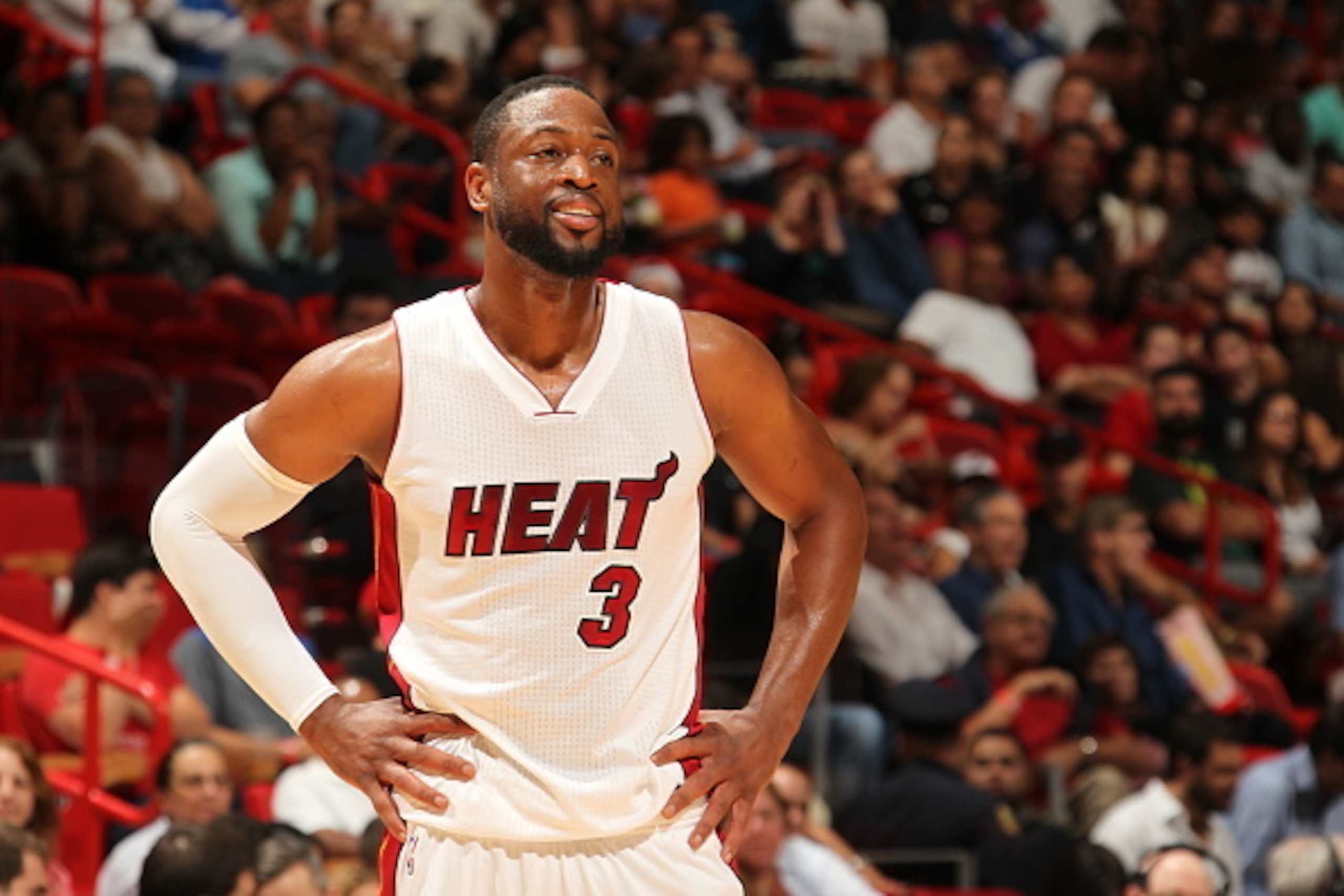
More star teammates, along with his maintenance program, will leave Wade vacillating between second and third fiddle—this time to Bosh and Dragic. He will even be tasked with mentoring young and inexperienced running mates in Whiteside and Winslow, the latter of whom, as a shooting guard, could one day be his replacement.
It's a spot in which Wade has never really found himself but one he's embraced nonetheless. He wouldn't have returned to Miami if he weren't comfortable ceding more control through next season and beyond, and he wouldn't already be taking Winslow under his wing if he weren't vested in the Heat's long-term future.
"He’s just helping me get adjusted from everything from the lifestyle to the duration of the season, how to take care of my body, diet and nutrition," Winslow said of Wade, per the Miami Herald's Barry Jackson. "Everything has been helping me make a smoother transition.”
Just as much as Wade needs to play like a superstar when healthy, this is his next, perhaps final, act for the Heat. He's already been their No. 1 option and franchise ambassador. And he's still all those things.
From now on, though, he's a custodian of Miami's next era as well—a guide who will not only aid in the Heat's attempt to contend now but who also helps ensure his next batch of sacrifices coalesces into a bigger on-court picture.
One that, this time, will outlast him.
Stats courtesy of Basketball-Reference.com and NBA.com unless otherwise cited. Salary information via Basketball Insiders.
Dan Favale covers the NBA for Bleacher Report. Follow him on Twitter, @danfavale.

.jpg?w=2560 "Cam Ward Says He's Not A Loser")
.jpg?w=2560 "🚨 Texans Trade for MHJ")
.jpg?w=2560 "Grading MHJ Trade 📝")
.jpg?w=2560 "Chargers Fall to 0-5 🤢")
.jpg?w=2560 "MHJ Bought Own Jugs Machine")