Why a Healthy Arian Foster Could Be the NFL's Best Running Back in 2015
At some point over the next few years, playing in the NFL could become a memory for Houston Texans running back Arian Foster.
The frailty associated with his position isn’t pleasant to think about. But the fleeting existence of a running back dictates that with Foster set to turn 29 before the 2015 season, his career heartbeat will soon slow to an intermittent beep. In a few short years, he'll have all kinds of time to drop shark truth on the Internet.
But too often we make a mistake with running backs like Foster who are advancing in age and have been especially breakable. We assume history will keep repeating itself to infinity and beyond.
TOP NEWS
Eagles OL Puts FO on Spot 😳
.jpg?w=2560)
Troy Aikman teases MNF departure
.jpg?w=2560)
Tomlin's Take After Cowboys' Players-Only Meeting 💀
According to that thinking, Foster, who’s played only two full 16-game seasons, will remain the same until whenever his final football day arrives. He’ll be electric and productive, yet still volatile and easily shattered.
What if—and work with me here—we dare to dream? What if we cut out that second part, and imagine a strange, sort of Twilight Zone season for Foster?
What would happen if Foster were to begin Week 1 having logged a full offseason of regular work during OTAs and training camp, without being hindered by injury rehab? What Foster would we see then?
We’re about to find out.

In 2013, Foster missed most of training camp and every preseason game while on the physically unable to perform list due to calf and back injuries. Those dings lingered, and eventually his season was cut eight games short by back surgery.
That kept him out for the preseason again in 2014, with the Texans resting their main offensive cog as a precautionary measure while he recovered. So that’s two straight years without a tuneup game, which reflects the recent state of Foster’s generally mangled muscles and bones.
But now he’s done something peculiar during an offseason: Foster has been healthy, and in one functioning piece.
“He’s been out there every day and it shows,” Texans head coach Bill O’Brien told ESPN.com’s Tania Ganguli in June.
“We have a very good running back,” he continued. “So you can rest assured that as long as he’s healthy and he’s out there, we will run the ball. I can tell you that. That’s one thing we’ll do.”
There are few certainties in this brave new world in which Foster is healthy. But if we take the words of his head coach and then observe the yards even a gimping Foster is capable of churning out, it’s not hard to reach a place where hope can become a league-leading producer.
Consider what Foster did in 2014, a season when he played only 10 complete games. He missed three due to groin and hamstring injuries, and he left early in three others. But when he did play, the reality of Houston’s sad-violin quarterback situation (which hasn’t changed) and the lack of passing-game support mattered so very little.
Let’s consult the basic 2014 rushing leader chart and note how much Foster did with fewer opportunities due to injury:
| DeMarco Murray | 392 | 1,845 | 115.3 |
| Le'Veon Bell | 290 | 1,361 | 85.1 |
| LeSean McCoy | 312 | 1,319 | 82.4 |
| Marshawn Lynch | 280 | 1,306 | 81.6 |
| Justin Forsett | 235 | 1,266 | 79.1 |
| Arian Foster | 260 | 1,246 | 95.8 |
Foster finished with the second-fewest total carries on that list. But despite his various aches and strains, he was still one of only six backs to post a 1,200-plus yard rushing season.
Here's that same rushing-yards ranking viewed from another angle, this time using the 16-game pace Foster had established.
| DeMarco Murray | 1,845 |
| Arian Foster | 1,532 |
| Le'Veon Bell | 1,361 |
| LeSean McCoy | 1,319 |
| Marshawn Lynch | 1,306 |
When he’s on the field and even somewhat healthy, Foster has consistently been a premier rusher, topping that 1,200-yard mark in four of the five seasons since he ascended to the starting job in Houston. But he may not even need to be healthy for a full season in the Texans offense to mount a serious challenge for the rushing title again, which he held in 2010.
The Texans quarterback competition will be a battle to see who can make wide receiver DeAndre Hopkins have to go into full stretching spider-hands mode most often. Ryan Mallett completed only 54.7 percent of his pass attempts over three appearances in 2014, and Brian Hoyer wasn’t much better (55.3 percent) in 14 games with the Cleveland Browns.
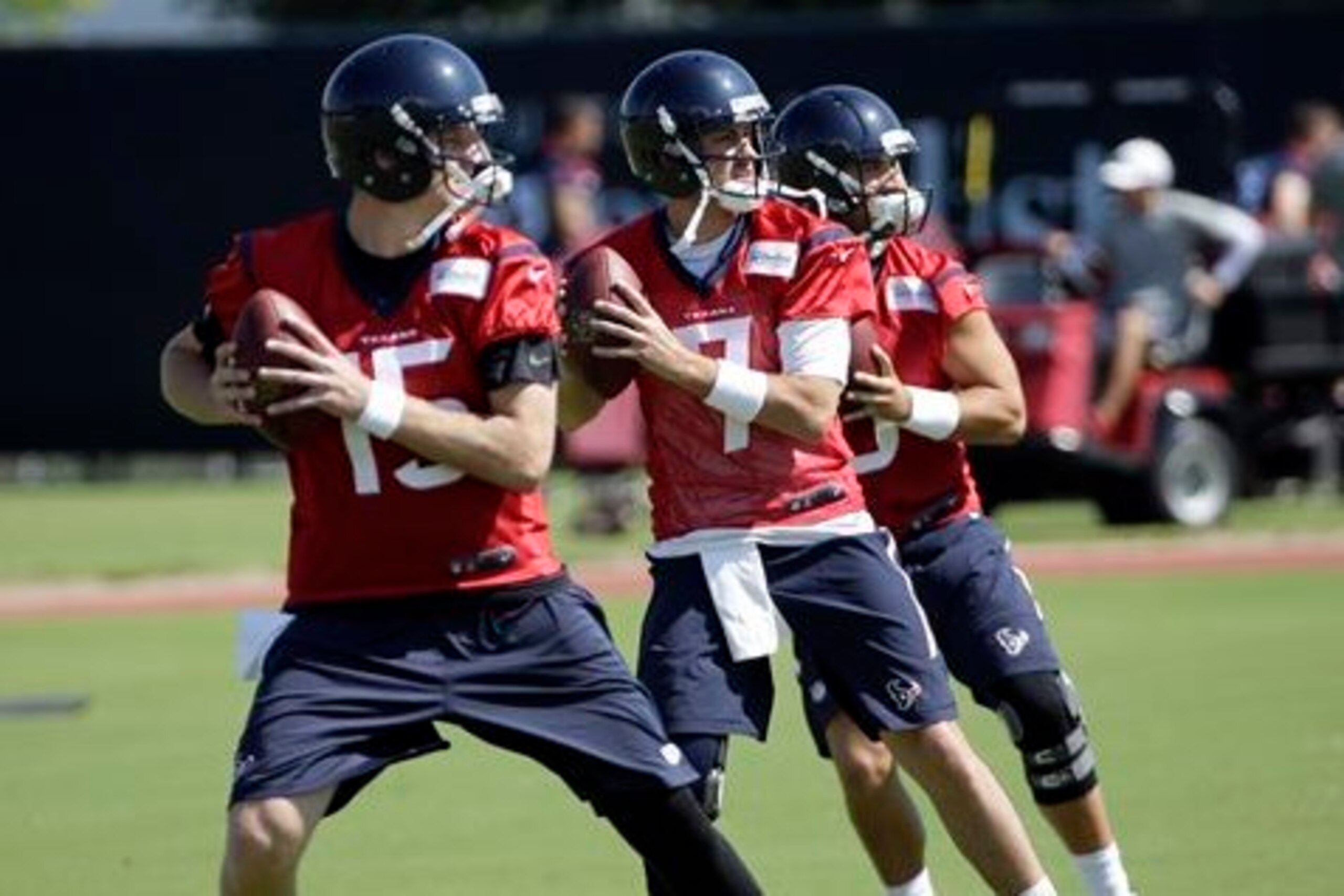
That quarterback sorrow is exactly why O'Brien has leaned on Foster to run so much in recent years.
“We ran the ball; we felt like that was our best way of winning last year,” he told Ganguli. “Playing good defense, run the ball, don’t make a lot of mistakes on offense, try to be good on special teams.”
Foster’s overall carries trailed most top running backs due to his injuries, but his 20 carries per game were second in the NFL only to Murray's 24.5, all while averaging 4.8 yards per carry (better than Murray's 4.7).
| DeMarco Murray | 16 | 24.5 | 4.7 |
| Arian Foster | 13 | 20.0 | 4.8 |
| LeSean McCoy | 16 | 19.5 | 4.2 |
| Le'Veon Bell | 16 | 18.1 | 4.7 |
| Marshawn Lynch | 16 | 17.5 | 4.7 |
Foster gained 90-plus yards in nine of those 13 games, which pushed his per-carry average higher and kept the chunk yardage flowing.
Many of his long runs were the product of a power-running style that creates missed tackles and allows Foster to muscle through contact. His 2.83 yards after contact per attempt trailed only the Seattle Seahawks’ Marshawn Lynch among running backs who played at least 50 percent of their team’s snaps, according to Pro Football Focus.
So the Texans and O’Brien are left at a crossroads with Foster. Do they try to manage the workload of a running back who thrives on heavy touches? Or do they just give passing public comments about doing that, and then go straight YOLO while hammering him into the ground?
Likely the latter, if history has taught us anything.
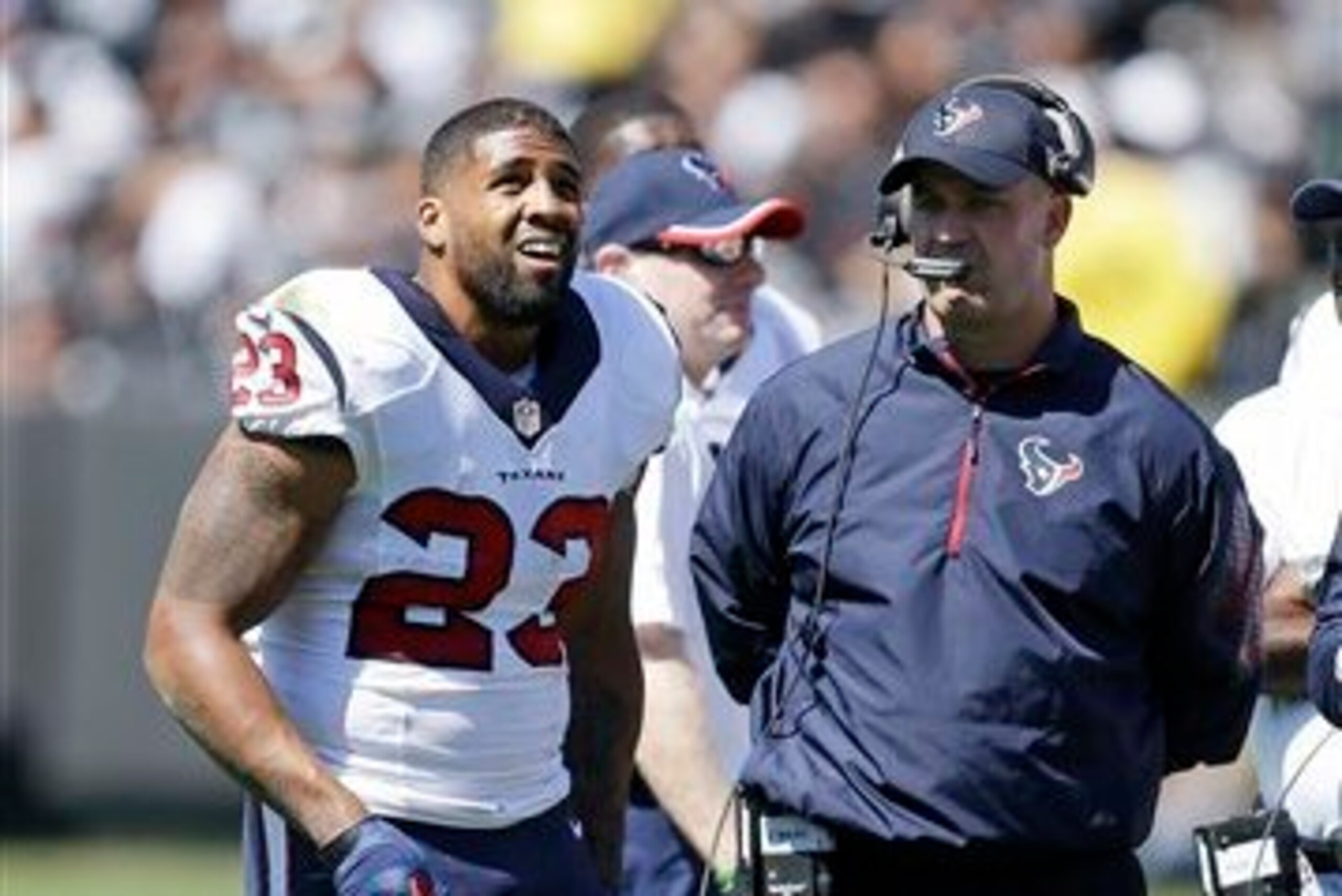
The need to ride Foster goes beyond Houston’s poor quarterback situation and passing game, which are still very much hovering sources of tears. There’s a broad and maybe more evil motivation, depending on your football worldview.
Foster has only two seasons remaining on his current contract, and the Texans releasing him after 2015 is unlikely, though not impossible. He’s due to account for a cap hit of $9.5 million in 2016, according to Spotrac, which is mammoth for a running back preparing to enter his age-30 season.
Financially, the Texans have two options. They can either ax Foster before the 2016 season begins and save $7 million in cap room, or decide he’s still an essential piece, regardless of the price, and keep him around.
Either way, the on-field result in 2015 will be the same. The Texans need a maximized return on their investment in Foster, which means every last bit of life will be squeezed out of him. That’s a fine situation for a Donald Trump Hotel towel stealer who’s healthy for the first time in a long time and needs to be the centerpiece of an offense (again).
Foster's breakable nature isn't unique at his position. It's a reality of doing business in the NFL as a running back. But injuries are, to an extent, a product of luck. The worst kind of luck.
And Foster's ability to consistently produce whenever he's even sort of healthy is what puts him on a separate tier—a tier he could own to himself in 2015 if the pounding of another season doesn't leave a new dent.
.jpg?w=2560)