

NHL Trade Grades for Flyers and Ducks After Trevor Zegras Deal
A few years ago, Trevor Zegras announced himself to the world at the 2022 NHL Skills Competition. He quickly became one of the NHL's most marketable players with monthly highlights.
It didn't take him long to fall out of favor in Anaheim, though.
On Monday, the Ducks traded the 2019 No. 9 overall pick to the Philadelphia Flyers for forward Ryan Poehling, a second-round pick in this year's draft (No. 45 overall) and a 2026 fourth-round pick. That return isn’t quite indicative of the star power Zegras holds, or at least once held.
Why did the Ducks feel the need to rid themselves of Zegras? Does the risk outweigh the reward in Philadelphia? Let’s look at the trade for both teams and grade how each did.
Anaheim Ducks
1 of 2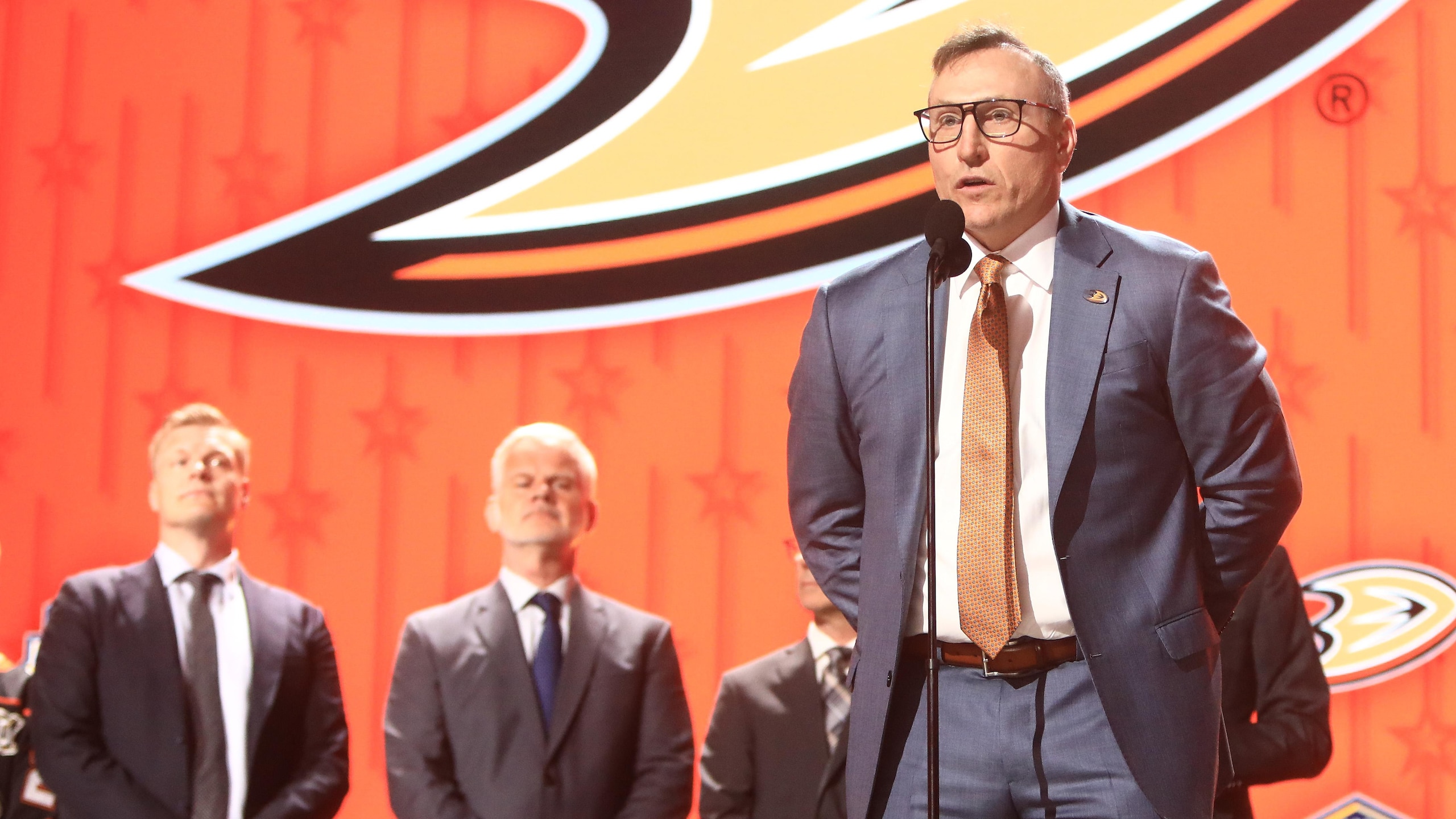
Let’s first look at this trade in a vacuum, where there are many justifiable reasons for Anaheim to anticlimactically pull the plug on its once-exhilarating ride with Zegras.
Zegras’ play had fallen off a cliff over the past few seasons. You can deal with a limited player who's putting up borderline first-line production. It’s a lot harder to justify atrocious defense and limited impact in the glitzier aspects of the game when a player is only producing at a 0.5-points-per-game pace, though. That’s certainly not good enough for someone who's earning $5.75 million.
Zegras is set to become a restricted free agent in 2026, with arbitration rights and a path to unrestricted free agency in 2028. The Ducks weren’t thrilled with his play, and the future in Anaheim at center rests with Leo Carlson and Mason McTavish.
Zegras had his own reasons to want to get out of Anaheim sooner or later. It was a question of when, not if, this divorce was coming. Anaheim gets out of the full contract for a player whose play has cratered and adds a bottom-six center in Ryan Poehling plus a pair of draft picks.
I can’t say I endorse the circumstances that led to this moment. It’s fair to knock Zegras for the limitations to his game, and he has to own that part of his downfall in Anaheim, but Ducks GM Pat Verbeek did not exactly set him up for success.
As a young player in the league, Zegras did not have a lot of help around him. Head hoach Greg Cronin, whom the Ducks have since fired, was not built for the task. The Ducks were an extremely young team. The last few seasons were even worse, with the recently drafted Carlsson and McTavish now needing the sheltered roles.
Verbeek’s attempts to complement Zegras with veteran talent were mostly busts. Alex Killorn was not the first-line winger Zegras needed. Ryan Strome was and is in no way built to take on that responsibility.
So, maybe the Ducks are right to move on now, and maybe this trade package was the best available. One has to wonder what might have been for Zegras in Anaheim had the team provided better conditions for development, though.
Grade: C
Philadelphia Flyers
2 of 2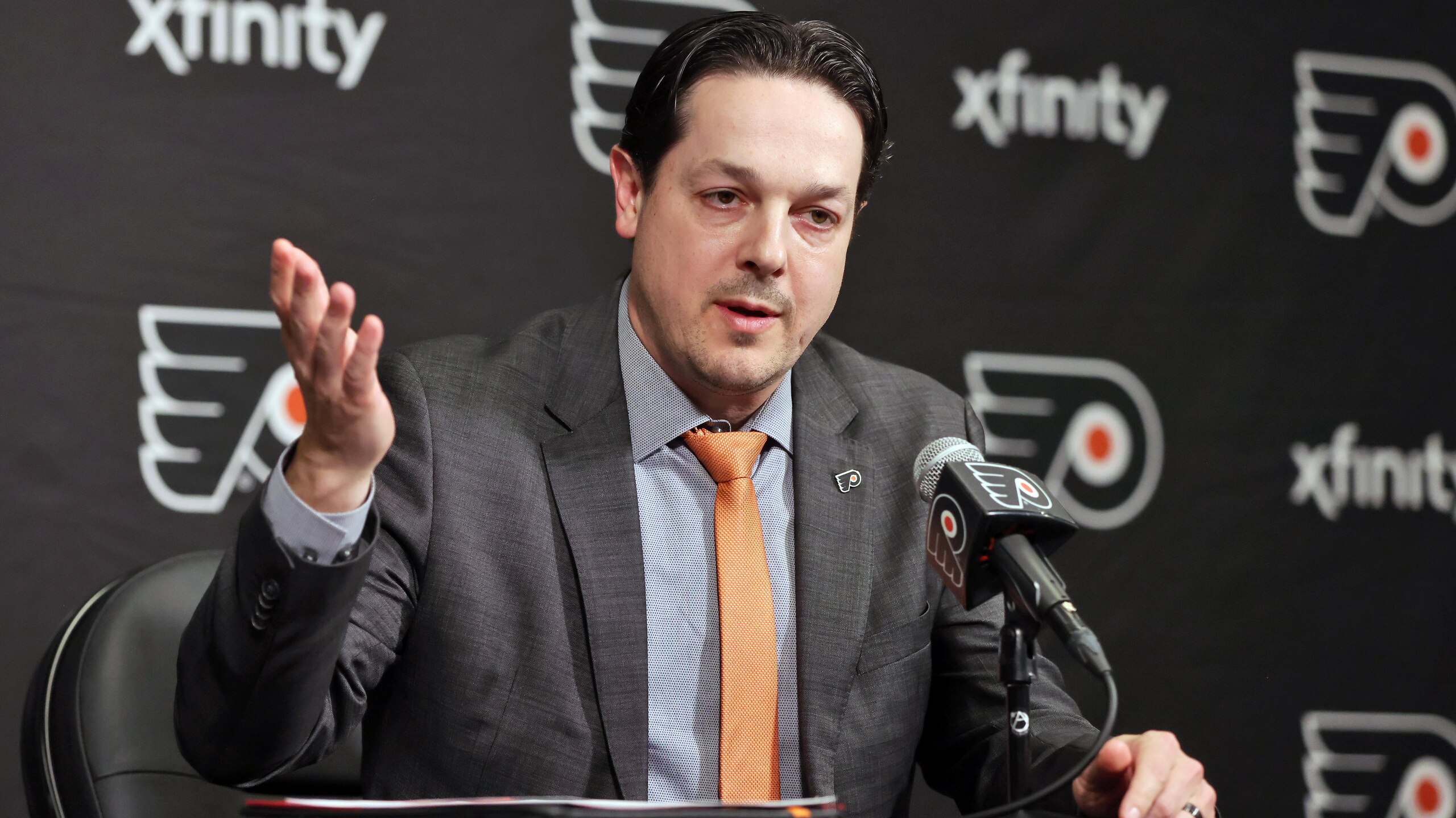
The Flyers are expected to be a big player this offseason for a few reasons. They had roughly $20 million in cap space before this trade, and most of their roster is already locked in for next season. They’re ready to move out of the rebuild phase after being competitive the last few seasons but missing the playoffs mostly due to a lack of star power. And if you were picking a team need outside of goaltending, it was a top-six center.
For all those reasons, Zegras was an obvious candidate to head to Philadelphia. The aging Sean Couturier, who's mostly a defensive specialist, and Noah Cates cannot be the top two centers on a team hoping to make the playoffs, let alone do anything beyond that. In general, the Flyers lacked any sort of creativity throughout the roster, but especially down the middle.
If Zegras brings anything, it’s creativity. The man has invented new types of goals and perfected other modern moves that other players are still trying to figure out. He's the most dynamic center in Philadelphia since Claude Giroux left in 2022.
Zegras is a great passer and an agile skater. He can beat defenders and goaltenders one-on-one, and he’ll find ways to create offense in the most innocuous moments.
However, Zegras had only 47 points in 88 regular-season games over the past two years. That’s nowhere good enough for a player who doesn’t bring much in the way of forechecking, wall play and defense. '
In that sense, the Flyers are gambling on something of a reclamation project. Can new head coach Rick Tocchet return Zegras to the uber-confident 21-year-old who embarrassed defenses and registered 65-point seasons despite the lack of talent around him?
There are reasons to believe in a revival. For one, Zegras was impacted by injuries over the last two seasons. The Ducks did not play a brand of hockey conducive to making the most of his abilities, nor did they have the talent around him necessary to contour his role to the sheltered, offense-driven shifts he’s built for. One also has to wonder if he found it hard to concentrate or self-motivate while knowing he was on a team that didn’t believe in him long-term.
Philadelphia will be a fresh start. He’ll be closer to home in Connecticut — something he’s long sought — and presumably at full health for the 2025-26 season. The Flyers will view him as a fresh breath of air, and he’ll have a chip on his shoulder, looking to prove his doubters wrong. Maybe most importantly, the Flyers can put him in positions to thrive. Couturier and Cates are meat-and-potatoes play-drivers who can take tougher assignments.
For his part, Zegras needs to become a more complete player, and Tocchet will be very demanding of him on defense. He’ll fall out of favor quickly if he doesn’t get with the program. But for the low cost of a second- and fourth-round pick plus a depth forward, the risk/reward heavily favors the Flyers here.
At worst, they cut bait on Zegras after the season when his contract expires and it will have cost them only a pair of mediocre draft picks. At best, they’ve found a top-six center for pennies on the dollar.
Grade: A
.jpg?w=2560)
-(1)_0.jpg?w=2560 "Bleacher Report")
.jpg?w=2560)
.jpg?w=2560 "Tennis Player Gets 24-Year Ban for Match Fixing (AP)")

.jpg?w=2560 "Brewers Looking To Sweep Dodgers 🧹")
.jpg?w=2560 "Jalen Hurts Out Sunday")
