
Before there was Alexis Sanchez, before there was Thierry Henry and Patrick Vieira and before there was even Arsene Wenger, there was Dennis Bergkamp.
June 20 marks the 20th anniversary of the mercurial Dutchman’s arrival at Highbury from Inter Milan, but the pre-Wenger Arsenal still seems something of a curiosity—an era that today’s young Gunners supporters can only read about or watch on YouTube.

TOP NEWS
Alexia Wins Ballon d'Or 🏆

Live Ballon d'Or Ceremony Winners 🎉

Final Men's Ballon d'Or Rankings 📊
Make no mistake, when Bergkamp arrived in north London in June 1995, Arsenal were in the midst of a crisis.
Not today’s version of a crisis, which might see them lose back-to-back games, exit the Champions League disappointingly or temporarily look as though they might not finish third or fourth in the Premier League, but a full-blown crisis.
George Graham had been sacked after he was found guilty of profiting financially from transfers, Paul Merson had only recently returned from rehab as a result of gambling, drug and alcohol problems, Nayim’s goal from near the halfway line had beaten the Gunners in the Cup Winners’ Cup Final in Paris, and Arsenal had lost 17 games on the way to finishing 12th in the Premier League, below the likes of Queens Park Rangers and Wimbledon and a massive 11 points behind Tottenham Hotspur.
Bergkamp must have questioned what he’d wandered into.
It was an Arsenal now overseen by Bruce Rioch, who had signalled his intent by tripling the club’s transfer record to sign the then-26-year-old Bergkamp for £7.5 million.
There was a less than auspicious start before the new No. 10 scored his first two goals for the club in a 4-2 win over Southampton at Highbury, a feat that led to the Independent’s Bob Houston to claim that “this was the day the doubters of Dennis Bergkamp's worth were routed.” There were never to be any doubters again.
With Bergkamp at the fore and feeding the prolific Ian Wright in attack, the Gunners rose to fifth place in the table and returned to European football, which was achieved thanks to the Dutchman’s classy winner at home to Bolton Wanderers six minutes from time on the final day of the campaign.
Had Bergkamp not scored that goal, Everton—who finished the campaign on 61 points, level with Blackburn Rovers and Tottenham—would have pipped Arsenal to a UEFA Cup place on goal difference. It may seem of little consequence now, but that immediate return to the continental stage was so important at the time.
Four months later came the arrival of the relatively unknown French coach Wenger from footballing obscurity at Nagoya Grampus Eight in Japan. The rest, as they say, is history.
It is a history Wenger has shaped but owes a lot to Bergkamp for his doing so.
As a bridge between the old, defensive, long-ball playing, “1-0 to the” Arsenal and Wenger’s sleeker continental approach, Bergkamp was in place for the arrivals of the likes of Vieira, Emmanuel Petit, Marc Overmars, Nicolas Anelka and Henry.
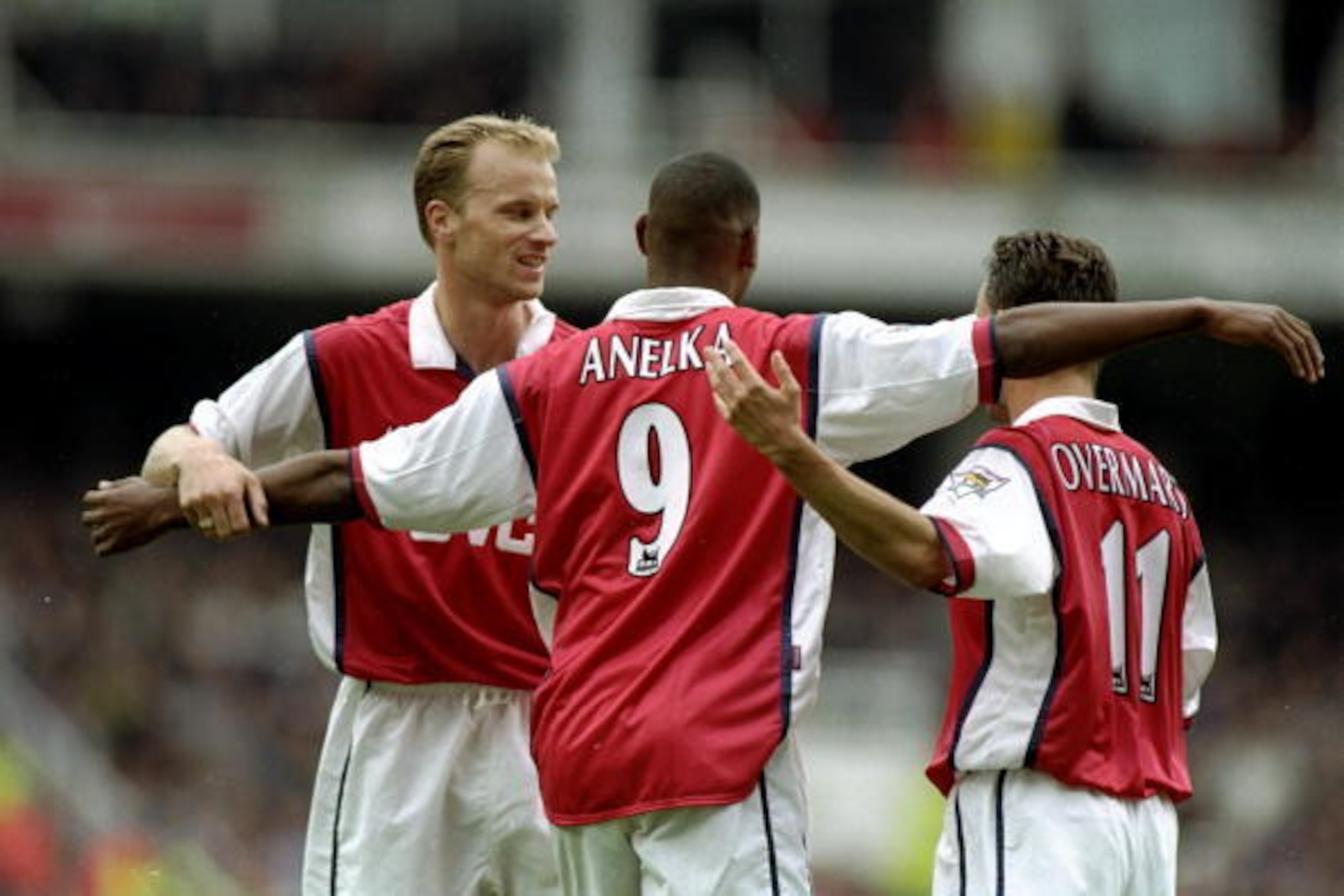
He played his part in the education of all of them and more, his obvious and genuine quality shining through during an 11-year spell in which he played 423 games, scored 120 goals and won three Premier League titles and four FA Cups.
Today, a statue of the Dutchman resides outside the Emirates Stadium. Inside it, Bergkamp’s presence is still being felt.
When Wenger arrived at Arsenal, he obviously did so with his own coaching ideas and philosophies, but the fact that Bergkamp was already at the club made it much easier for him to adapt and get his methods across.

The Dutchman was so good he could have played for any manager. This is a player who finished in the top three of Ballon d’Or voting prior to joining the Gunners and was third in the FIFA World Player of the Year vote at the end of Wenger’s first season in charge.
The Arsenal manager wasn’t being carried by his team’s star player, but his life would certainly have been a lot tougher if he wasn’t there, and he gained in confidence as the years went by and the trophies followed suit.
There is also an elegance to Wenger’s teams that, again, Bergkamp helped to create.
Wenger’s Arsenal have always had fast players, such as Overmars, Anelka, Henry, Theo Walcott and Alexis Sanchez, but they have also always had thinkers in the team, such as Robert Pires, Cesc Fabregas, Tomas Rosicky, Santi Cazorla and Mesut Ozil—perhaps the closest thing to Bergkamp the Gunners currently have, especially if he could improve his scoring rate.
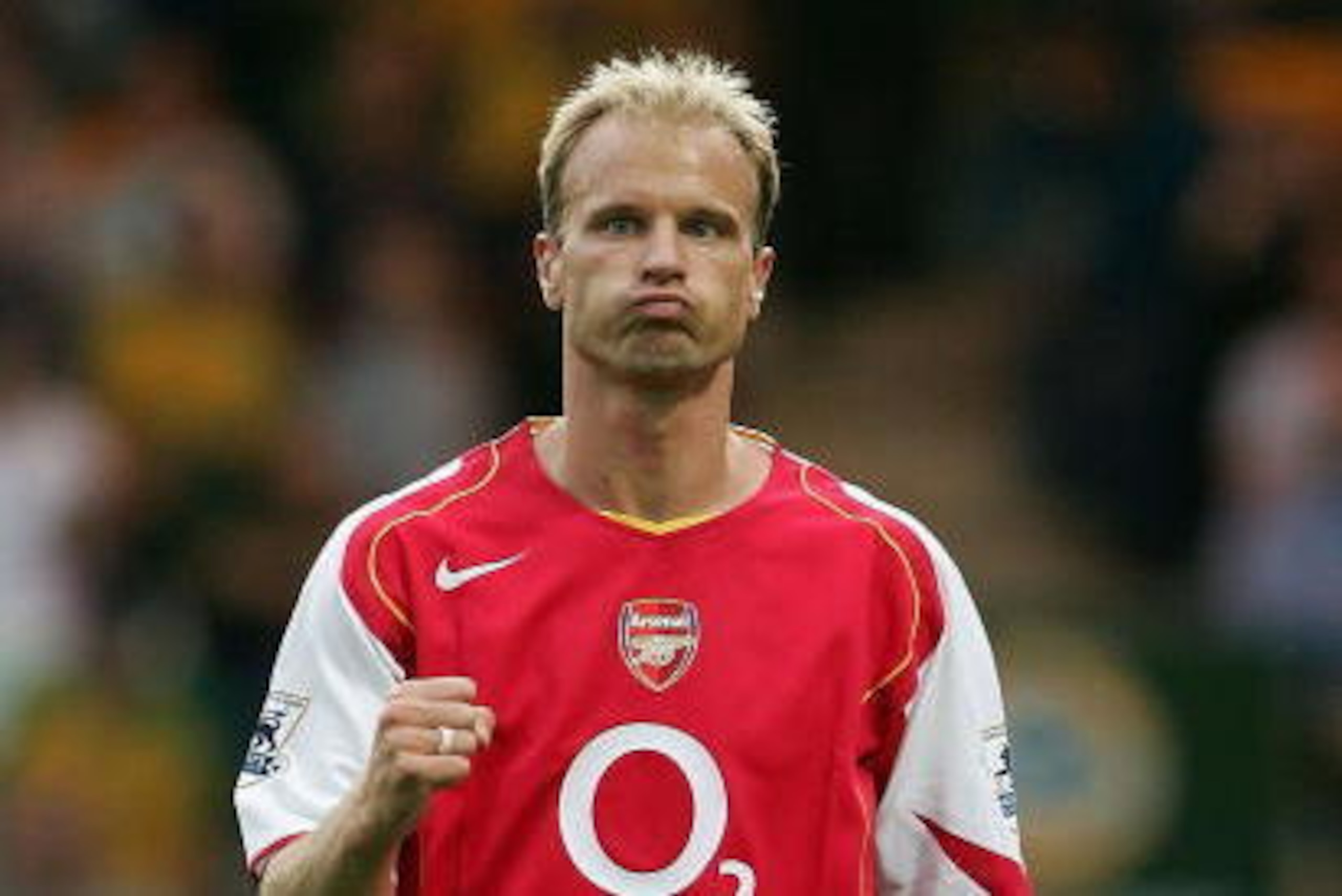
Doing things with style was always the Dutchman’s way, and that seems to have become the Arsenal ethos during Wenger’s 18 years in charge.
It doesn’t always end with success—and there always seemed to be a European player or two more highly regarded than Bergkamp—but it ensures the Gunners will remain forever watchable, just like their £7.5 million signing from Inter Milan was in his heyday.
.jpg?w=2560 "Chiefs, Steelers Eye WR Trades")
.jpg?w=2560 "WWE Raw Live Grades 🔠")


.jpg?w=2560 "Cowboys Handle Eagles on MNF 🤠")

.jpg?w=2560 "🚨Jay-Z Headlining Super Bowl")