
49ers: Full Position Breakdown and Depth-Chart Analysis at Running Back
From what I have seen during OTAs and minicamp, the San Francisco 49ers’ running game is completely different than last season.
First difference: The blocking scheme. Last season, they used a gap-blocking scheme, and the bread-and-butter running plays were “Power” and “Counter.” This year, they seem to be using a zone-blocking scheme, and the bread-and-butter running plays are stretch runs to the outside and read-option plays up the middle.
Second difference: The blockers. Two of the Niners’ strongest and slowest run-blockers the past five seasons, guard Mike Iupati (6'5", 331 lbs) and tackle Anthony Davis (6'5", 323 lbs), are gone. Their replacements are guard Brandon Thomas (6'3", 317 lbs) and tackle Erik Pears (6'8", 316 lbs)—faster offensive linemen who can execute zone-blocking plays.
Final difference: The starting running back. From 2006 to last season, the starter was Frank Gore. Now, he’s starting for the Indianapolis Colts, and Carlos Hyde is starting for the Niners. The Niners’ depth chart at running back has changed significantly from last season.
Here is a complete breakdown of the 49ers’ running back depth chart.
5. Jarryd Hayne
1 of 5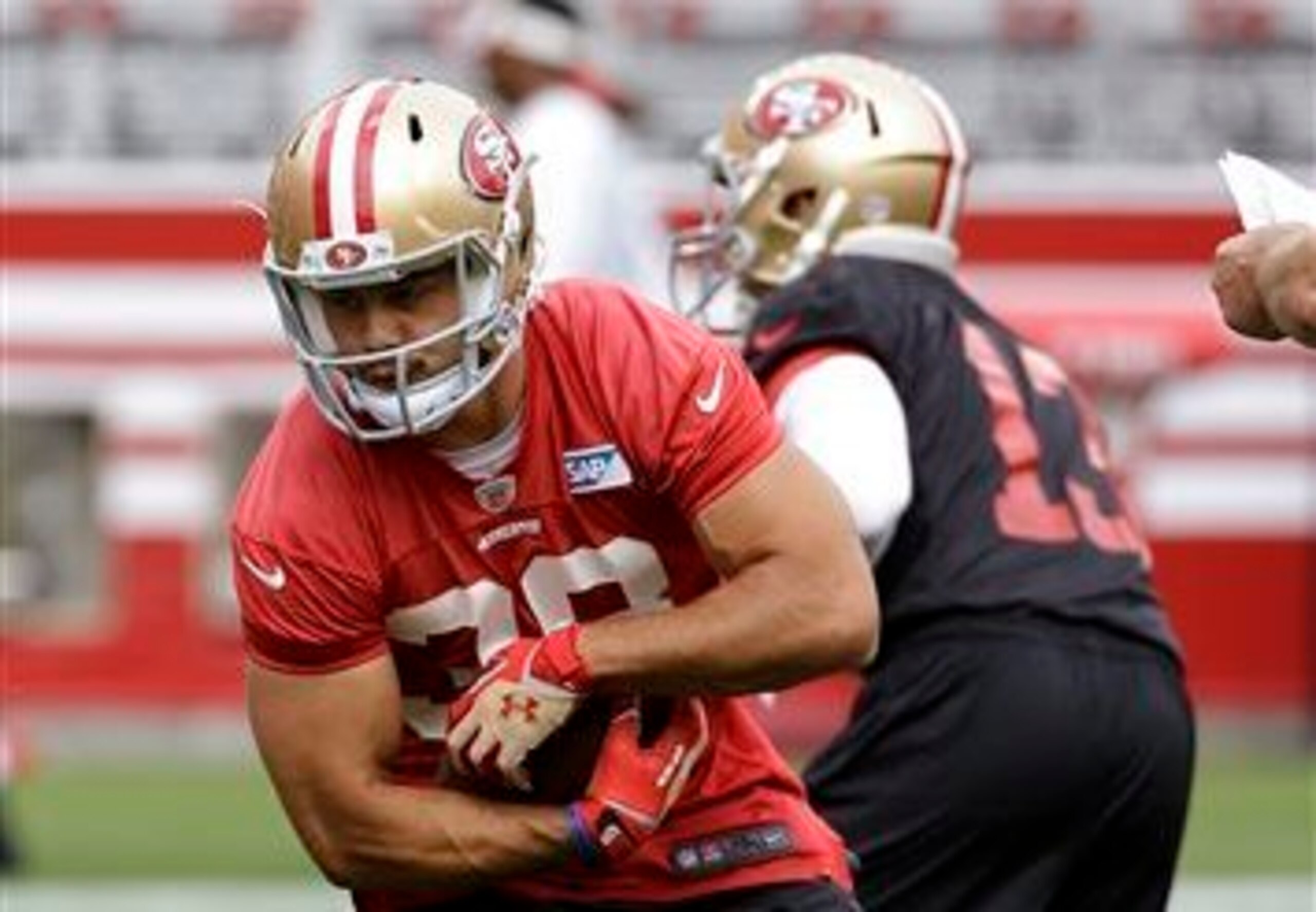
Twenty-seven-year-old former Rugby League star Jarryd Hayne is trying to make the 49ers roster as a running back and a returner.
According to Matt Maiocco of CSNBayArea.com, Hayne has to make the team as a returner to make the team at all. “At this point, it’s unreasonable to think he can make the team solely as a running back,” writes Maiocco. “Hayne runs too upright to succeed as an NFL running back.”
Maiocco brings up a fair point—pad level typically is key for a running back. Frank Gore had superb pad level, practically crawling through holes. He is one of the best in the NFL at making himself smaller than he really is.
Hayne doesn’t seem to have that skill, but he might not need it. The 49ers seem to be transitioning to a zone-blocking scheme. Pad level is less important with zone blocking than it is with gap blocking. Frank Gore played in a gap-blocking system on the Niners.
Plenty of upright runners succeed with zone blocking. Arian Foster of the Houston Texans is just one example. No one expected him to be a great player. He went undrafted in 2009.
Might Hayne be the next Arian Foster? We’ll find out during preseason when Hayne puts on pads for the first time.
4. Mike Davis
2 of 5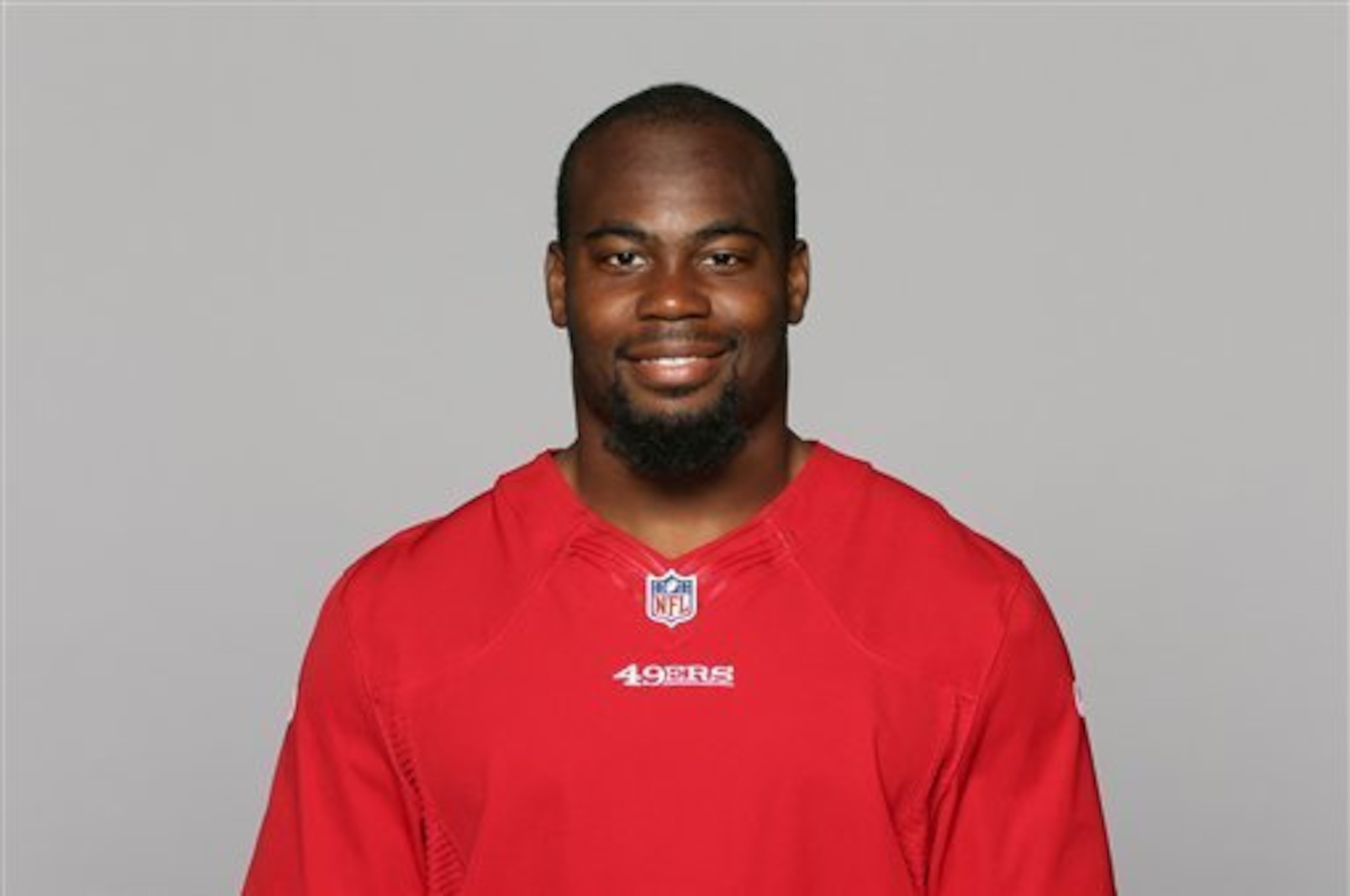
The 49ers spent a fourth-round draft pick on Mike Davis this season. I assume he will work his way past Hayne on the depth chart eventually.
But Hayne has taken more reps with the first-team offense than Davis has so far during OTAs. Davis mostly has worked with the second-team offense and the other rookies.
One thing already is clear—Davis runs low. He has terrific pad level, unlike Hayne. Davis actually looks a bit like Gore on the field, although he can’t smoothly string together cuts one after the other like Gore can. Gore looks like a downhill slalom skier when he zigzags through defenses.
Davis probably won’t carry the ball much next season, but he can earn playing time on third down if he shows he can block and catch passes. He seems to have good hands, but he hasn’t been able to block yet—no collisions until training camp.
3. Kendall Hunter
3 of 5
Hunter probably won't be the 49ers’ No. 2 running back next season, but he might carry the ball more than any Niners running back not named Carlos Hyde. Let me explain.
Reggie Bush probably will be the No. 2 running back and play more frequently than Hunter. The former Detroit Lion is the best receiver of the Niners’ running backs, and San Francisco's new coaching staff seems to be emphasizing passes to running backs. Bush might be the Niners’ third- or fourth-leading receiver next season.
But Hunter is a better running back than Bush. He is averaging 4.6 yards per carry in his career, and he’s only 26. Bush is 30 and is averaging 4.3 yards per carry during his career. Last season, he averaged only 3.9 yards per carry.
When the 49ers want to run the ball next season and Hyde needs a breather, I anticipate Hunter taking his place more often than Bush.
.jpg?w=2560 "Seahawks Chiefs Football")


2. Reggie Bush
4 of 5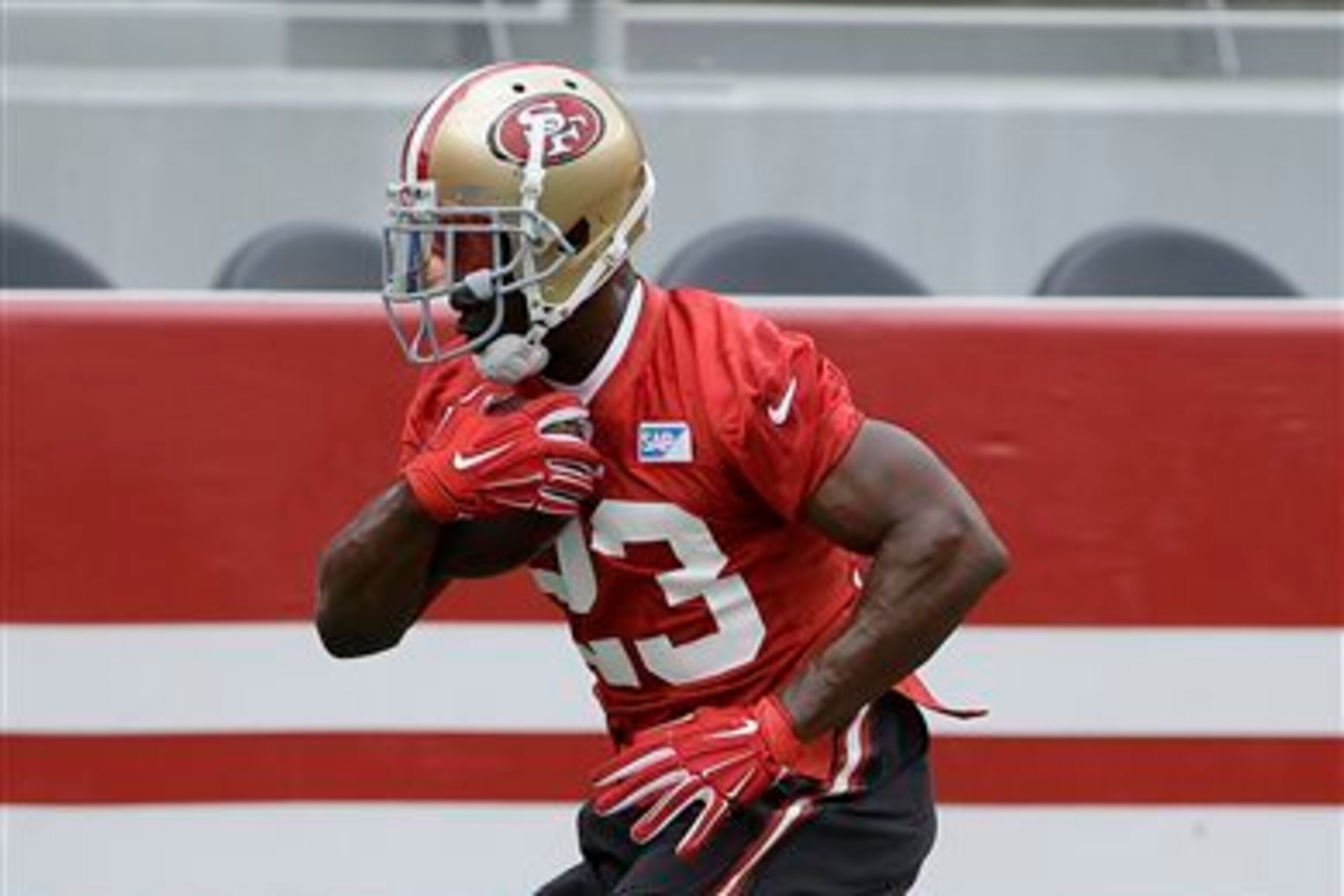
That being said, I expect Reggie Bush will be a much more important member of the offense than Hunter next season.
The swing pass to Bush seems like it will be a staple of the 49ers offense this year. Passes to running backs were a rare occurrence under the previous coaching staff, which is one reason why Colin Kaepernick’s completion percentage has been among the league’s lowest. He was throwing difficult downfield passes more frequently.
The more the 49ers call short pass plays for Bush next season, the better Kaepernick’s completion percentage will be. Bush will make Kaepernick’s life easier, and he will make life difficult for the Seattle Seahawks defense, which struggles to cover quick running backs like Bush.
1. Carlos Hyde
5 of 5
So far during OTAs, the 49ers offense has looked quite similar to the offense the Washington Redskins ran under Mike Shanahan—zone blocking and lots of read-option and play-action bootleg passes.
That system is friendly to running backs. Alfred Morris rushed 335 times for 1,613 yards (4.8 per carry) and 13 touchdowns his first season with the Redskins. He was a rookie.
Hyde is more talented than Morris. He was a second-round pick in 2014; Morris was a sixth-round pick in 2012.
If the 49ers use Hyde the way the Redskins used Morris, expect Hyde to carry the ball more than 300 times next season. And even with such a heavy workload, Hyde has the talent to average 5.0 yards per carry. He might lead the NFL in rushing yards next season.