
On UFC Broadcasts, What They Don't Tell Us Is Often as Important as What They Do
Reviews are in for UFC 187, and they are nearly unanimous.
This was the best night of fights MMA fans have seen in a long, long time.
From Daniel Cormier's winning the light heavyweight championship to Chris Weidman's holding serve against Vitor Belfort, the evening’s dueling main events put an exclamation point on that rare pay-per-view worth more than its $60 asking price. With stellar individual performances from supporting actors Donald Cerrone and Andrei Arlovski, the event’s three-hour main card rarely dragged.
TOP NEWS
Volkanovski breaks record after title win at UFC 333
Fights to Make After UFC 333 ➡️
🚨 UFC 336 Fights Announced
To top it off, several of the bouts came preloaded with thought-provoking and relevant out-of-the-cage storylines.
There was Belfort's return after he took 18 months off to ditch his controversial testosterone replacement therapy regimen. There was Anthony Johnson's vying for a title despite past domestic violence issues. There was the fact that Cormier and Johnson were only even fighting because Jon Jones had been stripped of the championship following an alleged hit-and-run accident.
There was—to put it mildly—a lot going on.
Unfortunately, if you didn’t already know about some of these important topics, you might have missed them completely on Saturday night. The official broadcast team certainly didn’t want to talk about them.

This is nothing new, obviously. Oftentimes, what UFC broadcasts don’t tell us is just as important as what they do. These aren’t regular sports telecasts, after all; they’re carefully planned corporate infomercials in which the messages are meticulously groomed and tightly controlled.
Bad news is so often swept to the side that if you’ve been watching UFC events for years, you probably don’t even notice anymore. You just innately understand that to get the whole story, you have to read between the lines. Or at least read a website.
Perhaps this weekend’s event only felt jarring because there was so much to ignore.
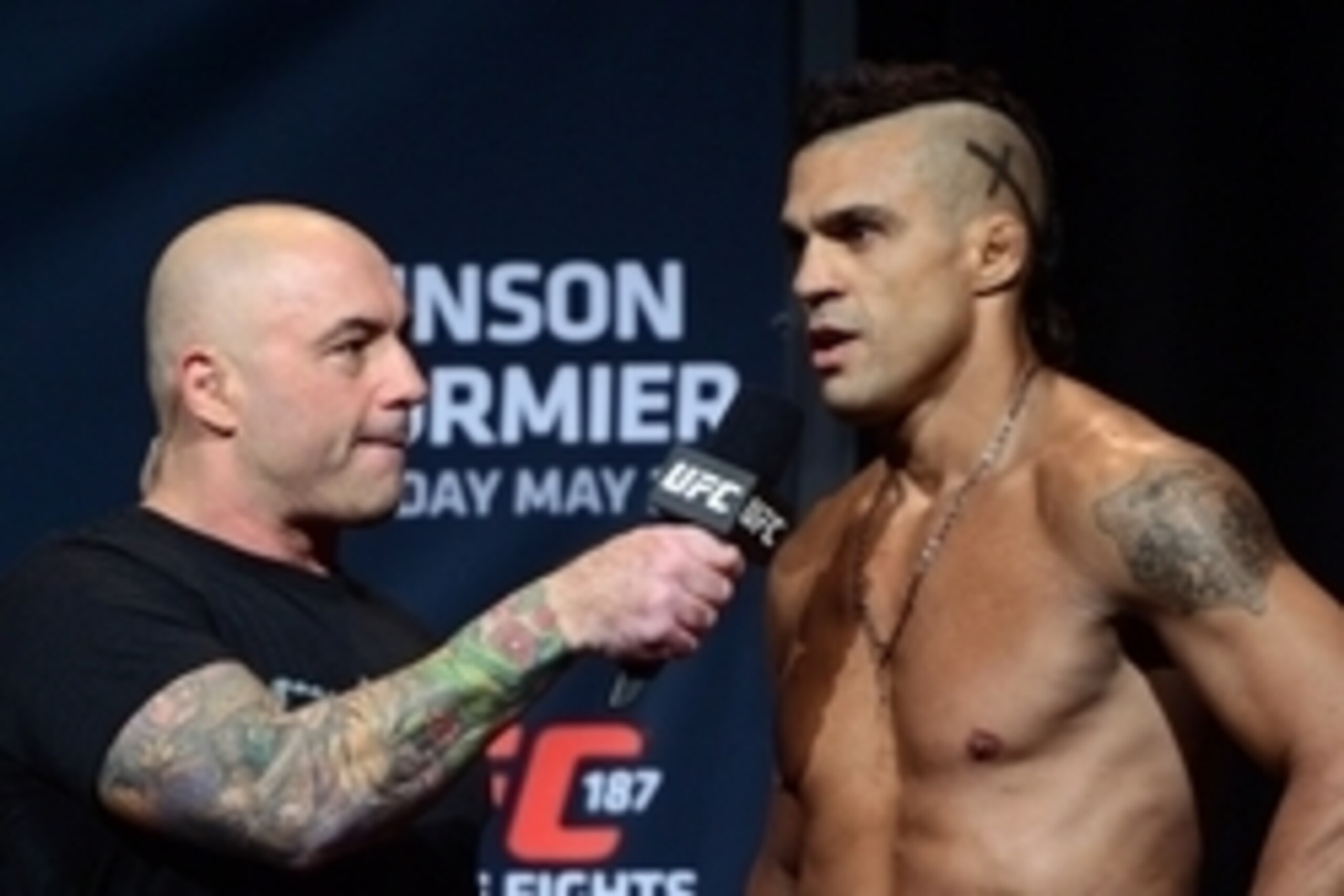
Play-by-play man Mike Goldberg and color commentator Joe Rogan did their normal duty, carrying the audience through an 11-fight card without once really engaging with arguably the three biggest stories of the night.
Belfort's fighting for the first time in three years without TRT? Ignored it.

That spate of news stories re-examining Johnson’s checkered past? Ignored it.
Cormier and Johnson only meeting for the title because Jon Jones was recently given the boot? Well, they couldn’t completely ignore that one, but the UFC seemed to do its very best to keep it at arm’s length.
Just before the UFC 187 main event, producers aired a short video package highlighting the Jones situation, but nobody ever actually uttered the words “felony charges” or “hit and run.”
At least not out loud.
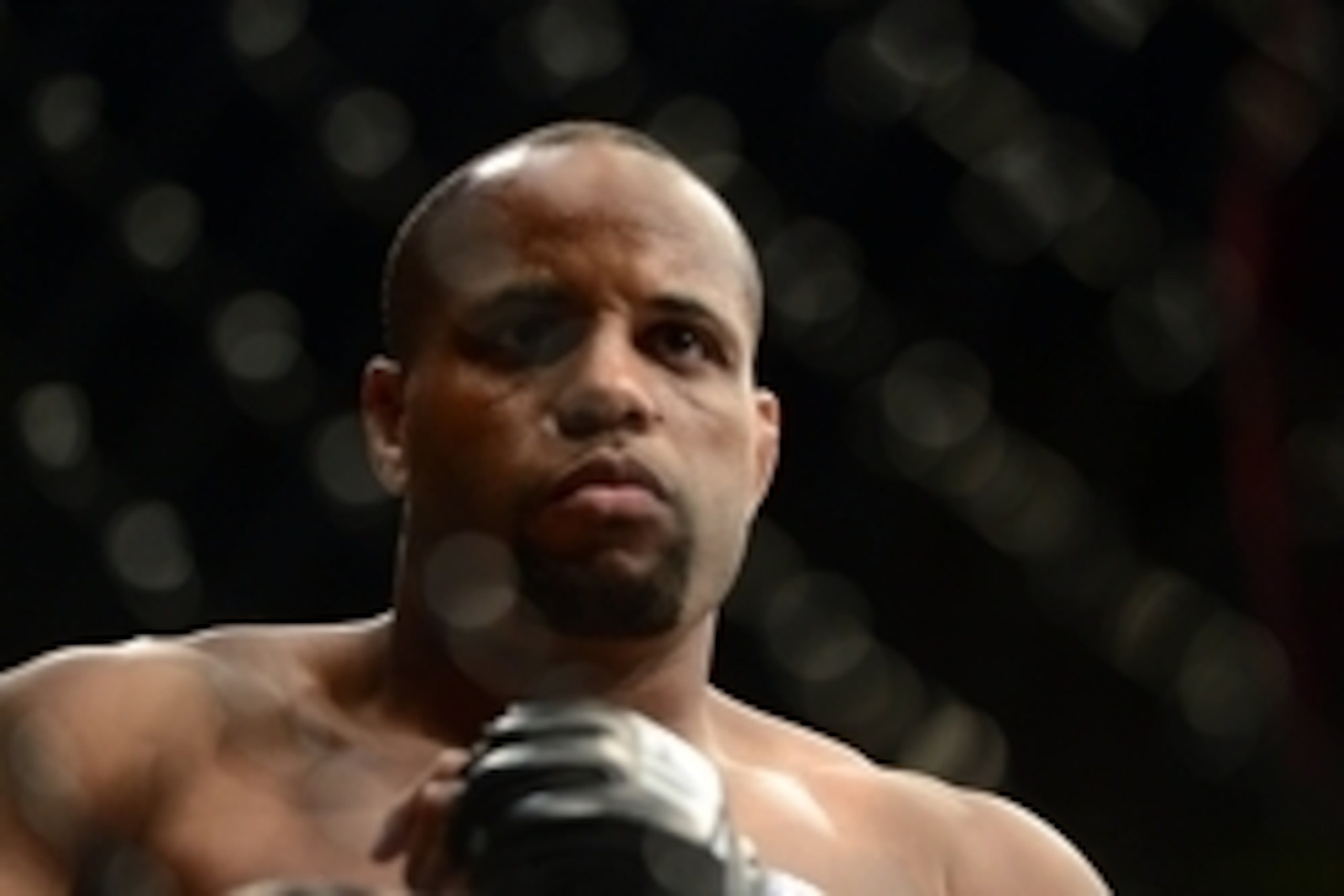
Instead, they noted we were about to crown a new titlist at 205 pounds for the first time since 2011. They spoke of Cormier’s recent loss to the champion and referred to Jones as being “on the sidelines” or “on hiatus.” Nobody mentioned the pregnant woman with a broken arm, the marijuana reportedly found in Jones’ vehicle or eyewitness accounts saying he ran away from the wreck before briefly dashing back to grab a large wad of cash.
Of anyone, Cormier came the closest to actually putting his finger on it. After he’d defeated Johnson by third-round submission, he seized the microphone from Rogan and declared: “Jon Jones, get your s--t together! I’m waiting for you!”
If you’d been paying attention to the UFC news cycle, no explanation of Cormier’s words was needed. If you hadn’t, none was offered.
Again, all this merely amounted to business as usual. The UFC’s announcers work for the fight company, so there has never been any expectation that they will say anything other than exactly what the UFC wants us to hear.
Perhaps fans don’t even want to be bothered with pesky details like what happened to the light heavyweight champion. Perhaps they don’t care why Belfort suddenly showed up on their TV screens looking like a three-day-old balloon. Maybe they just want to plunk down their money and spend a few worry-free hours watching the fights.
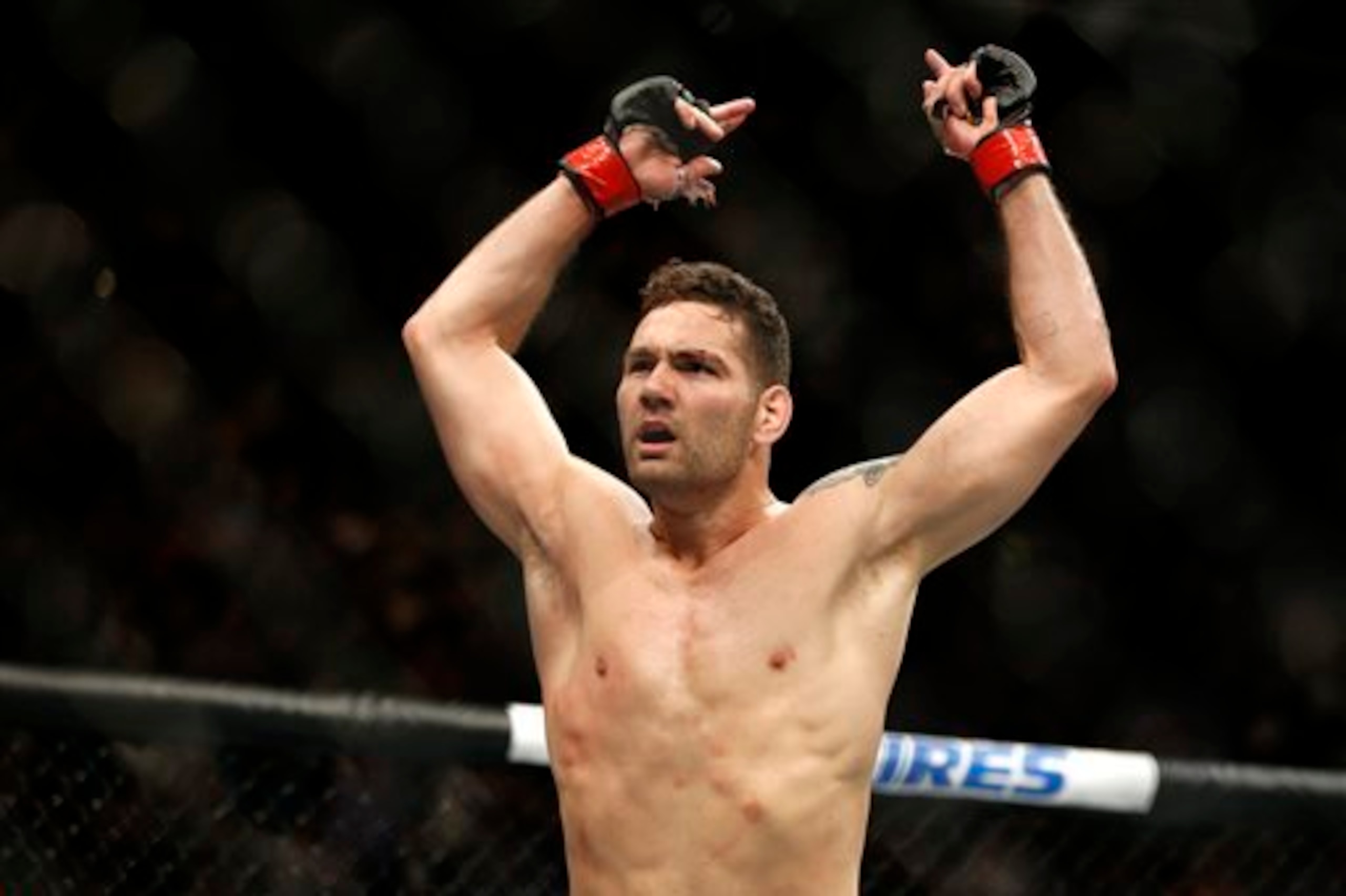
But for hardcore MMA fans, it was hard to ignore the fact that this version of UFC 187 only existed because of these storylines. Johnson and Cormier were only fighting for the title because the UFC told Jones he couldn’t. Weidman and Belfort were only there because three previous efforts to get them in the cage together had failed—twice due to injury, but once because Belfort was pulled out for drug-related reasons.
Largely pretending those narratives didn’t exist made the whole event seem like one big lie of omission.
You can almost cut the UFC some slack for not meeting Johnson’s legal issues head-on or for putting the Jones story on the backburner in order to focus on the two guys actually fighting that night. Neither of those stories directly affected what fans were seeing in the cage.
The drama surrounding Belfort, however, was a different thing entirely.

Clearly, after his long, well-publicized dalliance with TRT, the sudden absence of the controversial hormone treatments changed everything for The Phenom. He showed up at UFC 187 physically depleted, looking not at all like the muscle-bound beast who crafted three consecutive head-kick knockouts during 2013.
As the UFC broadcast team repeatedly marveled at his longevity—literally counting the days since Belfort’s UFC debut in 1997 and reminding us that recently he’d looked even more dangerous than in his 19-year-old salad days—it actually felt like they were mocking us.
“I can’t believe about 20 years ago, you and I were talking about Vitor Belfort,” Goldberg said to open the main card. “We’re still doing it tonight.”

“There’s no one like him,” Rogan replied. “There’s no one from that era that is not only competitive today but fighting for the title in a really high-profile fight. Vitor Belfort is coming off three of the most spectacular victories of his career 20 years into the game.”
All of this discussion went down without a hint of irony, of course.
Goldberg and Rogan never mentioned Belfort’s positive test for elevated levels of testosterone from February 2014. They never noted that 20 days after that failed test the Nevada State Athletic Commission suddenly banned TRT from competition.
They never pointed out the striking physical differences between the Belfort who showed up to fight Weidman and the dangerous maniac on the highlight reels, even as they aired them.
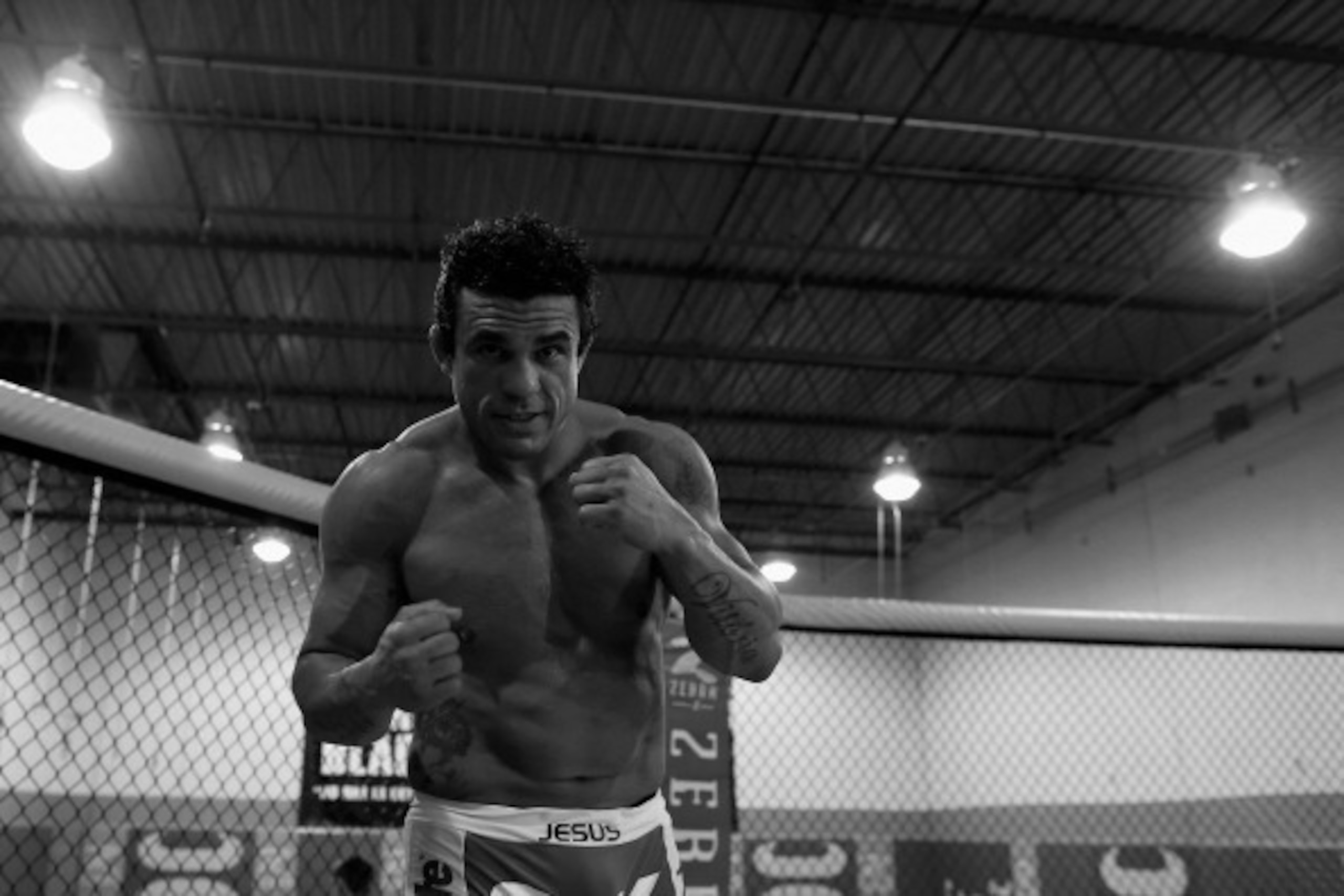
Had Belfort lost all that muscle mass as a result of an illness or some terrible accident—like the motorcycle wreck that knocked former heavyweight champion Frank Mir out of competition back in 2004, for example—it would have been a major topic of conversation. Yet on this night we were tacitly asked not to make an issue of Belfort’s stunning physical transformation.
They couldn’t stop people from thinking it, though. When the UFC posted the results of its “fan pick ’em poll” prior to the middleweight title fight, it revealed that 75 percent of spectators tabbed Weidman to win. Certainly, those numbers wouldn’t have been nearly as lopsided if anyone thought the “most spectacular” incarnation of Belfort was going to show up that night.
But we didn’t expect that guy, and he didn’t show. Weidman crushed Belfort by first-round TKO, and then we all moved on—another chapter of MMA history closed without so much as a wink and a nod.

And look: We know why the company does this. It’s trying to sell us stuff. It’s trying to pocket our money and keep us all coming back for more. UFC PPVs are more sales pitches than news reports. This is a reality we perfectly understand, even if it occasionally feels like a slap in the face to people who know what’s going on behind the scenes.
The weirdest part, maybe, is that we all know they’re doing it. We show up to a UFC event expecting a certain amount of spin. We know we’re getting the company’s perspective rather than the unadulterated truth. We’ve decided that we can put up with it because that’s the way things have always been and, really, what are we going to do about it?
You have to reimagine our sport’s entire history to dream up an MMA universe where fight promoters actually treat us like adults.
But that’s weird, right? It’s strange to know that and—what’s more—to be OK with it.

At this strange juncture in our sport, it seems fitting to wonder: What if the UFC just told us the truth? Would that really be so bad?
Would it really harm the product if it chose to take on Belfort’s TRT use in a responsible and realistic way? What if the UFC just came out and told us Belfort had opted to use a controversial medical treatment that not everyone approved of, one which the NSAC later decided couldn’t properly be policed? That he’d been very good while he was on the stuff, but now nobody was sure exactly what was going to happen to him?
As a fanbase, we could handle that...couldn’t we?
Would it change anyone’s mind about Belfort? Would it make more people cheer for Weidman? Would it make us all so disgusted that we switch off our TVs and leave MMA forever?
Doubt it.
Smart money says it wouldn’t matter much at all.
Even if it did make for some uncomfortable moments—life is complicated, you guys. Weird stuff happens, and you have to decide how you feel about it—at least we wouldn’t have to pretend we didn’t notice.

.jpg?w=2560 "Raiders Could Start Mendoza")



.jpg?w=2560 "Rodgers Iced Out on Plane 💎")
.jpg?w=2560 "🚨 Week 8 AP Top 25 Poll")
.jpg?w=2560 "Packers Safety Slams Refs 🤬")