The Memphis Blueprint for Rebuilding a College Football Team
A team that won a total of 10 games over the course of four lifeless, talent-deprived seasons matched that number in less than four months in 2014.
After a flood of offense, a gravity-defying 54-yard game-tying field goal in overtime, a game-winning interception in double overtime and a wild postgame fracas unlike any in recent history, Memphis did more than conquer BYU in the Miami Beach Bowl.
It emerged from program purgatory.

_0.png?w=2560)
Between 2010 and 2013, the Tigers were outscored by 305 points. They were the poster child of a dysfunctional program. They were hopeless and helpless. In 2014, thanks to one of the nation’s premier defenses and a flurry of touchdowns at the season’s conclusion, they flipped the script entirely.
This was no fluke. By taking various steps—headlined by finding the ideal head coach (and staff) poised for the makeover—Memphis broke through. It was unexpected, but it was by design.
As a result, it is now the blueprint for countless others to follow.
The Rise, Fall and Rise of Memphis Football
Dave Woloshin remembers rock bottom. He remembers narrating the week-to-week ineptitude of one of the worst programs in college football, a stretch in which Memphis won five games over the course of three seasons.
“I would sit through the first quarter and start using every note that I had for the broadcast,” Woloshin, the radio voice of the Tigers, said. “By the second quarter, it was already fill time.”
Since 1986, Woloshin has helped relay Memphis athletics to the masses. He has worked on television and radio, watching the football program undergo various makeovers.
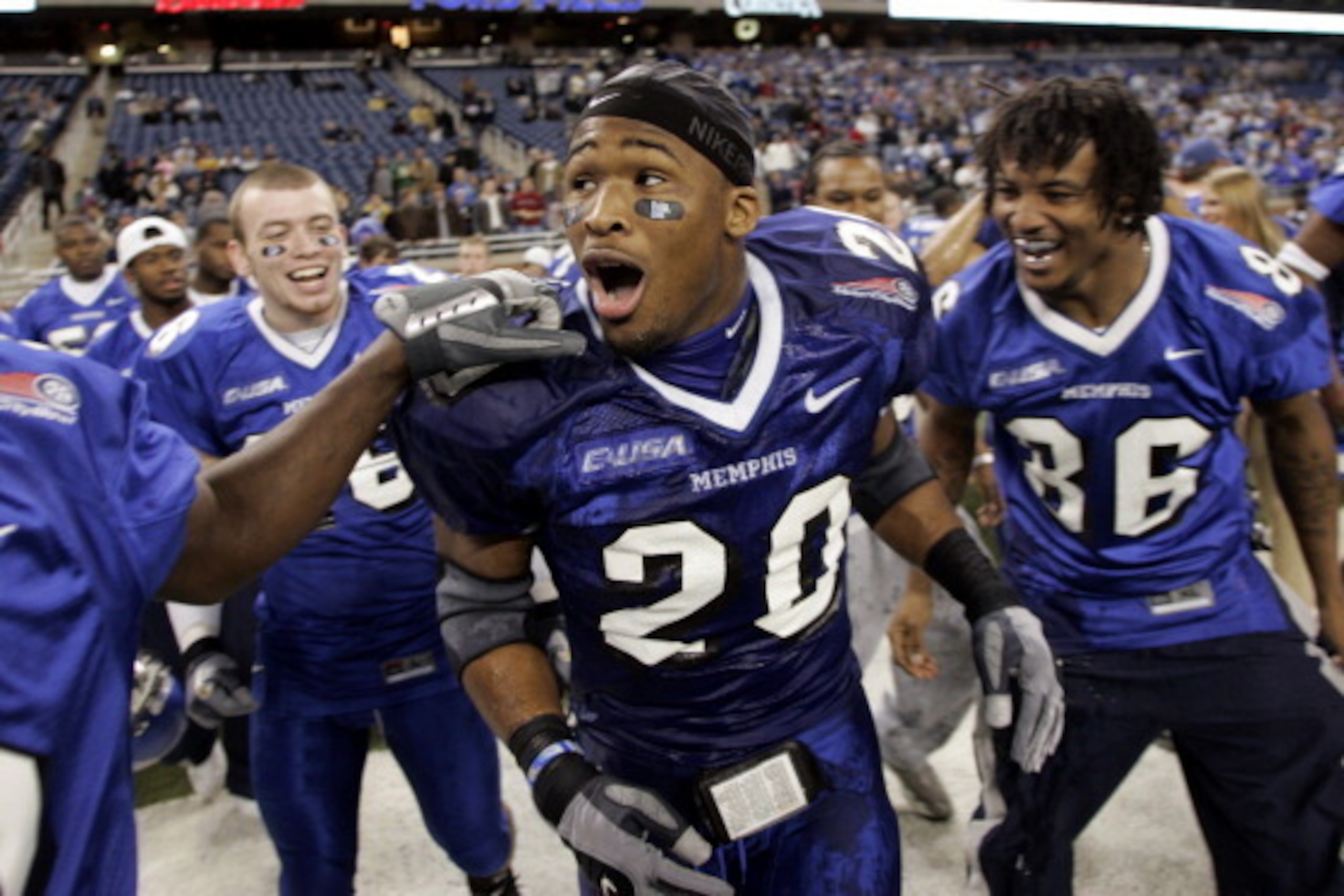
As bad as it was, Woloshin recalls some program highs—like when his friend, former Memphis coach Tommy West, guided the Tigers to new heights and national respect with the helping hand of the magnificent DeAngelo Williams, one of the best collegiate running backs of our time.
After putting the program on the map in the early 2000s, however, West couldn’t sustain the expectations he helped create. In 2009, after a two-win season, West was relieved of his duties as head coach.
Before he exited, West delivered a memorable, uncensored press conference that highlighted the obstacles hindering the program. This was not rock bottom, although it was close.
Larry Porter, the coach tabbed to follow West’s footsteps, left his station as running backs coach at LSU to lead a different set of Tigers. He lasted two seasons, winning just three games.
“It was sad,” Woloshin said. “Memphis had proven that the town could get turned on by football. We were getting 40,000 to games not long before this.”
Interest plummeted. Hope vanished. Fans who were on the fence about supporting the program—something West had touched on during his departure—removed themselves from the picture entirely.
“The Tigers announced a crowd of 14,992 on Saturday,” The Commercial Appeal’s Geoff Calkins wrote after a loss to Central Florida in late November of 2010. “If there were more than 4,000 in the place, I'm DeAngelo Willams.”
This was rock bottom. This was the most unwatchable team in the nation now looking for another head coach after only two seasons.
After dabbling with the possibility of hiring Jim McElwain—Florida’s most recent hire—Memphis settled on an unproven offensive coordinator in his mid-30s.
Justin Fuente was lured away from TCU and was named the Memphis head coach in 2012. Untested and unknown, Fuente was handed an impossible program with no expectations to speak of.
And then, his team hit the field.
“The very first practice I ever went to, I knew we had something,” Woloshin said. “I saw that and said that this guy was different.”
He was.
On Monday, Fuente led Memphis past BYU 55-48. This was the Tigers’ first bowl win since 2005 and their first 10-win season since 1938. He did so with a new five-year contract that will pay him $1.4 million in the first year and escalate throughout, according to Pete Thamel of Sports Illustrated.
From 3-9 to 10-3 in one calendar year—with two of the three losses against UCLA and Ole Miss, two Top 12 teams at the time—Fuente has brought the program back from the dead.
Along the way, he left a trail to follow.
Step One: Find Your Template
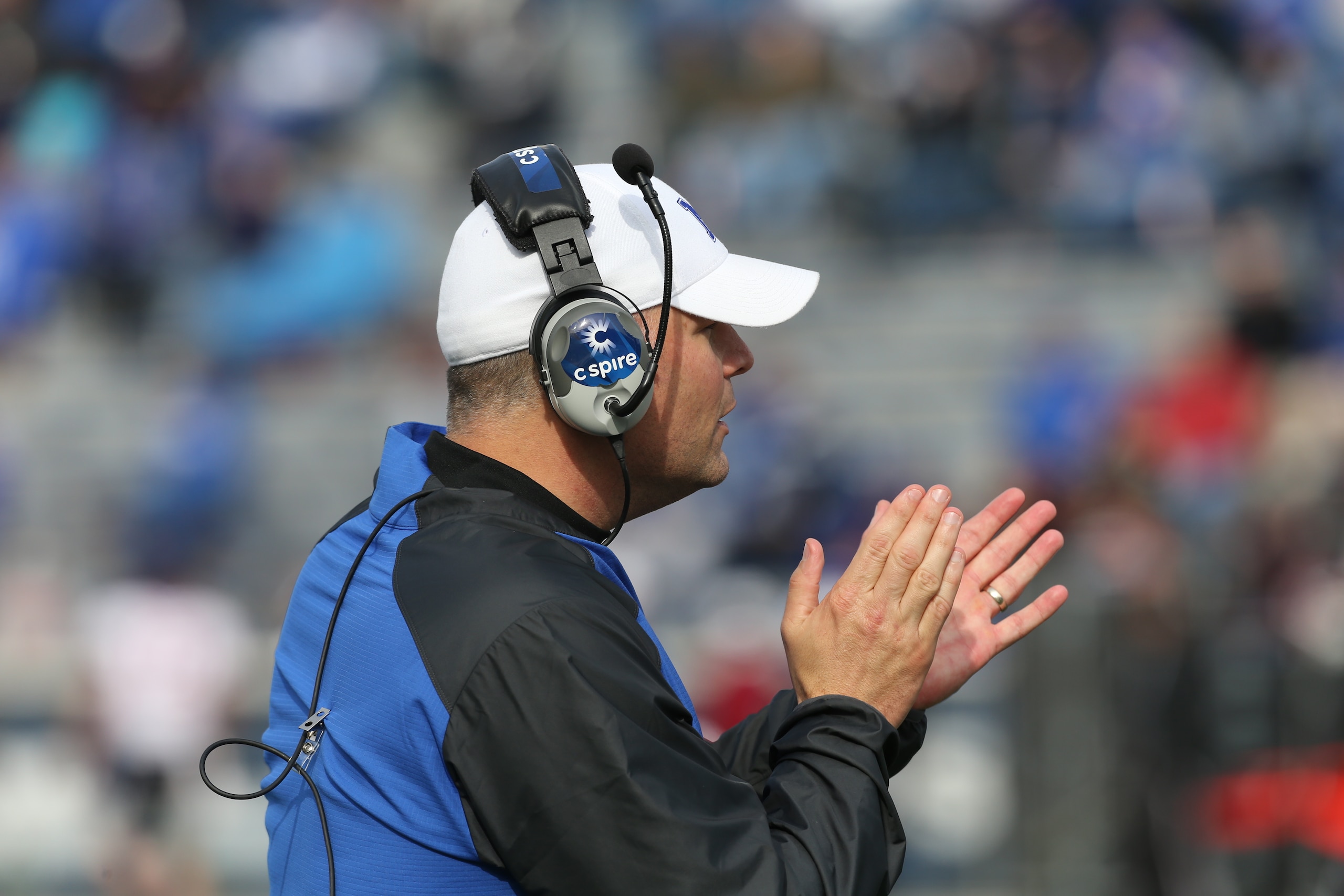
All rebuild efforts have to start somewhere. For Memphis, it began in Fort Worth.
Before Fuente could implement his program foundation, he first had to take the job and abandon his post as co-offensive coordinator at TCU. Given everything the Tigers’ program had been through in recent years, this was a decision that took some massaging.
“I thought long and hard about it,” Fuente told Bleacher Report. “I went into it with my eyes wide open, and I knew it hasn’t been a healthy situation. But I also knew it wasn’t that long ago that they had success.”

Ultimately, he decided to take the leap of faith. Fuente alerted TCU head coach Gary Patterson that he was leaving and received Patterson’s blessing as he packed up the U-Haul. He arrived at TCU still fresh, with some experience at Illinois State to draw from. He left with a wealth of knowledge on how to run a program.
Fuente didn’t dive into this endeavor by his lonesome. He leaned on the advice and direction of former Tulsa head coach Bill Blankenship—who just so happened to be his coach back at Union High School in Oklahoma, where Fuente was a star quarterback—and Patterson, who Fuente studied intently at TCU.
“I’m not sure either one had specific knowledge of this job as much as specific knowledge of how to go about building a program,” Fuente said. “We had a system that worked. To me, that was something you could hold on to. That was a constant for me.”
Fuente came from a place that went 55-10 in his time at the program—including 36-3 during his final three seasons.
Why wouldn’t he bring these proven philosophies with him?
| Years | School | Position(s) | Record |
| 2001-2006 | Illinois State | QB Coach, Offensive Coordinator | 34-34 |
| 2007-2011 | TCU | RB Coach, Co-Offensive Coordinator | 55-10 |
| 2012-Present | Memphis | Head Coach | 17-20 |
“I had a great relationship with Gary Patterson when I worked for him, and I wanted to take everything we did program-wise from there and put it here,” Fuente said. “I’m not talking about the eight-man front or the way we ran the offense. I’m talking about the way we practiced and the way we ran our offseason.”
From a structural standpoint, Fuente shocked the system by channeling enormous influence from one of the nation’s most successful head coaches. On a more individual level, he also brought with him the mentality his mentor displayed during the week-to-week grind.
“Gary’s drive fascinated me,” Fuente said. “His ability to put aside a victory and immediately turn his focus toward the next opponent was uncanny. He was completely dialed in on the opponent throughout the entire week, and that was fascinating on a personal level.”
This year, Fuente was named one of eight finalists for the Eddie Robinson Coach of the Year Award. Joining him in this honor were Nick Saban, Urban Meyer, Jimbo Fisher, Mark Helfrich, Art Briles, Bryan Harsin and the eventual winner, Gary Patterson.
Step Two: Work Your A** Off
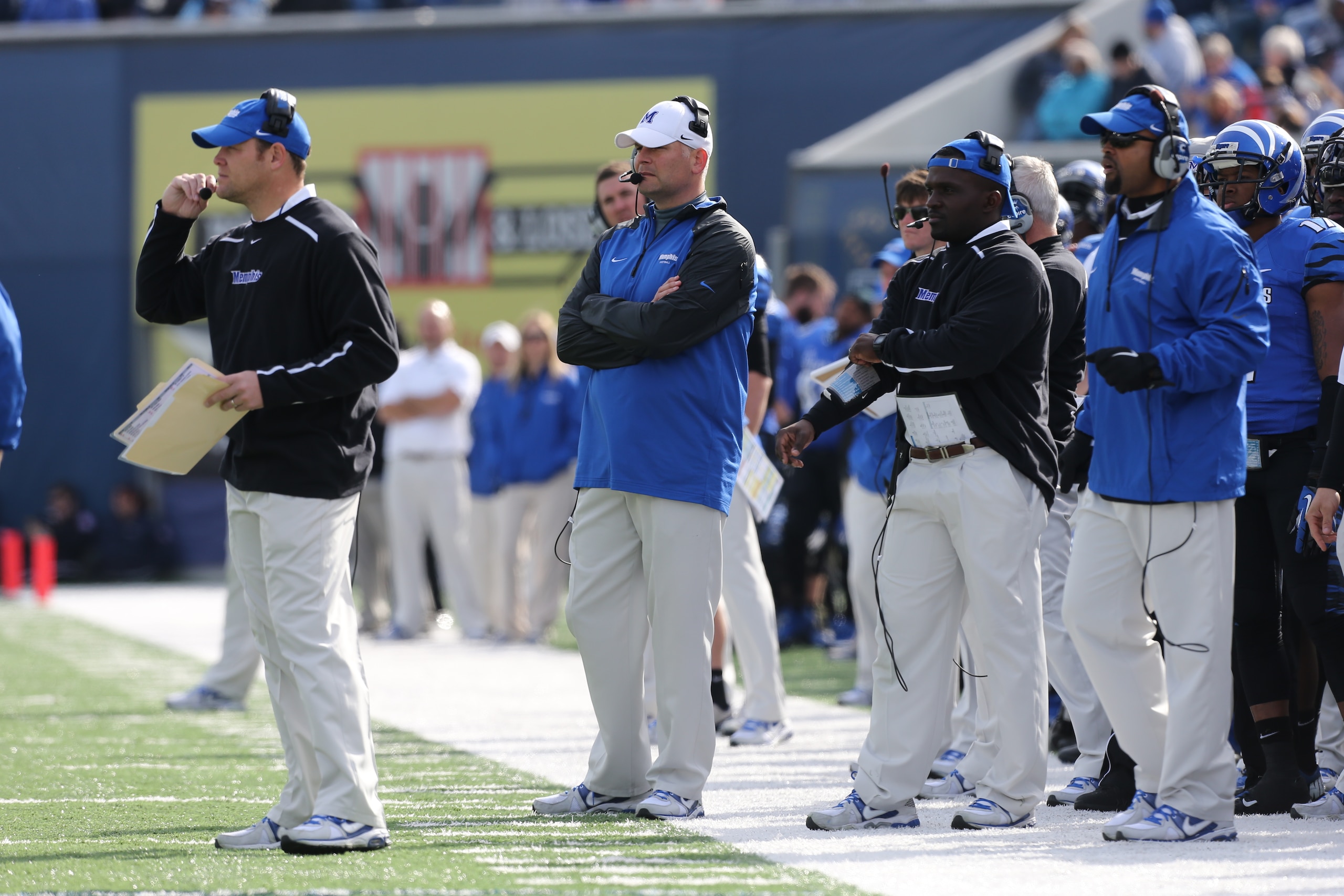
Woloshin’s rave review of the first Fuente-led Memphis practice he was in attendance for was not the sentiment felt within. In fact, the head coach tasked with reshaping the program didn’t exactly match his response.
“It was a nightmare. It was awful. We couldn’t even make it through it, first of all,” Fuente said. “We weren’t physically conditioned enough to do it. It was as an everyday battle, and it still is. It’s still not where I want it to be. I wouldn’t want Coach [Patterson] to see us.”
His thoughts years later mirrored his impressions following the team's first practice in pads.
While practices were a struggle early on, Fuente was not without talent to work with.
Recruiting is a critical part of any rebuild; it’s also vital in sustaining a certain level of success. While Fuente’s predecessor had been unable to deliver tangible results, Porter did attract marquee talents who eventually paid off.
Still, that talent had to develop. And while Fuente had more in place than many realize—something that ultimately led him toward the job—turning potential into something more is where most rebuild efforts do a nosedive.
That’s where practice comes in; it’s the heart and soul of every sports team at every level and an enormous part of Fuente’s success. Working alongside defensive coordinator Barry Odom—one of the brightest defensive minds in the country—the two zeroed in on improving and developing through repetition.
“It’s the most crucial part,” Fuente said on the importance of practice. “You have to get the most out of your time on the field, and it’s still not where I want it to be. If Coach Patterson were to come to our practice, I’m not sure he would say it’s where it needs to be. But that’s what we’re striving for.”
Fuente’s frustration early wasn’t about learning a set of plays or a given system; it was simply a matter of being able to take reps at the intended pace. Woloshin, having attended hundreds of practices in various places in his time covering the sport, recalls what he watched.
“It blew me away,” Woloshin said. “It was choreographed, it was on the move, and those guys never stopped. It was like watching a hockey line change.”
It’s one thing to take a proven plan and mimic the ingredients. It’s another to exhaust all resources to ensure that it is followed.
This, in a way, is the easy part. The path to success is defined by the work you apply. Doing it over the course of years—and ensuring that time and progress are on the same distinct upward path—is another battle entirely.
Step Three: Savor The Journey and Celebrate Small Victories
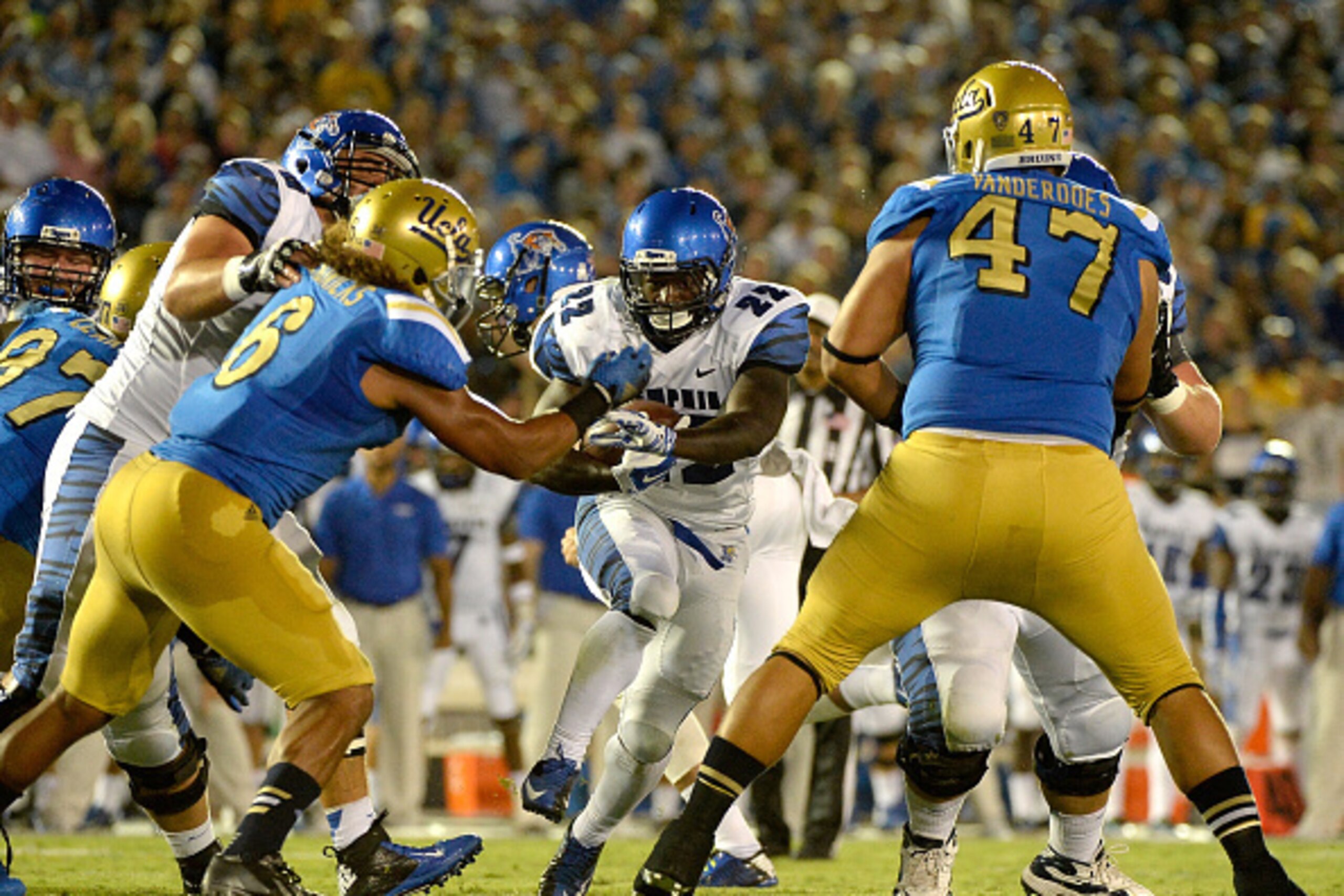
Not every step of the rebuilding process revolves around work, repetition and planning. Most do, but not all.
In fact, appreciating the growth and celebrating the results—as insignificant as they might appear to those outside of the building—is fuel to move forward.
Winning a national championship is always the goal. Of course it is. But when you start at the bottom, there’s something to be said about admiring the climb. In many ways, this is where the satisfaction lies.
“It’s hard to do this and you don’t have to tell anybody about it,” Fuente said. “But inwardly you have to take some satisfaction in small steps. If not, you drive yourself crazy.”
| Statistic | 2012 | 2013 |
| Points Against | 30.3 | 24.6 |
| Points Allowed | 363 | 295 |
| First Downs Allowed | 266 | 250 |
| Opponent Rush Yards Per Attempt | 3.94 | 3.32 |
| Interceptions | 8 | 11 |
Although Fuente’s team only won three games in 2013, the progress was evident. Even though it took a small step back in terms of overall wins—winning three games versus four in his debut season—Fuente saw the change in the works.
Practices got better. Players developed. The performance, despite what the win column said, improved. This was the year that set the table for 2014, especially on the defensive side. It was no setback.
The Tigers made life difficult on former Louisville quarterback Teddy Bridgewater, almost beating Louisville. Memphis also lost to UCF, an eventual BCS bowl winner, by only seven points.
“We were close to winning games last year,” Fuente said. “We played very good defense, we just didn’t score many points. We played some really close games against good people.”
Close losses will eventually get you fired. But given the way Memphis was trending prior to last season, this was a critical step forward. It didn’t come with wins—not yet, at least—but it set the foundation for things to come.
It is in our nature to be consumed by results and, in particular, wins. Pull back the box score, however, and you can find (and appreciate) small improvement.
For a head coach navigating this enormous operation, simply acknowledging these developments can be vital. It can tell you where you need to focus, but more importantly, it can justify the message and methods being taught.
Take note of Fuente’s barometer of success, fellow coaches:
“A win is the end goal and you have to do that to keep your job, but being able to see it moving forward has got to be able to fuel you and drive you.”
Step Four: Develop a Personal Covenant
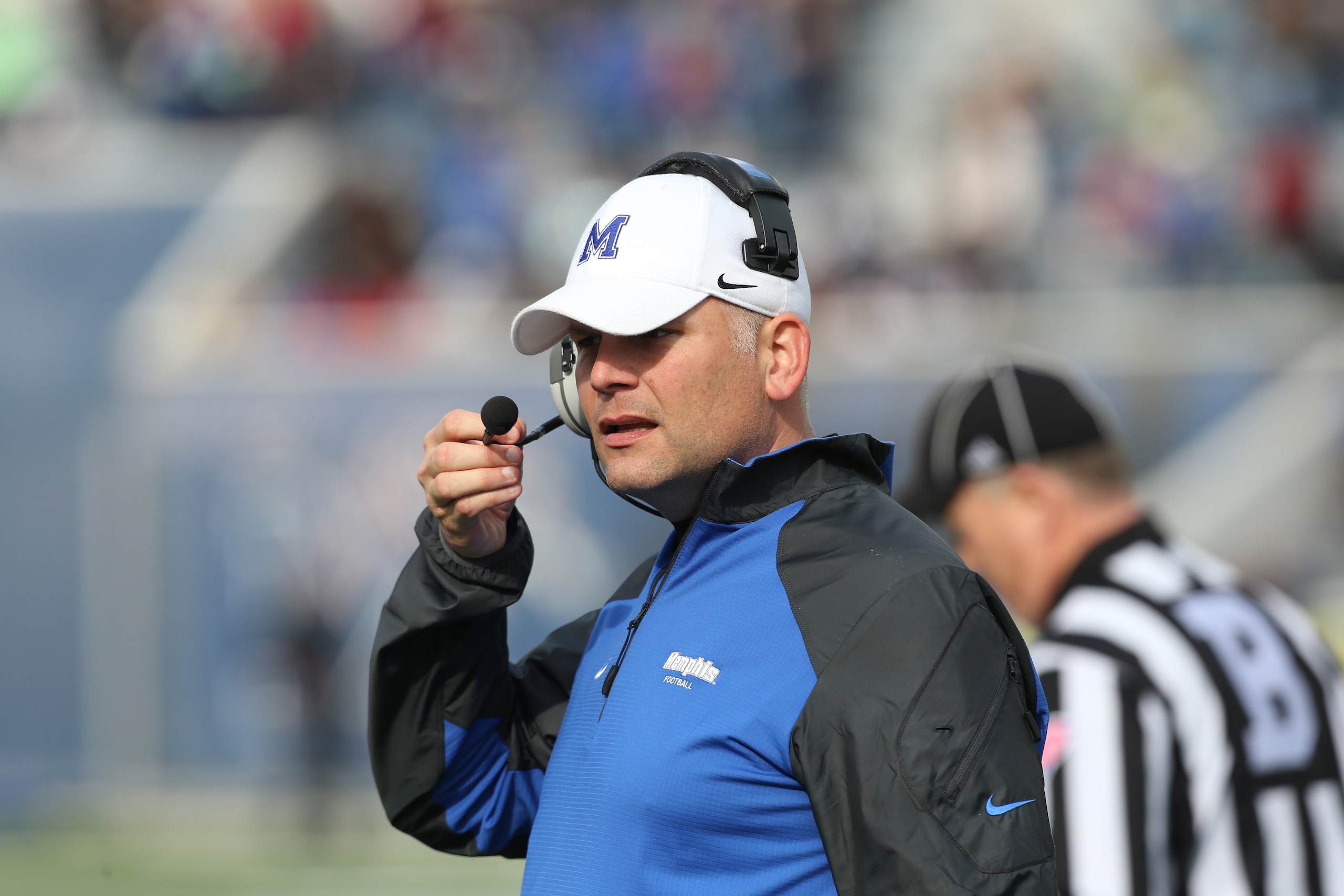
The main ingredients are rather obvious, although the last part of the rebuild is where most efforts derail. You need to find that special something, that one missing element you can’t quite put your finger on. Along those lines, your message can’t be lost along the way.
You need to find your own Memphis Family Covenant.
“If we could adhere to the Covenant,” Fuente said on the 2014 season. “I thought we had a chance.”
The Memphis Family Covenant, according to Fuente, boils down to playing “selfless” football. It’s about “playing for each other,” he added.
It’s not something we could ever understand, even with his description laid out on the table. It’s something exclusive to the team and locker room, which is precisely why it’s so valuable. To know it, you must experience it.
As a result, playing for Memphis has become a luxury. And that was the case long before the Tigers won 10 games.
“We have a group of seniors here that have been through a lot,” Fuente said. “Seeing the health of the team, the kids enjoying playing football and having success, that’s where my satisfaction comes from.”

Along the way, Fuente has been able to adjust his style and slowly drift away from what got him to this point. That might seem strange given the level of success he has worked toward, but the plan was to never simply hold serve, especially for a coach still in the infant stages of his career.
As Fuente has settled in—and as his players have bought in—he’s eased into his comfort zone. With a 10-win season and a bowl win on his resume, this part of his voice should only continue to evolve.
“I think I’m more myself than I was the first couple of years,” Fuente said. "I can’t be Coach Blankenship or Coach Patterson; I’ve got to find a way to adjust my style to my personality so we get the results these coaches have gotten.”
This is Fuente’s own personal covenant: the satisfaction of appreciating results and the endless search for more.
“Other people watch us and say we’re doing a good job,” Fuente said. “But we’re not there."
What began with the methods of some of the sport’s brightest minds has morphed into something spectacular, something that’s far easier to outline than it is to execute.
To rebuild a program from the ground up, you need to follow the steps Fuente laid out. You need to find success through others and incorporate the wisdom of people who have done it before. You need to make the most out of your practice, exhausting each and every hour given in creative ways. You need to celebrate, build on and learn from success, even if these conversations don’t take place in plain sight.
The one final item necessary for a true rebuild just so happens to be the most important. It's also the most difficult to achieve and ultimately the place so many teams will fail and have to reset once more, hoping to get it right the next time.
It’s also not a point that Fuente touched on while articulating the necessary blueprint, nor would you expect him to.
You need to find a Fuente to begin. Good luck.
Unless noted otherwise, all quotes obtained firsthand.
.jpg?w=2560 "OBJ Calls Out Giants After Release")




.jpg?w=2560 "NFL investigating referee after viral exchange with player")