Why Riley Cooper Is Losing Playing Time in Eagles Offense
Philadelphia Eagles wide receiver Riley Cooper may have caught the NFL by surprise in 2013, but opponents aren’t making that mistake again. Only 11 weeks into a five-year, $25 million contract, there are indications his own team is no longer fooled.
After entering this season as the Eagles’ clear No. 2, Cooper has begun to lose ground to other receivers on the depth chart. According to the game charters at Pro Football Focus (subscription required), the second-year starter played a season-low 67.4 percent of Philadelphia’s offensive snaps in the club’s win over the Tennessee Titans on Sunday.
Cooper was on the field for at least 88.4 percent of the snaps in each of the first five games.
TOP NEWS
Bears' Santos Wanted to Kick 58-Yarder
Picking Each NFL Division Winner 🔮
.jpg?w=2560 "Chargers Chiefs Football")
Reported Details of Seahawks-K9 Split ⛓️💥
The decline in playing time has not gone unnoticed. Reporters have been dogging Cooper for answers all week. At first, the fifth-year wideout chalked up the Eagles rotating players to standard-operating procedure, only he too observed Maclin doesn’t sub out nearly as often while speaking to John Gonzalez for CSNPhilly.com.
“I’m supposed to sub every four or five plays, and that’s what I do,” Cooper replied. “Maclin, I guess, he’s a lot better player than me, so he doesn’t have to sub.”
| 2014 | 11 | 39 | 425 | 1 |
| 2013 | 15 | 47 | 835 | 8 |
| 2012 | 5 | 23 | 248 | 3 |
| 2011 | 3 | 16 | 315 | 1 |
| 2010 | 2 | 7 | 116 | 1 |
I guess the Eagles think Jordan Matthews is a better player than Cooper, too, as Pro Football Reference has the slot receiver down for 62 plays versus the Titans—two more than the starter. And maybe, just maybe, they’re starting to think fellow rookie Josh Huff is a better option as well, as he was on the field for a career-high 32.6 percent of Sunday’s contest.
Honestly, this isn’t really that big a secret. In terms of numbers, no way is Cooper living up to the long-term extension he signed during the offseason. Thirty-nine receptions for 425 yards and one touchdown through 11 games simply isn’t much of an impact, not for a so-called No. 2 receiver.
Not compared to 2013, either, Cooper’s breakout year. Last season, he finished third in the NFL with 17.8 yards per reception, tied for sixth with six receptions of 40-plus and tied for 16th with eight touchdowns.
No way Cooper matches that or comes close in 2014. Not with the way he’s playing—or not playing, as it were. Still, none of that explains why there's such a significant drop-off in production from one year to the next.
The simple fact of the matter is: Despite last year’s numbers, Cooper just doesn’t scare defenses down the field.
According to PFF's metrics, last season, he was targeted 16 times on passes of 20 yards or more through the air, catching seven. This year, he’s been targeted deep 15 times already, but he only hauled in three for one of the worst success rates in the NFL.
Based on the film, there’s no real difference the way opponents are defending Cooper. Actually, they’re not very interested in him at all, perfectly content to put a cornerback on an island against No. 14.
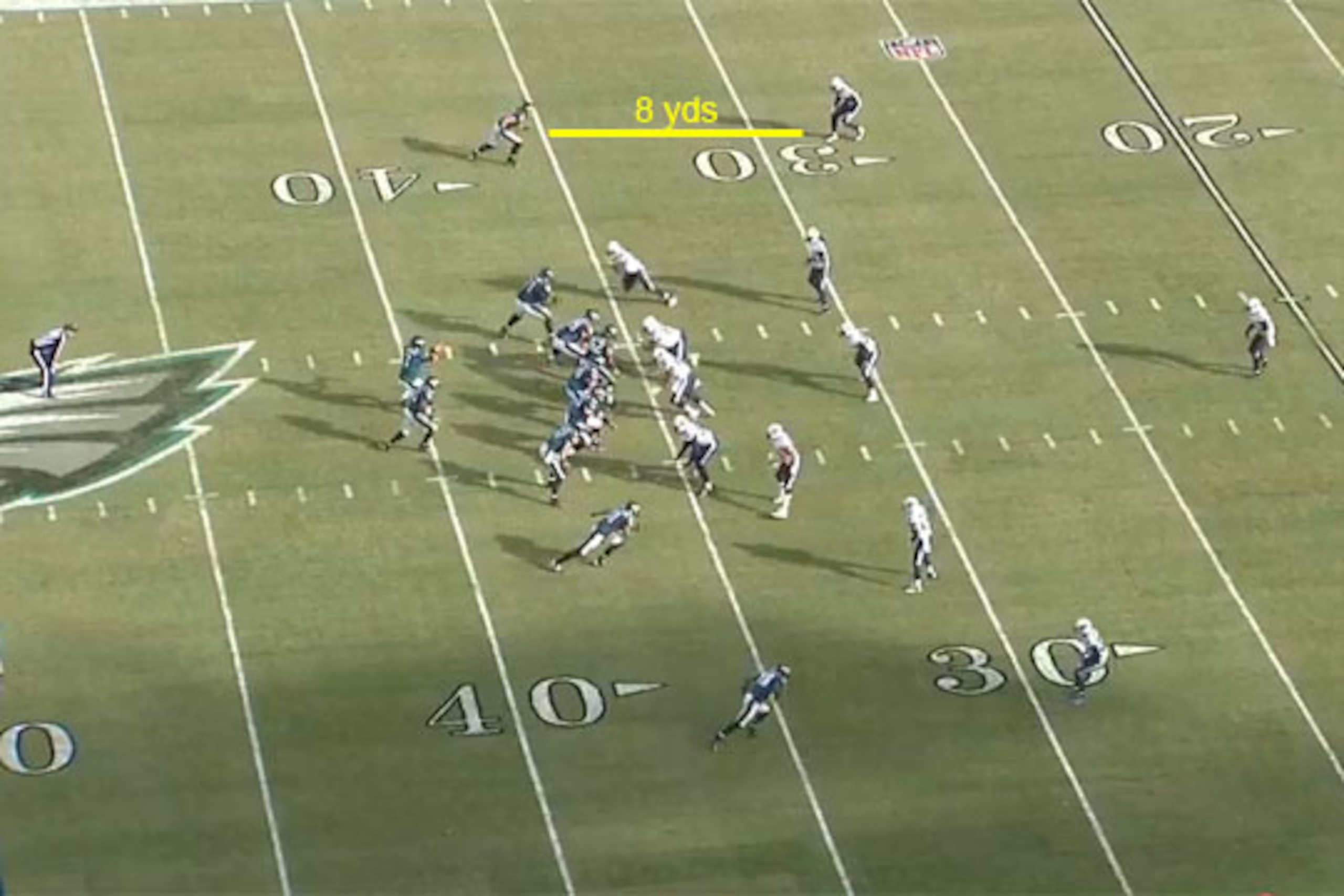
A basic eight-yard cushion works fine here. It’s close enough that the corner can still make a play on the ball, but far enough back that there’s no way Cooper should run right by his man.
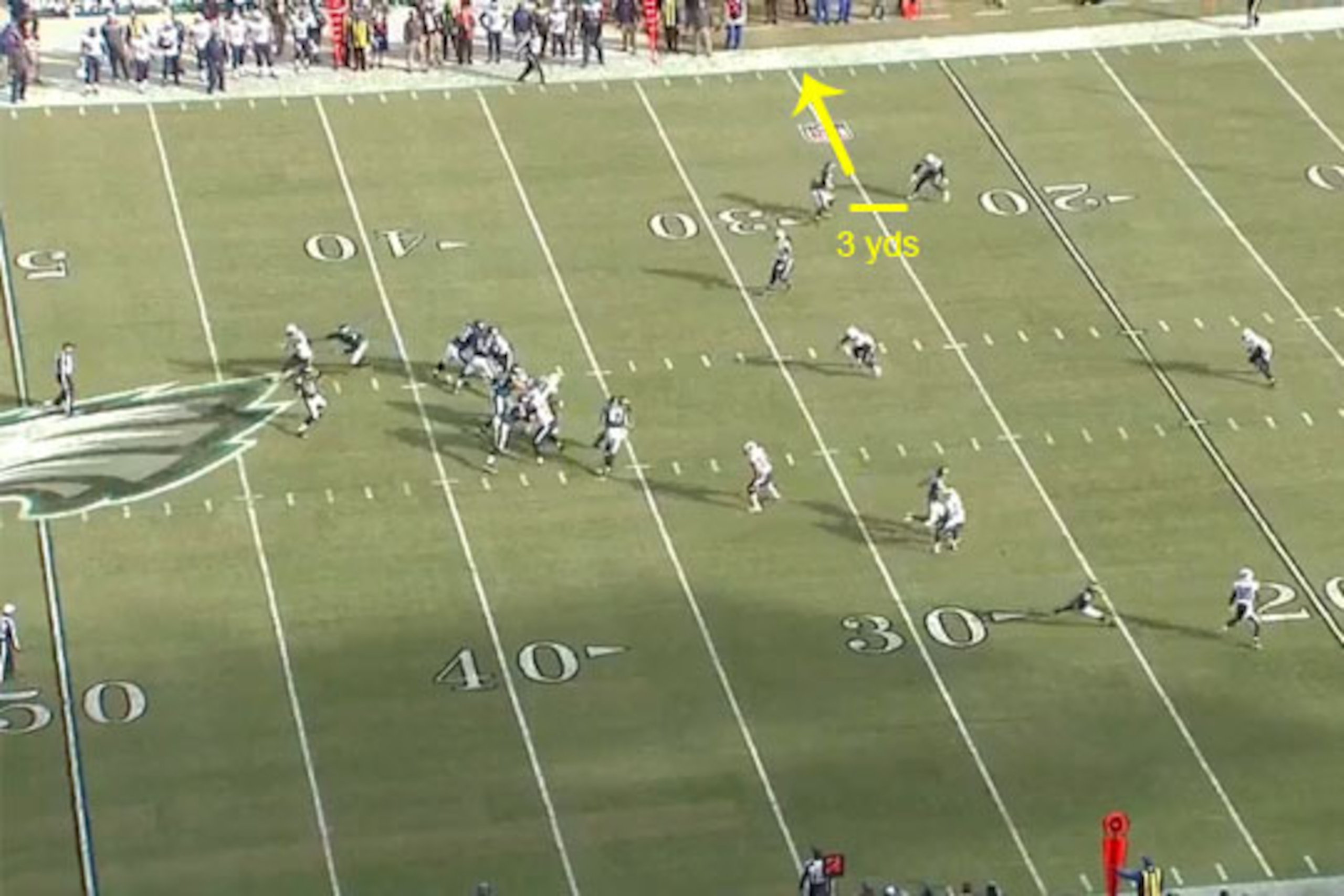
It’s a simple 12-yard out-pattern, but the defender is sitting on anything in that intermediate range. Look how little ground the cornerback has given up since the ball was snapped—he’s backpedalled all of about five yards and is now positioned to make a play on the ball.
Cooper actually has a step on his man, but Mark Sanchez misfires. However, in the quarterback’s defense, this was a tight window on a difficult throw. Plus, a better cornerback may make a better read on the play and be able to jump the route.
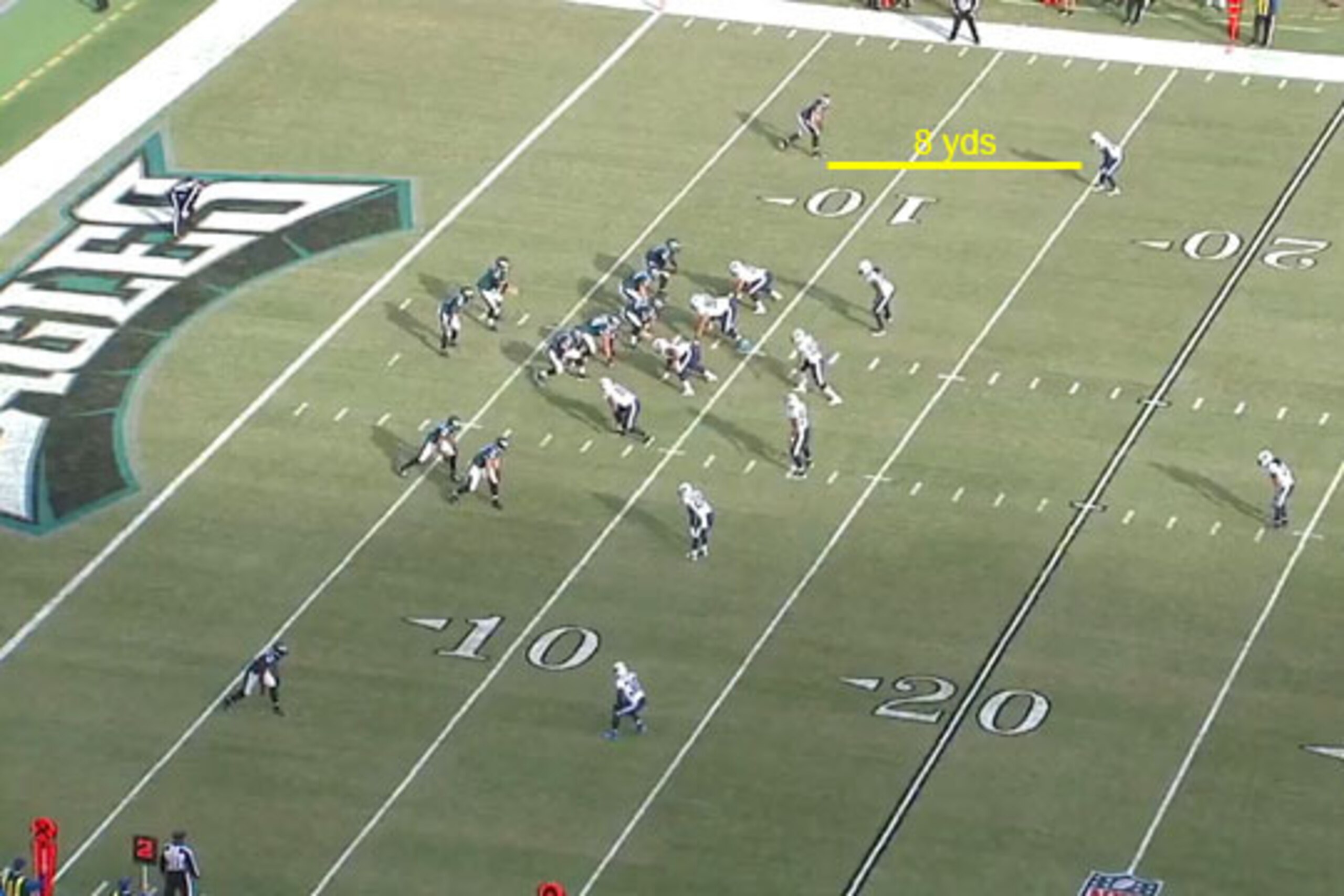
Here we have the same look from the defense—about an eight-yard cushion for Cooper—only this time, the defense wins.

Again, the cornerback is sitting on Cooper’s move, unafraid of this particular receiver running right by. This time, it’s a post route, and even though the defender is facing the wrong direction as Cooper makes his cut, he’s positioned well enough to still spin around and undercut the pass.

Cooper simply doesn’t create a lot of separation against defenders. He isn’t quick or fast compared to most NFL receivers.
Huff isn’t necessarily the most explosive athlete, either, and Philadelphia loses a lot of size with him on the field instead—five inches, to be exact. However, he is the more agile of the two. Nolan Nawrocki’s scouting report for NFL.com describes the Oregon rookie as having “good speed and a fluid stride.”
| Games 1-5 | 8 | 93 | 11.6 | 1 |
| Games 6-10 | 20 | 462 | 23.1 | 6 |
| Games 11-17 | 25 | 348 | 13.9 | 2 |
Cooper may be the bigger target and more accomplished playmaker at this level, but defenses seem to have him figured out. Of course, this should come as no surprise to anyone who was paying attention. Cooper peaked during a five-game stretch midway through 2013 that accounted for 462 yards and six touchdowns—more than half of his season’s production.
In the seven games that followed (including playoffs), Cooper posted 348 yards and two scores. Until we added the first five games, during which he was essentially invisible, it became quite clear that stretch in the between was an aberration.
After all, you don’t get to hang 139 yards and three touchdowns on the Oakland Raiders every week. Not in the NFL.
Even when he has been open, we’ve seen Coop leave several big plays on the field this season. He flat-out dropped a perfect touch pass from Nick Foles for a would-be 20-yard touchdown against the Indianapolis Colts in Week 2. Cooper also had a shot to haul in a potential game-winner in the loss to the San Francisco 49ers, granted in heavy traffic, but that ball obviously fell incomplete as well.
The only thing Cooper fans can really say for the guy this year is he’s a heck of a blocker. As it turns out, though, so is Huff. The kid really gets after it, and despite the size discrepancy, he may be equally if not more effective.
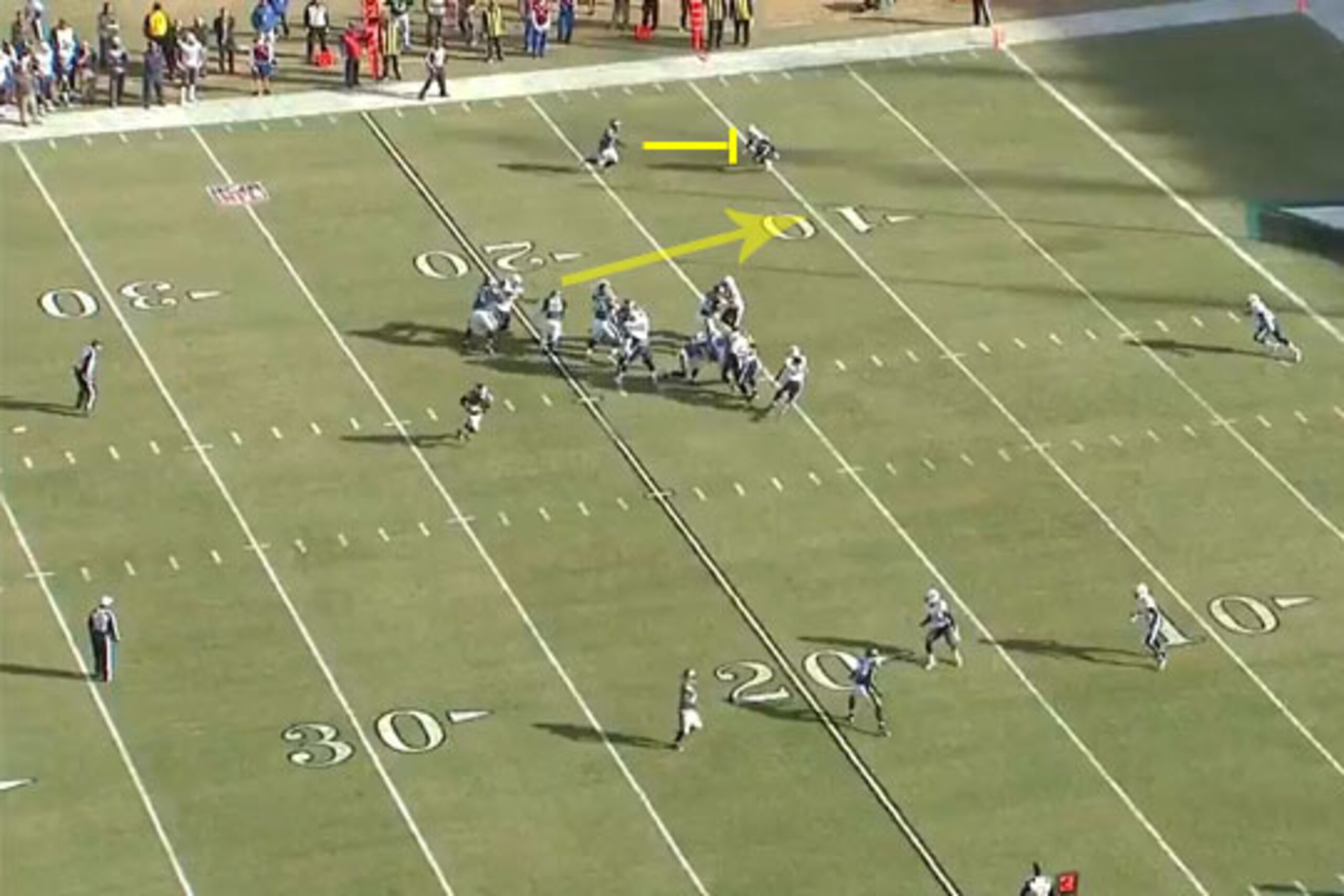
That’s the rookie at the top of the screen. LeSean McCoy takes the handoff and is about to break through the line of scrimmage, where Huff’s man appears to be the last obstacle on the path to the end zone.

McCoy doesn’t quite have the juice to go the distance, as the Titans' pursuit is better than expected. However, it’s not for Huff’s lack of effort. His block on this play very nearly paved the way for six points.
We’ve seen this effort consistently from Huff, who, despite making his share of miscues as well, is beginning to build a case to be in the lineup more over Cooper. In other words, you can expect the veteran receiver to continue fielding questions about his diminished playing time in the near future.
On the bright side, and just in case you were wondering, Cooper’s five-year contract is not a killer. According to Spotrac, the Eagles could get out from under the new deal as early as 2016 with a minimal hit against the salary cap.
.jpg?w=2560)
.jpg?w=2560 "Texans Jaguars Football")