The 49ers Strike Gold with Chris Borland, the Next Great 'Too Short' Linebacker
Last spring, the name Zach Thomas came up in 49ers draft meetings. "Too short, too slow, short arms, but all he did was make plays," someone said.
Thomas' name came up because the 49ers scouts and coaches were discussing an inside linebacker prospect who reminded them of him. Like Thomas, Chris Borland of Wisconsin was too short (5'11"), too slow (his 4.78 hand-timed mark in the 40-yard dash made him the 21st-fastest linebacker at the combine) and his arms were short enough (29.25") to ensure all of his sports jackets would need tailoring. And like Thomas, Borland made plays. Lots of them.
TOP NEWS
.jpg?w=2560 "Chargers Mack")
Every Trade's Best Trade Asset 🔁
.jpg?w=2560 "Green Bay Steelers Football")
Insiders: Cowboys Overpaid for Porter
.jpg?w=2560 "Seahawks Cardinals Football")
MHJ's Potential Trade Value 📉
In his college career Borland made 420 tackles, including 50 for a loss. His 15 forced fumbles were the second-most in NCAA history. He became an All-American through smarts, heart and passion.
"He's been making tackles for as long as he's played, and he's done it in a variety of ways," 49ers general manager Trent Baalke said. "He can slip blocks. He anticipates well. He beats blockers to the spot. He's shown the ability to play through blocks as well."
But the 49ers, like every NFL team, looked at Borland with healthy skepticism. College production alone does not ensure NFL success, and Borland's shortcomings might have been more easily exposed against superior competition. The issue was whether or not Borland's intangibles could override his tangibles. The 49ers ultimately slotted him as a third-round talent and drafted him 77th overall.
If they knew then what they know now, they might have taken Borland much higher.
Last spring, the name Dat Nguyen came up in 49ers draft meetings. "Didn't look the part, but he was always around the ball, always making plays," someone said.
Baalke called his old boss Bill Parcells before the draft to talk about Borland, and they found themselves talking about Nguyen. The similarities were undeniable. But Parcells was a big proponent of measurables, and as a rule, he didn't have much use for the small and the slow.
Baalke had scouted Borland three times at Wisconsin, and loved him. But he wanted to hear a viewpoint that might have been different from his own. Parcells calls players like Borland and Nguyen "exceptions" and cautions against having too many exceptions on the roster.
"His thing was if you were going to make an exception, it had to be on an exceptional player, and that usually was a player who was highly instinctive and highly productive," Baalke said. "Those were the two qualities that an exception had to have."
Most coaches are a little different from Parcells. Typically, coaches evaluate players mostly by what the tape tells them, and not so much by what the numbers say. It was Jimmy Johnson, for instance, who was behind the Dolphins drafting Zach Thomas in 1996.
San Francisco coach Jim Harbaugh took one look at Borland and was hooked. Still is. He says Borland will steal your football "like a thief in the night," and then he gives you that Harbaugh smile. Baalke said Harbaugh pushed for the team to rate Borland highly throughout the draft process.
The 49ers' Midwest area scout also was willing to risk his reputation on Borland. In meetings, he raved about Borland's instincts and play demeanor. The interesting thing about Scott Brown is before the 49ers hired him as a scout in 2012, he spent 35 years as a defensive assistant coach in college. He is a coach in scout's clothing.
Baalke learned something about players like Borland when he worked with Joe Gibbs for the Redskins. Gibbs, he remembered, stressed character, intelligence and the ability to make decisions quickly. He used to call himself a "P.E. coach," and the way he looked at players reflected that. Borland, he thought, was the type of player Gibbs would have jumped on.
When Parcells took over the Cowboys, he decided, with some trepidation, to keep Nguyen. He ended up happy he did. Baalke and Parcells came to agree that Borland might make Baalke happy, too.
Last spring, the name Sam Mills came up in 49ers draft meetings. Defensive coordinator Vic Fangio had coached Mills with the Saints and Panthers. Mills was two inches shorter than Borland, but that statue of Mills that stands outside of Bank of America Stadium in Charlotte looks downright imposing.
"I've never been prejudiced against short linebackers after coaching Sam," Fangio said. "So much of playing inside linebacker is instincts and feel. Chris has a good abundance of that, as did Sam."
Instincts. It's almost impossible to discuss Borland for more than a few seconds without the word, or a variation of it. He is a predator as much as a linebacker, thinking one step ahead of his prey.
In overtime against the Saints, 49ers linebacker Ahmad Brooks forced Drew Brees to fumble. The ball was on the ground, and eight players were closer to it than Borland. But he came out of nowhere, knifing through the crowd to pounce on the ball and set up the game-winning field goal.
On a given play, he often is moving in the right direction before anyone else.
"He is just real instinctual when it comes to post-snap movement, and even pre-snap movement," Baalke said. "Sometimes he is moving before the ball is snapped because he has already diagnosed the play in his mind."
49ers coaches actually have had to rein in Borland from trying to make a beeline to the football before the play unfolds.
"In the NFL some plays have more deception than they do in college," Fangio said. "He would at times go to the ball too quick, abort his assignment too early and then pay a price for it in training-camp practices and preseason games. So we had to find the fine line between finding where he thinks the ball is going to be and not aborting his assignment too early. He's gotten much better at that."
The large majority of the time, Borland—who scored a 30 on the Wonderlic test—is not guessing. He is knowing.
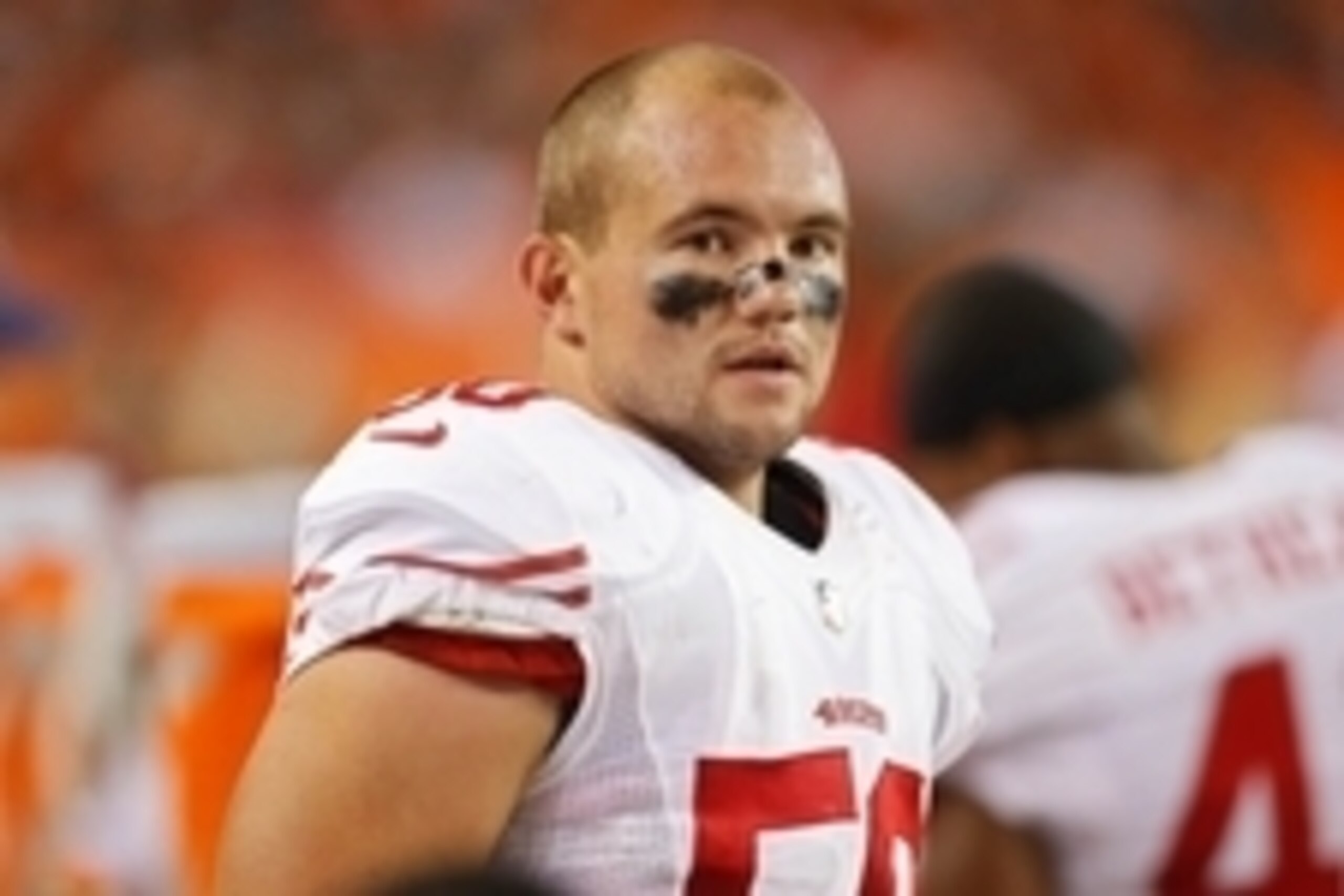
Some of Borland's instincts can be traced to his DNA, like his round face.
"There are a lot of guys who can watch a lot of film and prepare and be assignment-oriented, but they just don't have the knack for doing some of the things the highly instinctive players can do," Baalke said.
And some of his instincts come from preparation.
"He's a student of the game," Baalke said. "He understands a lot of the parameters that go along with offensive play-calling. He really understands the tendencies of a team based on formations, down and distance, field position, time in the game and what an offense is trying to do to you."
Last spring, the name Mike Singletary came up in 49ers draft meetings. "Coach [Singletary] was a shade under 6' and not overly fast but a highly instinctive player and obviously a very good player," Baalke said. "He's an example of a player whose instincts allowed him to play above and beyond his limitations."
Short, slow linebackers can be liabilities in pass coverage. That was one reason Borland's name was buried on some teams' draft boards. But the special ones like Singletary find ways to compensate.
In Borland's first start, against the Broncos, he struggled in coverage. He failed to diagnose some combination routes, and crafty Peyton Manning took advantage of him, as Manning has countless others. The game underscored the importance of Borland "retraining his eyes," according to Baalke. In college, Borland's reads were almost all of the quarterback. Now, he's being asked to read more than the player with the ball in his hands.
Since that game, there has been clear improvement in Borland's coverage. In fact, the following week in practice, Borland had four or five interceptions, Fangio said. He also had two interceptions in the 49ers' last game, which resulted in his being named NFC Defensive Player of the Week. In the past 40 years, Borland and Ken Norton are the only 49ers linebackers to pick off two passes in a game.
The Saints didn't really find a way to take advantage of Borland with 6'7" tight end Jimmy Graham, and Fangio said he didn't try to avoid the matchup. He said the 49ers jammed Graham when Borland was on him, and they also mixed up coverages so the Saints couldn't zero in when Borland would be covering him.
The way Fangio sees it, there is a trade-off with Borland's height.
"Over the course of a season, there will always be a few plays where his lack of height or length will surface," he said. "But guys that size make plays because of their lack of length, too. They are built lower; sometimes they are not seen as easily by quarterbacks and blockers and running backs. So you hope it balances out and try to keep them out of those situations where the height may be a factor in pass coverage."
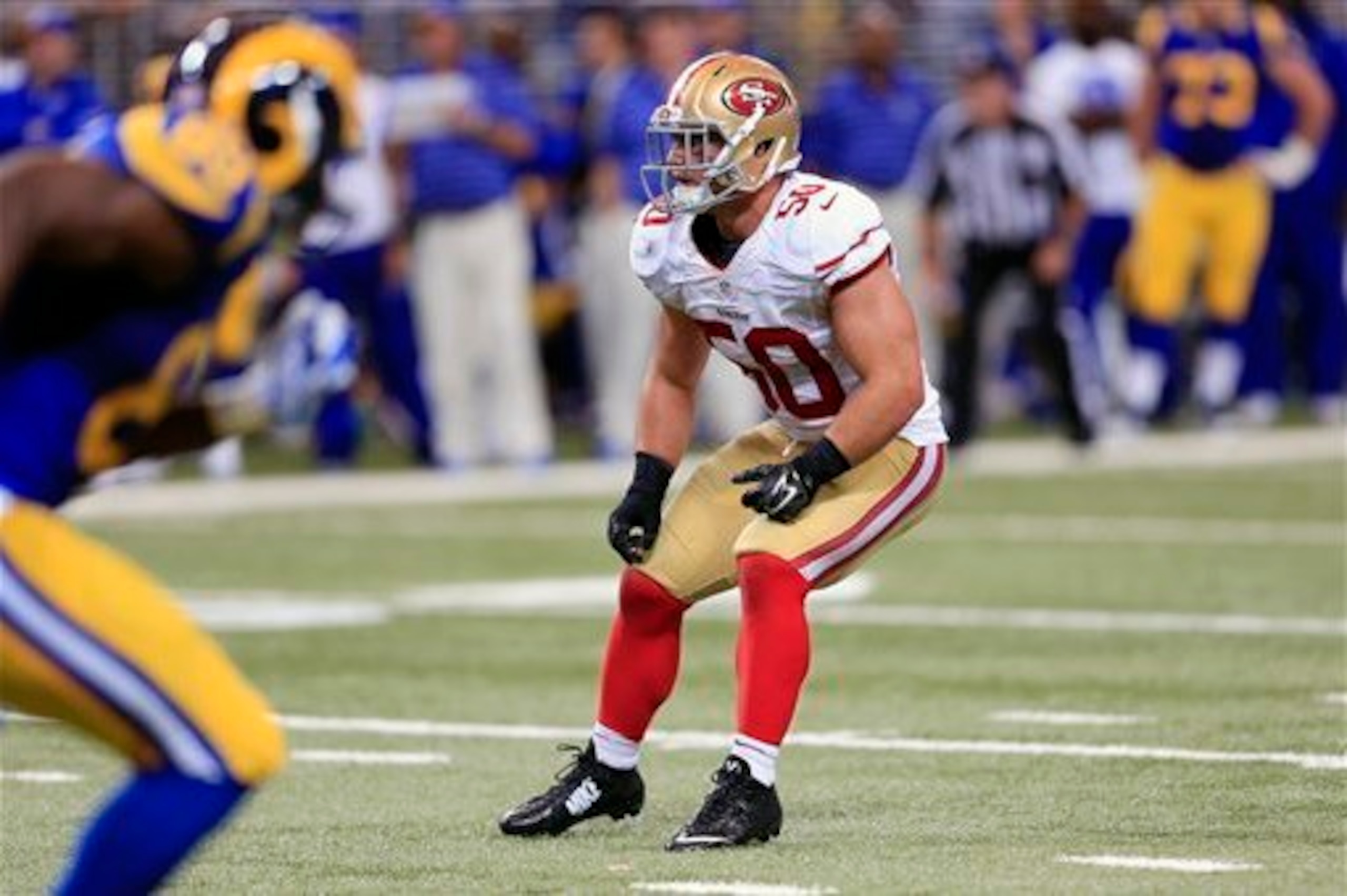
A lot of smaller linebackers don't take on blocks well, and Borland initially had plenty of room to improve in that area. Fangio said Borland has shown considerable growth in taking on blocks. Improving weaknesses has been a consistent theme of Borland's nascent NFL career.
"His understanding of the game improves with each and every practice, and each and every game," Baalke said.
If he wasn't dealing with blocks well, Borland wouldn't have 48 tackles over his last three games. Even though Borland has been a starter for only the last four games, he leads the 49ers in tackles. He also is the second-highest-ranked inside linebacker in the league by Pro Football Focus (subscription required), behind 2013 Defensive Player of the Year Luke Kuechly of the Panthers.
That kind of production from a third-rounder is giving the NFL a lot to talk about. Next spring, the name Chris Borland is going to come up in a lot of teams' draft meetings.
Dan Pompei covers the NFL for Bleacher Report.
.jpg?w=2560 "Giants Football")