Jake Long's Torn ACL a Major, Unlucky Blow to the Rams Offensive Line
For the St. Louis Rams, injury made an already-awful late-October Sunday take a turn for the worse when veteran left tackle Jake Long's season likely ended due to a torn ACL.
According to Pro Football Talk's Mike Florio, the Rams "(believed Long) tore the same ACL that was torn last season" during a Week 8 matchup against the Kansas City Chiefs, adding that a Sunday night MRI later confirmed the diagnosis. The news almost certainly means that the former 2008 No. 1 draft pick will land on injured reserve for the fourth season in a row.
TOP NEWS
NFL House in Paris Closes for Protests
Trevon Diggs Cut by Seahawks
B/R's Expert Week 7 NFL Picks 🔮
When it comes to injuries, some guys run out of luck.
Literally.
More often than not, ACL tears do not involve full-speed contact to the lower leg. Rather, they frequently stem from a minimal or non-contact perfect storm of lower body positioning, weight distribution and unfortunate timing.
Regrettably, it seems Long found himself in such a predicament late in the third quarter on Sunday:
As Chiefs defensive tackle Vance Walker sped by, Long suddenly let up on his block and fell to the ground. He then left the field gingerly, and the grim diagnosis followed later in the day.
Cameras did not offer a clear view of the nature of the contact between Walker's body and Long's right leg. However, whatever contact did transpire—if any—certainly did not appear that bad.
Nevertheless, Long's positioning likely left him vulnerable and at least partially contributed his injury.
How?
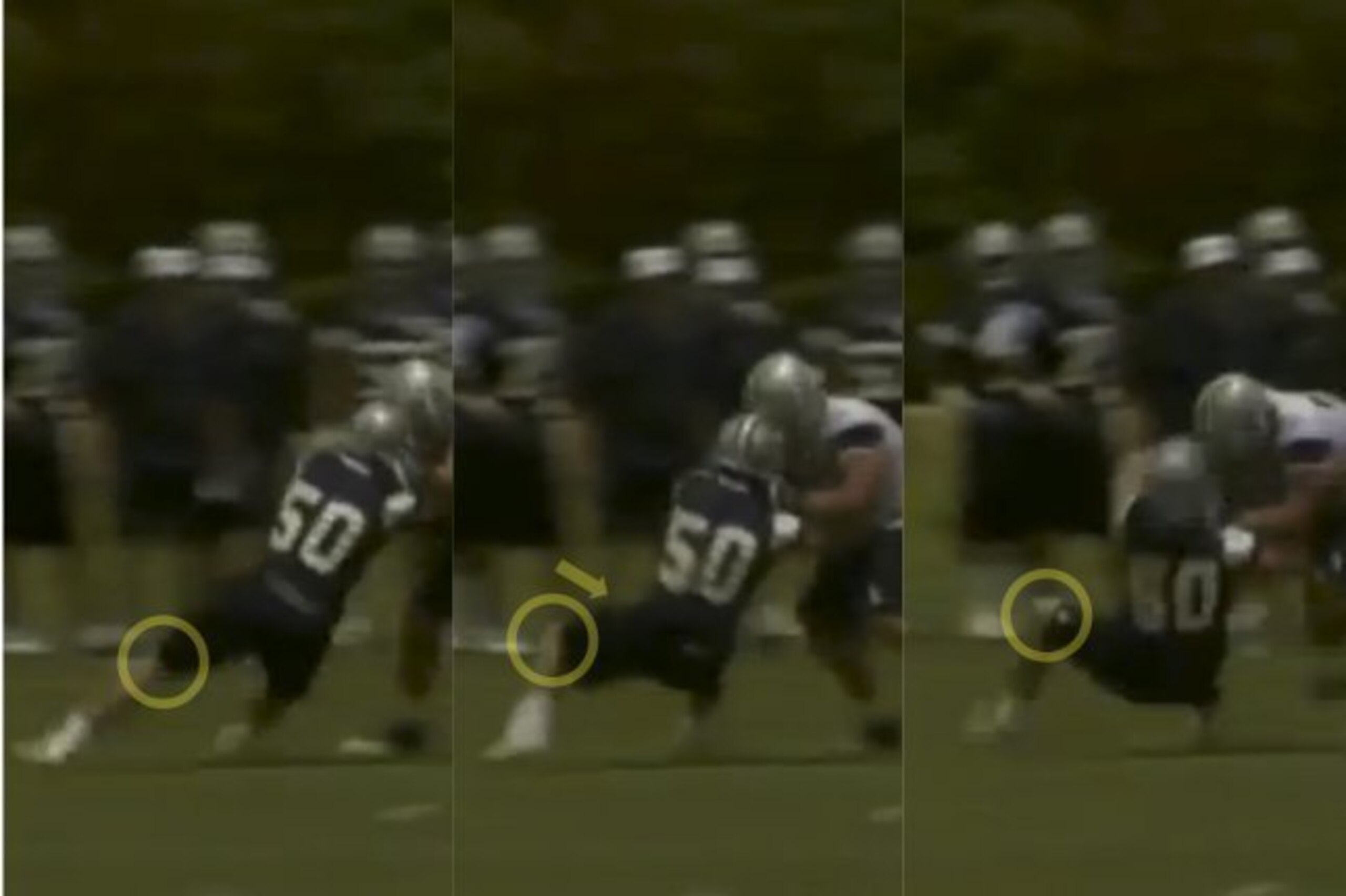
To better understand what probably happened, let's break down two examples of recent ACL tears. We'll start with Dallas Cowboys linebacker Sean Lee's from earlier this year, courtesy of the team's official website:
Now, let's examine Rams running back Isaiah Pead's via a GIF from SB Nation's Turf Show Times:

In both cases, a mismatch of weight distribution and footwork contributed to the tears. After all, if a player plants his foot in such a way that his toes point outward relative to his knee—a frequent occurrence on the football field—his margin for error when it comes to absorbing extra force on his knee narrows significantly.
In Lee's case, his teammate forced the linebacker's upper body to create the weight and positioning mismatch. In Pead's, a sharp cut was to blame.
While the circumstances of Long's injury remain a bit shrouded by a lack of camera angles, a similar set of circumstances probably led to his injury.
Now, he faces a long road to recovery.
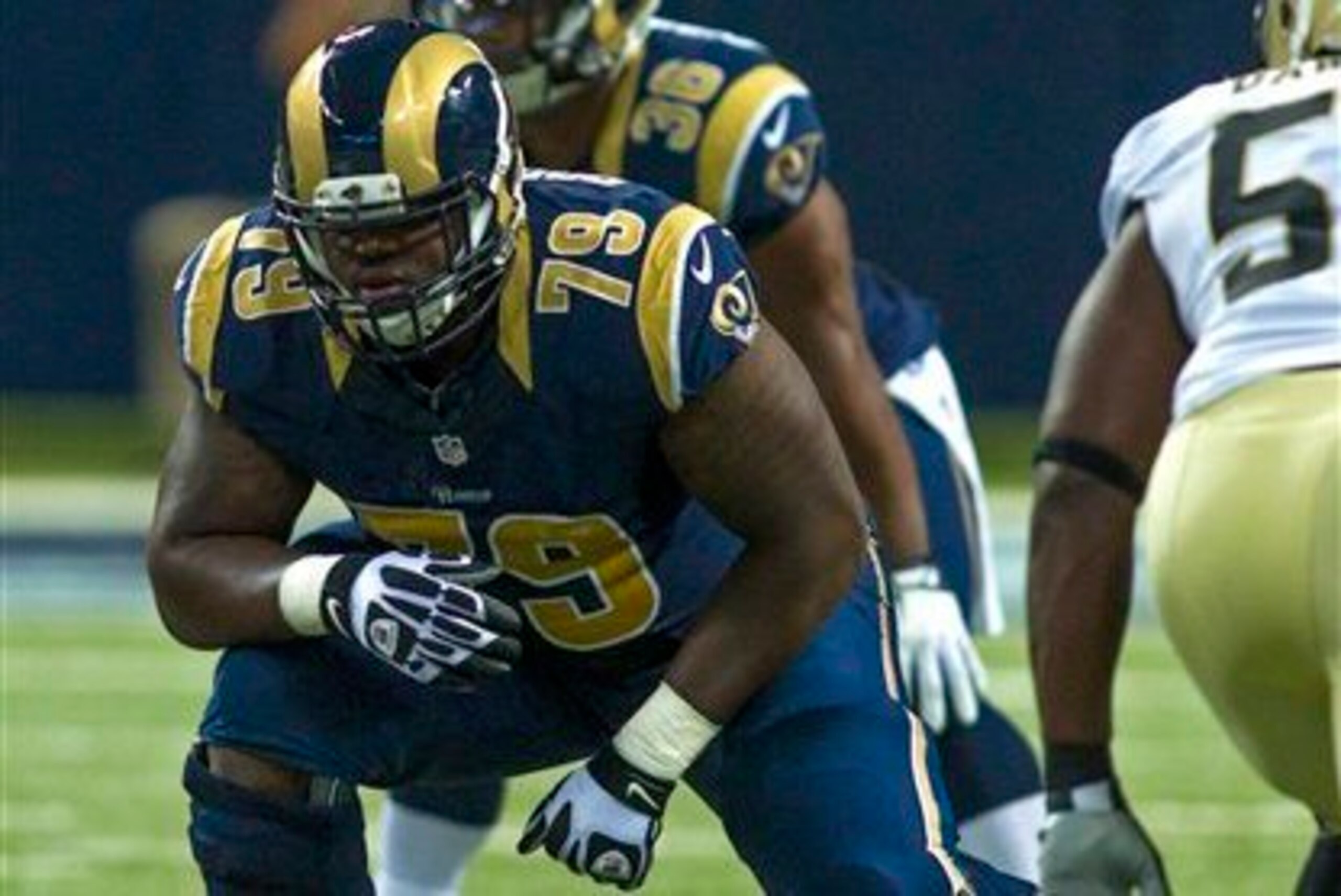
Long tore his right ACL in December 2013. As such, his 2014 injury actually involved a tear in the graft his doctors used to replace his native ACL last year. His surgeon will need to use a new graft to replace that replacement.
Unfortunately, the recovery time won't be any shorter this time around—ACL tears usually come with eight-or-more-month rehabs—and as mentioned, the left tackle will likely move to injured reserve soon. The entire NFL community surely hopes for nothing but a full and speedy recovery.
Nothing yet suggests Long will not return to full speed, and the Rams' medical team includes some of the best physicians and therapists out there.
In the meantime, the 6'5'', 332-pound Greg Robinson will likely fill the gap—perhaps permanently.
The Rams drafted the 22-year-old Robinson out of Auburn with the second overall pick in the 2014 NFL draft. Presumably, the team at least partly viewed the rookie as an insurance package—and perhaps long-term replacement—for the oft-injured Long.
In the weeks to come, Jeff Fisher's squad will get a long look at the young tackle as he works to protect quarterback Austin Davis' blind side. Though the Rams, who sit at 2-5, are likely already looking forward to 2015, a secure left tackle position could go a long way in ensuring a safe pocket for their franchise signal-caller—whoever that ends up being.
Dr. Dave Siebert is a second-year resident physician at the University of Washington and a member of the Professional Football Writers of America. He plans to pursue fellowship training in Primary Care (non-operative) Sports Medicine.