
Plate Racing, Blocking, and the Whole Big Mess...
The restrictor plate races at Daytona and Talladega have always produced some exciting finishes, but they have a propensity to mangle cars and ruffle feathers. Here are some of the reasons why.
First, the horsepower-sapping plates tend to even out the field, and even the best driver out there needs drafting help to win. With the cars packed together like sardines, the slightest twitch can send the cars into each other with disastrous results.
Add to this the fact that these four races are held as very important races to win, with big crowds, big paychecks, and big trophies.
TOP NEWS
.jpg?w=2560 "Saints Lions Football")
Rap: Lions, LaPorta End Contract Talks
Colorado State DC gets fired mid-game during blowout loss
Aaron Boone Calls Out Yankees Catcher 🗣️
And more often than not, big wrecks and big headaches.
In the final laps, drivers often become more daring and take chances to gain position. This leads to the ubiquitous "big one" and typically involves a dozen or more cars.
The "big one" usually takes out a number of contenders for the race win, guilty of little more than being in the wrong place at the right time.
The relative lack of throttle response in plated engines also leads to another facet of plate racing, and that is bump drafting.
Bump drafting involves a car behind another getting a run and pushing their car into the car ahead, giving them a burst of speed and the chance to gain positions faster than usual.
If this is done when the two cars are not lined up properly, or going into a turn, it often results in a tangled mess of sheet metal, smoke, and dashed hopes for the evening.
Another problem with plate racing is the car in front blocking one or more cars behind that have a run and are a threat to overtake them.
In the past, blocking was not as common as it is today, but recently it has become de rigeur, leading to a sizable share of wrecked racecars.
NASCAR has cautioned drivers at the pre-race drivers' meeting not to do it, but the pattern of blocking drivers continues. What constitues a block and how NASCAR could deal with it better would be a difficult task to overcome.
Blocking is a part of these races and probably always will be.
The driver leading on the final hundred yards to the checkered flag in the last two plate races has blocked a run and been wrecked, ruining what would have been a top five finish.
Saturday night at the Coke Zero 400, it was Kyle Busch's turn to try blocking.
Busch was finally leading the race coming out of turn 4 into the tri-oval.
Tony Stewart got a run on him and bumped him slightly, then pulled to the outside to make the pass. At that point, Busch tried to slip in ahead of Stewart from the inside and block him but Stewart already had the line.
Stewart didn't budge and Kyle went sailing into the wall as Stewart crossed the finish line as the winner.
Plain and simple, blocking on the last lap dosen't work very well.
The driver ahead has to have an open line, and then it turns into a game of shuck and jive with the car behind at nearly 190 miles an hour.
Nobody's reflexes are that good. Just ask Carl Edwards, and now Kyle Busch.
It seems they were expecting Brad Keselowski and Tony Stewart to lift just a little and give them back the groove they were in and the race win.
So much for wishful thinking.
I believe if you ask Carl and Kyle if they could have their decisions to do again, they might have considered holding their groove and hoping for the best.
If Kyle had held his ground after Tony bumped him, the worst he would have finished would likely have been fifth place. With no drafting help close for Busch, the race was lost before Stewart even gave him that bump.
But this pattern of finishes will no doubt continue, until NASCAR makes some changes.
As Tony Stewart said in his downbeat post-race news conference, "you just don't want a race to be decided like that...it just is what it is."
What could be done to change plate racing for the better?
One would be removing the plates altogether. Restrictor plates were first used by NASCAR in 1971 to eliminate the advantage of teams using the larger Chrysler Hemi engine.
The plates were eliminated in 1974 when NASCAR banned the larger engines, reducing the engine size to 358 cubic inches.
Today the plates exist to curb some of the speed the cars would have if left unrestricted. Bobby Allison blew a tire and crashed into the frontstretch fence at Talladega in 1987, injuring fans and nearly going into the stands.
The following year, restrictor plates returned to racing at the superspeedways.
Speed reduction and safety are the reason plates are used, but there are other ways to reduce the car's speeds.
From adding weight, to reducing engine size and compression, options have been considered to give the drivers' better throttle response and keep speeds down.
All have come with their own set of problems. So we continue this dance of destruction.
But just think, if we could remove the plates we might be able to return the superspeedways to an era of the shotgun-style passing of the late 1970's.
Anybody who says superspeedway races are boring without plates should look back to the 1979 Daytona 500. That was a race for the ages.
If it could be done then, it can be done now.
Tight bunched packs and breakneck speed make the plate races exciting, but I find it sad to hear a driver like Tony Stewart not celebrating a win like Saturday night as much as he should have.
There are some things that could be done, besides eliminating the plates, to make these four races better.
Now don't even get me started on the yellow-line rule...
.jpg?w=2560 "Vikings Buccaneers Football")
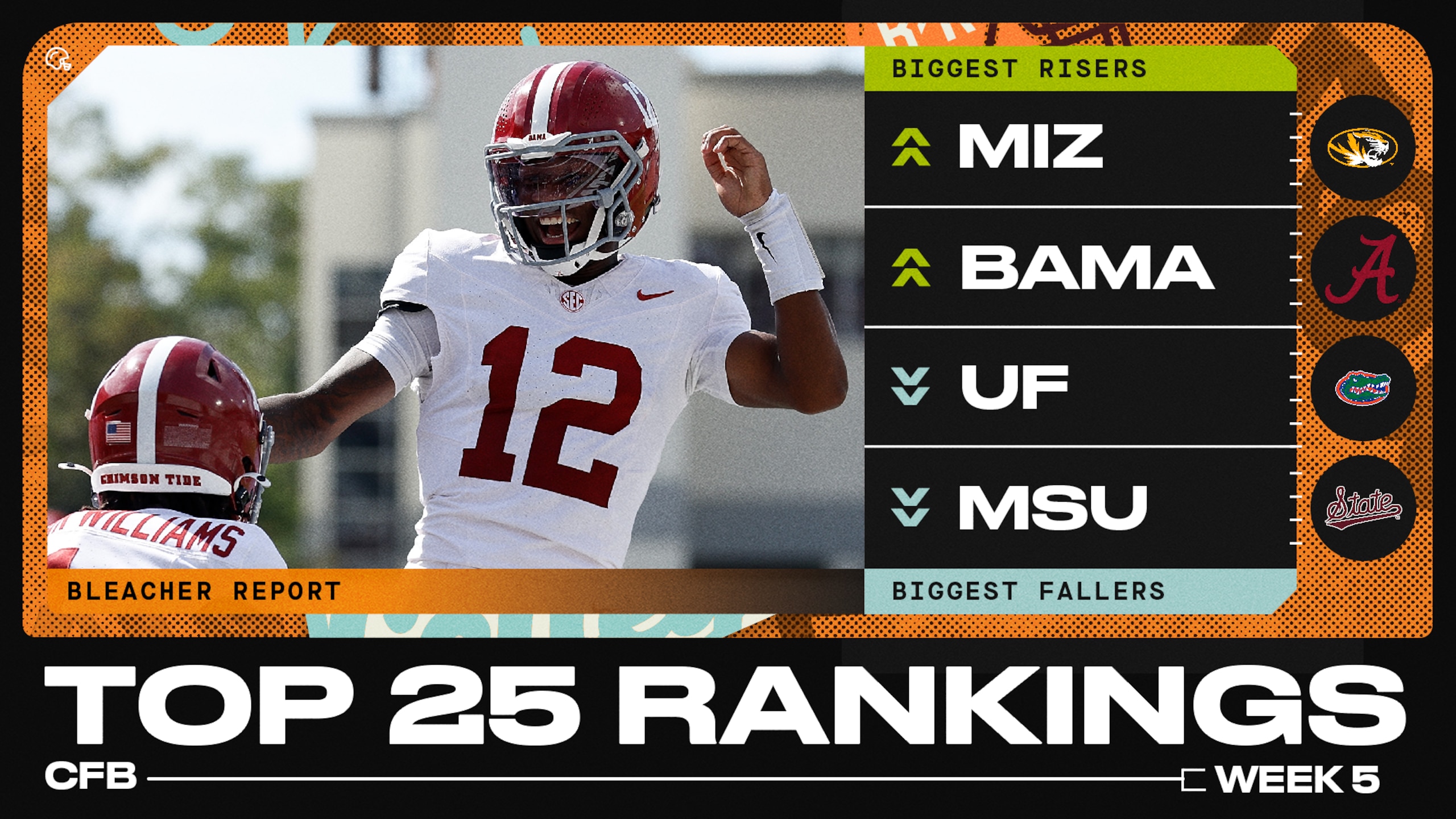
.jpg?w=2560 "EVERY Fantasy Football Update")
_0.png?w=2560 "Week 5 Winners & Losers 📊")

.jpg?w=2560 "Commanders May Change Logo 👀")