3 Factors That Will Decide OKC Thunder's Playoff Ceiling
The Oklahoma City Thunder have more talent and depth than they’ve ever had before, and with two top-10 players at the helm, that predictably makes OKC a threat every time it steps on the hardwood. When the Thunder are playing their best basketball, they are close to unbeatable.
But head coach Scott Brooks has the challenge of making sure they reach their lofty ceiling, and these are the three factors that will dictate whether Kevin Durant adds a Finals MVP to his expanding trophy collection or stews over not finishing first for at least one more summer.
Ball Movement



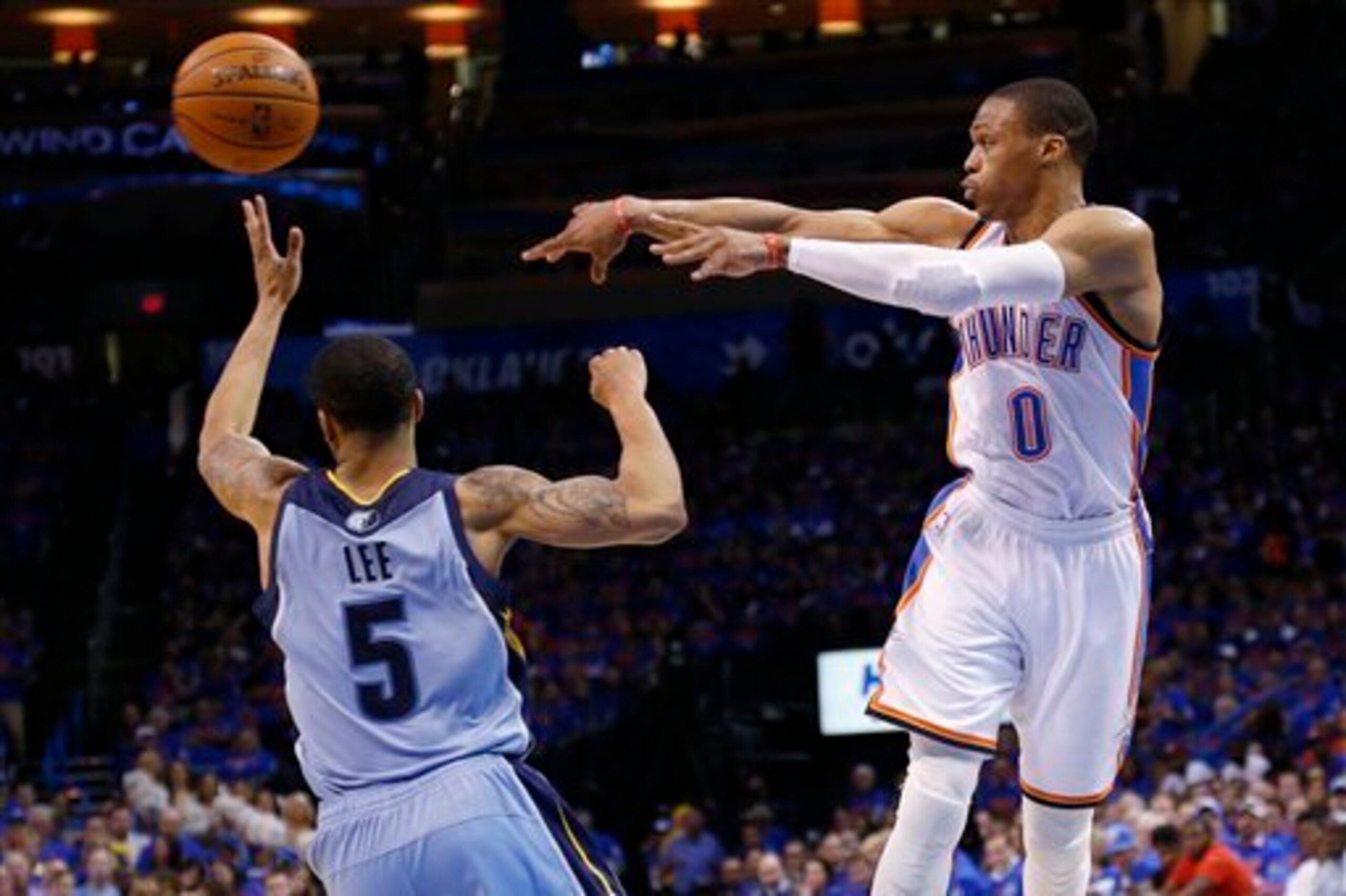
It’s easy to fall into the trap of playing isolation basketball when you have one-on-one players as talented as Russell Westbrook and Durant.
But the Thunder will lose if they rely on iso ball.
The Memphis Grizzlies are an excellent defensive team, but OKC helped them out by stopping the ball and letting all five defenders focus on Westbrook or Durant—whichever one held the ball at that moment.
When the ball is moving, defenders need to at least move and make rotations, and the motion creates open shots and cutting lanes.
Whether the OKC role players can knock down those open shots is another matter, but the Thunder too frequently devolve into one-on-one offense that ends with Durant/Westbrook settling for a long pull-up jumper.
Even if the possession ends in that pull-up jumper, it’s much better for the offense in the long run if it comes off multiple passes that force the defense to read and react.
Substitution Patterns
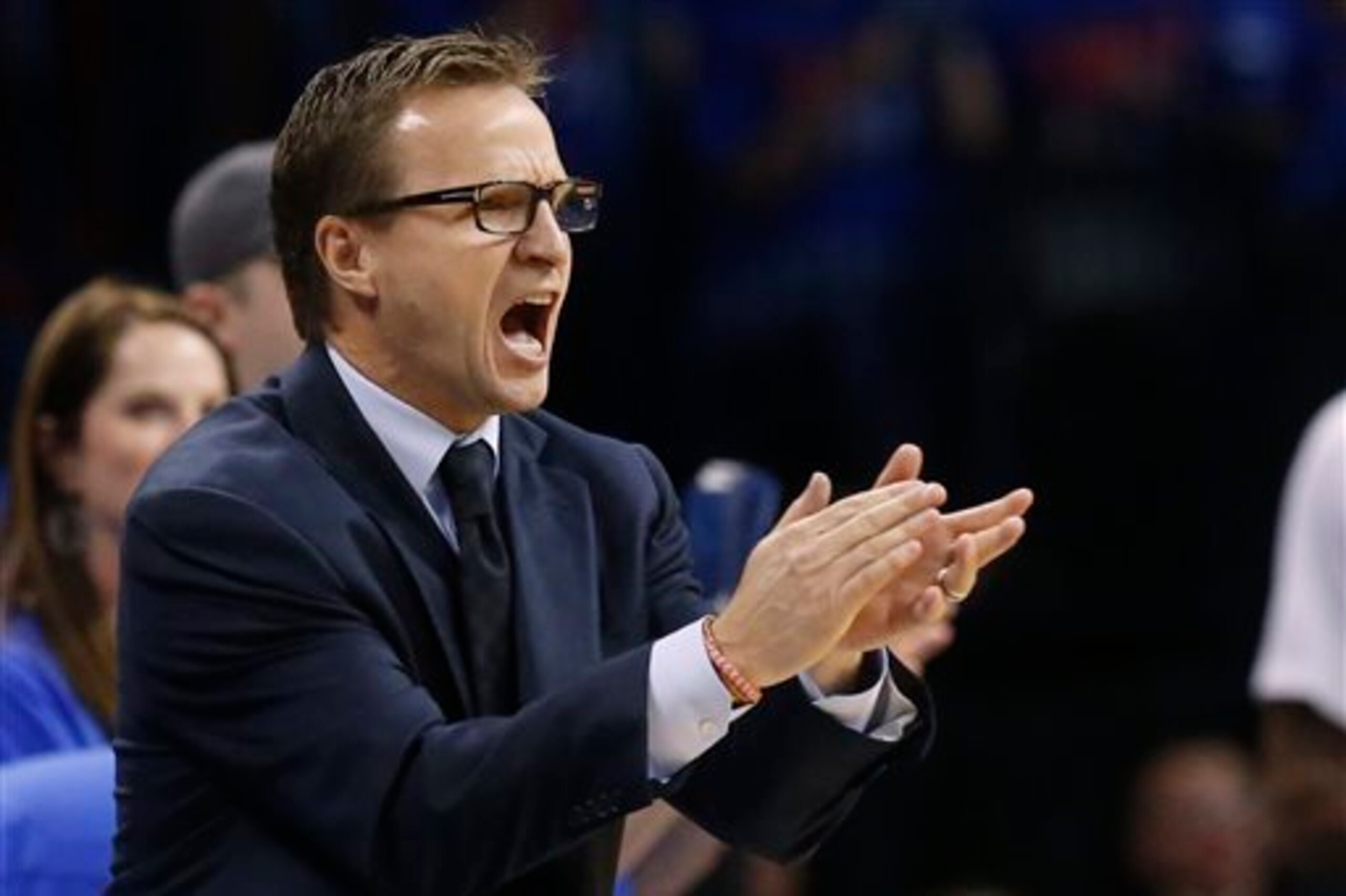
As I mentioned in the introduction, this team is deeper than it ever has been before. This rotation can go 10 deep with quality players, and that’s not mentioning the potential of Jeremy Lamb and Perry Jones III to impact a game in spot minutes with shooting and defense, respectively.
With great depth comes great responsibility—for Coach Brooks at least. OKC can thrive in big lineups or in small-ball lineups, and there are role players for every scenario.
Energetic big men who frustrate opponents? Steven Adams (aka “The Instigator”) and Nick Collison.
Experienced veterans with championship success? Derek Fisher and Kendrick Perkins.
Wing defenders with length, quickness and versatility? Thabo Sefolosha and Perry Jones.
Instant offense off the bench? Reggie Jackson.
There are so many different choices and lineups at Brooks’ disposal, and the key to any championship aspirations lies in his ability to navigate those options and push the right buttons at the correct time.
He did this late in the first-round series against Memphis, opting to insert Caron Butler into the starting five and using a bigger dose of Steven Adams.
As the stakes increase, however, the margin for error decreases. If he’s too sluggish in making these adjustments against the likes of Doc Rivers, Gregg Popovich and Erik Spoelstra, they will take advantage.
Finding the right balance of Reggie Jackson’s youthful exuberance and Derek Fisher’s sage contributions will be critical. Knowing when to pull Perkins and blitz opponents with a small-ball lineup of Durant at the 4 will decide games. Toeing the line between Sefolosha’s elite perimeter defense and Butler’s offensive talents will be the difference between wins and losses.
Coaches frequently fall out of our consciousness when players take the court, but Scott Brooks needs to be at his best if OKC is to have any chance of winning a championship.
Late-Game Offense

This is another point that reflects partially on Coach Brooks, but Durant and Westbrook are also a big part of the late-game offense. At times, OKC is a devastating offensive dynamo in late-game situations thanks to the unstoppable scoring combo of the two stars.
Other times, however, it is maddening to watch Westbrook hold on to to the ball or Durant hoist contested three-pointers. The offense always has the capacity to stagnate, but that is especially true late in the game.
In those situations, the brilliance of the two stars (see: four-point plays by both players) can oftentimes compensate for the complete absence of any kind of structure.
But OKC won’t be able to beat the Spurs or the Heat—two teams that execute beautifully—without a more coordinated offense in the clutch.
It doesn’t necessarily have to be set plays as much as ways to get the superstars the ball where they can be effective.
Here are some examples of concepts the Thunder can sprinkle into their late-game offense:
- Durant and Westbrook pick-and-rolls
- Westbrook and Serge Ibaka pick-and-pops
- Feeding Durant in the post, where he can use his unmatched length; he was the ninth-best post-up player in the league, scoring 1.07 points per possession, per SynergySports (subscription required)
- Utilizing Westbrook off the ball, where he is a destructive cutter and finisher
- Trusting Ibaka’s jump shot
If the Thunder can take care of these three aspects, they have a great chance of playing in the last game of the NBA season.


.jpg?w=2560 "Rodgers Iced Out on Plane 💎")
.jpg?w=2560 "Raiders Could Start Mendoza")
.jpg?w=2560 "Packers Safety Slams Refs 🤬")
.jpg?w=2560 "🚨 Week 8 AP Top 25 Poll")