

Can Anyone Beat Boston Bruins Goalie Tuukka Rask in 2014 Stanley Cup Playoffs?
Tuukka Rask’s playoff performance for the Boston Bruins has been seemingly beyond reproach. With a 0.976 save percentage and a grand total of two goals against in three contests, there is very little in his play deserving of critique.
At the same time, it’s important to acknowledge that Rask’s exceptional work isn’t the product of one player standing on his head. Depending on perspective, either the Detroit Red Wings have done a poor job of generating chances or the Bruins have done an exceptional job of controlling the dangerous area in front of the net.
It doesn’t diminish Rask’s play to recognize that his gaudy totals are a combination of his own efforts and the work of the defence in front of him any more than it diminishes that same defence to acknowledge that Rask has been superb behind them. Boston’s opposition needs to get past both the defence and the goaltender to score goals, so it’s well worth breaking down the Red Wings’ performance in that regard.
TOP NEWS

Blockbuster McDavid Proposals 💡

Trade Landing Spots for Pavel Zacha 📍

Ranking Every Home Jersey 🏡

With an eye toward doing that, I went through every shot recorded by the league’s official counters through the first three games between Detroit and Boston and graded them along a four-point scale:
- Grade A chances were shots on net from point-blank range and breakaways—the highest quality of opportunity a goaltender can face.
- Grade B chances adhere to the commonly accepted scoring chance definition, minus those exceptional breakdowns recorded as "Grade A" chances.
- Grade C chances are shots from just outside the scoring chance area and also point shots into traffic, shots where it would have been difficult for the goaltender to get a clear look.
- Grade F chances are basically throwaway shots—the kind goalies should never or almost never get beaten on.
Obviously, there is some subjectivity to these measures, but they give us an idea of what Rask is facing every night. The following chart shows the breakdown though the first three games:
| Type | Shots | Goals | SV% |
| Grade A shot | 2 | 1 | 0.500 |
| Grade B shot | 22 | 1 | 0.955 |
| Grade C shot | 30 | 0 | 1.000 |
| Grade F shot | 27 | 0 | 1.000 |
Of the 81 shots Detroit has put on net (NHL.com credits the Red Wings with 82, but one of those was a pass from behind the net into the slot area that upon multiple reviews appeared to go by Rask without hitting him; therefore it wasn’t counted here), the vast majority were of the lower "C" and "F" grades.

To a degree, that’s Boston’s defence getting the job done, but it also is in part the Red Wings’ game plan—something that a Gustav Nyquist comment to MLive.com’s Ansar Khan last month would appear to support:
"We’ve been talking about [shooting more] my whole year and the time I’ve been here, really. I’ve always been more of a passing player. I’m trying to shoot the puck more. ...
... That’s how you create chances, too, getting rebounds for goals. All goals aren’t going to be pretty tic-tac-toe plays for an open net, you got to put the puck on net.
A couple of my goals have gone off deflections from the other team’s skates. So you just got to keep putting it on net.
"
Those low-quality chances occasionally do result in rebounds. Of those 30 "Grade C" chances, nine times Rask put a rebound into a scoring area that was being contested by a Red Wings player, so there’s a definite strategy at work, albeit one that hasn’t paid off for Detroit just yet.
Where Rask has been really brilliant is on what we’ve described here as "Grade B" chances: good opportunities that do not represent complete defensive breakdowns. A 0.955 save percentage is a great number in any situation, and when we know all of the shots in question were legitimate scoring opportunities, it’s even more impressive.
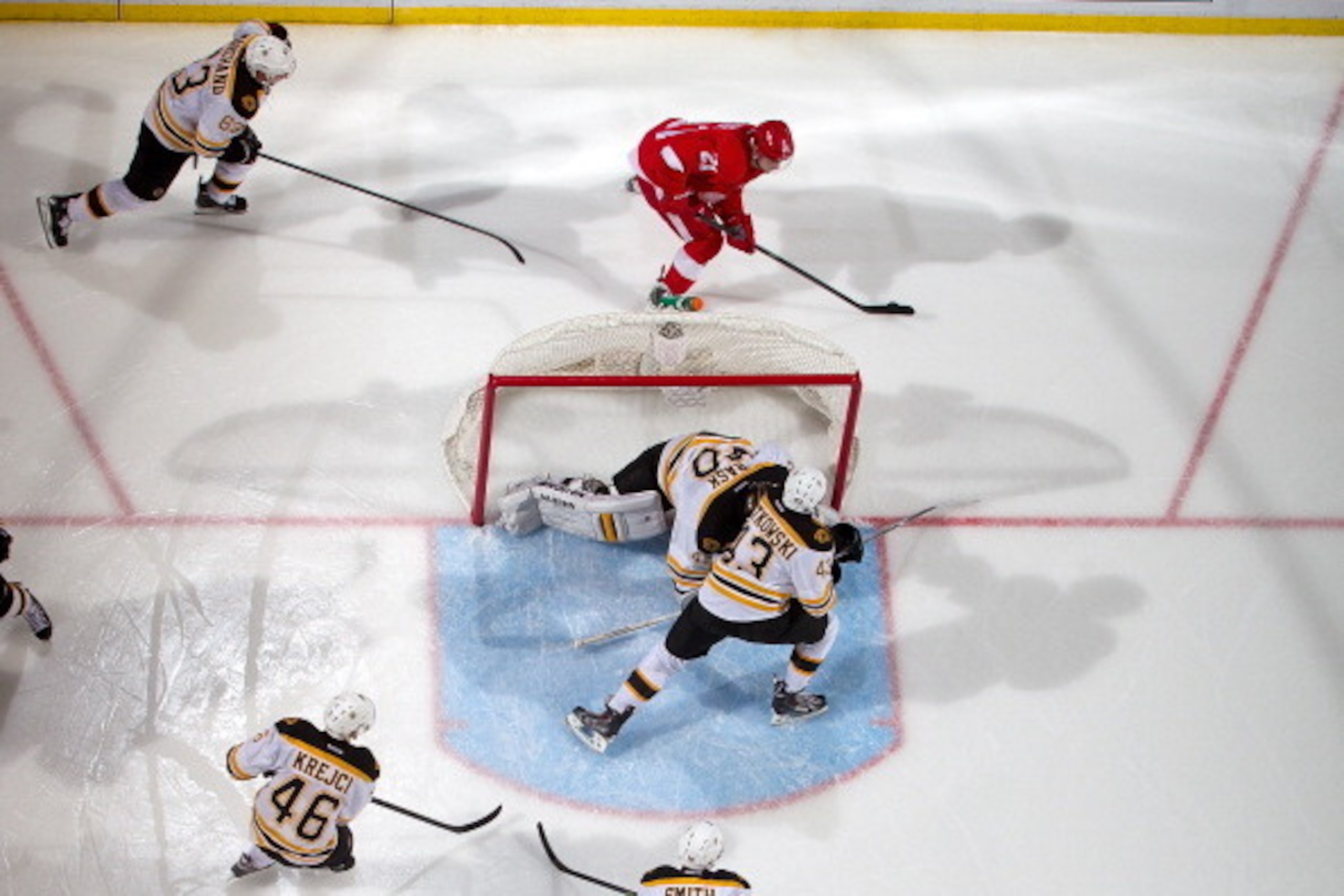
Where Rask has been getting help from the defence is in both clearing out some of the rebounds he’s handed out and also in limiting the number of "Grade A" opportunities.
For example, when I did this exercise during the first game of the non-concluded Montreal-Tampa Bay series, Habs goalie Carey Price saw more "Grade A" chances in that one contest than Rask has seen all series against Detroit—and Price faced fewer of those high-end opportunities in that game than Anders Lindback did for the Lightning.
The real difficulty for the Red Wings (and any other potential Bruins opponents) is that they aren't playing a team with either great defence or a great goaltender. Boston not only has a netminder at the very peak of his game but also boasts a defence that does as good a job as any of limiting high-end scoring opportunities.
We’re still in early days, but it could well prove to be a Cup-winning combination.




.jpg?w=2560 "Rams troll Jameis, Giants on social media")




.jpg?w=2560 "Old Brady Vid Goes Viral 🐐")