

2014 NFL Draft: Why RB Talent May Be at an All-Time Low
By all accounts, the 2014 NFL draft class is as deep as any other. Except at running back, however, where we have seen a tectonic shift in recent years.
Last year marked the first since 1964 when a running back was not selected in the first round, back in the day of 20-round drafts. Just 10 running backs were taken that year, a stark difference from even a year later, when Gale Sayers headlined a class of 20 prospects.
Fifty years later, we find ourselves looking at the real possibility a back won't be taken in the first round for the second consecutive year.
.png?w=2560)
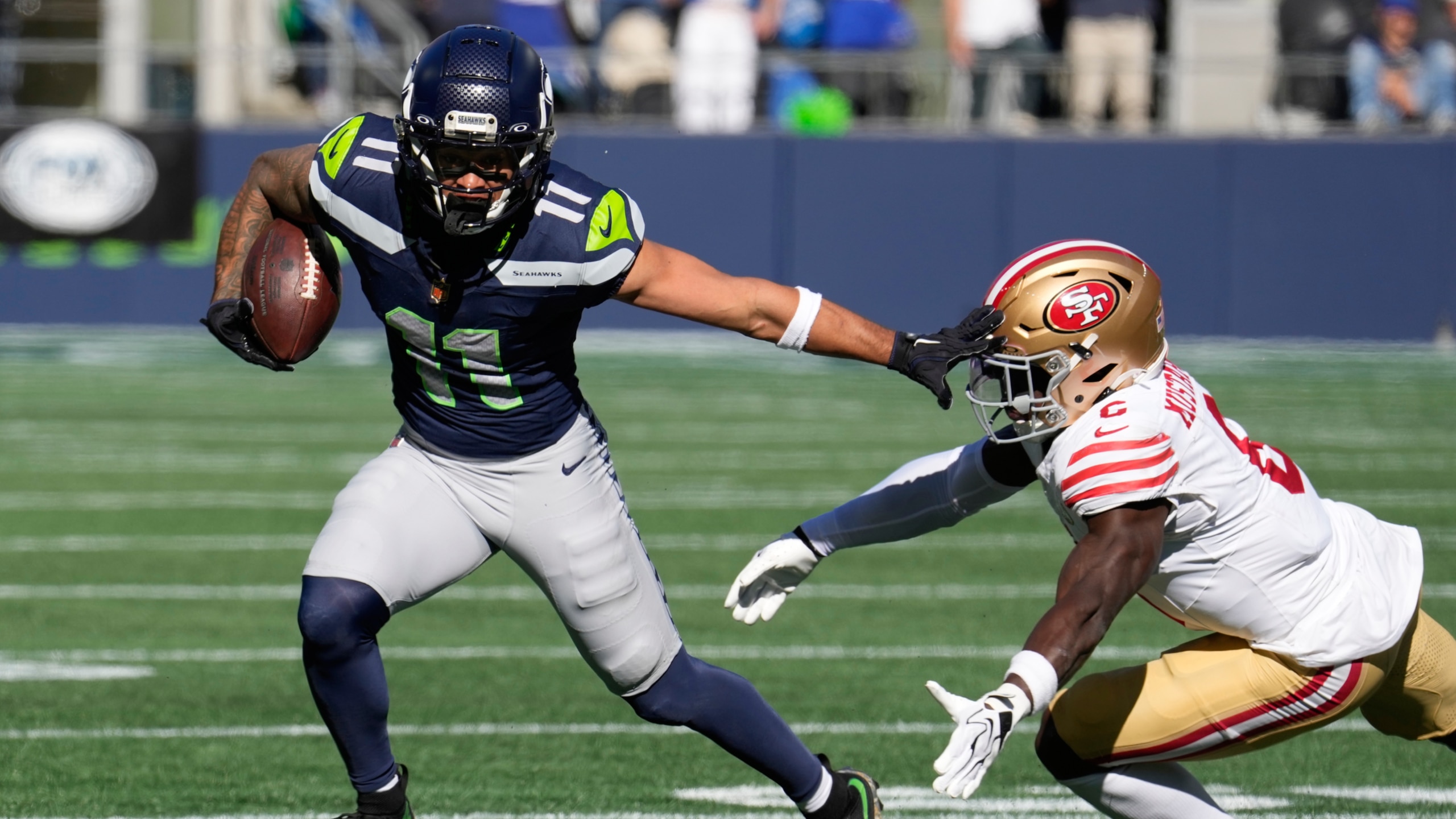
How can that be? One led college football with 2,177 rushing yards and another was tops with 31 touchdowns. Both are expected to be third-day picks. Another averaged 7.3 yards per carry, and six had at least 1,700 yards and 18 touchdowns. But statistics won't save them.
Former Pittsburgh Steelers running back Jerome Bettis saw it coming before the 2013 draft, and he blamed it on the devaluing of the position, per USA Today's Chris Strauss:
"Jerome Bettis doesn’t expect to hear the names of any running backs announced from the podium at Radio City Music Hall on Thursday night. With at least four offensive linemen projected to go in the top ten of the 2013 NFL Draft, the former Pittsburgh Steelers powerhouse sees the evolution of pro offenses continuing in more of a pass friendly direction.
“There’s the devaluing of the running back position,” Bettis told USA TODAY Sports. “I don’t know if there’s one running back in this year’s draft where people say he’s going to be a first round pick. I don’t know when the last time that’s been the case. You see devaluing of the running backs and the higher valuation of the offensive line. It’s difficult for me because I don’t want to see the art of being a running back disappear.”
"
Bettis' primary premise or his argument was the new rule enacted in 2013 saying running backs could no longer use the crown of their helmets to hit defenders, but that's not the only reason they have become less valuable in recent seasons.
Of course, the evolution of the game is only part of the problem. After all, if a once-a-generation running back was coming out of college this year, he would surely be taken in the first round.
Executives around the league seem to see a talent decline coming out of college, per Ray Fittipaldo of the Pittsburgh Post-Gazette:
"The NFL has become more of a passing league in recent years, but Steelers general manager Kevin Colbert said the proliferation of spread offenses in college football has played a part in the trend as well. Colleges are not producing a high number of quality running backs because the emphasis has been on quarterbacks running and throwing out of the spread at many schools.
“I think it’s a result of what’s happening in college football,” Colbert said. “The running backs, for the most part in a lot of offenses … are not emphasized as much, so you don’t get to see as much production or dominance. So, you maybe don’t see a top running back, but several were taken in the second round and they ended up being productive players for their teams. If there is a great running back he’ll still go in the first round, regardless of what’s happening schematically.”
"
Indeed, it's difficult to imagine running backs would be shut out of the first round were Adrian Peterson or Barry Sanders entering the NFL this season. That doesn't appear to be the case this year.
Therein lies another problem when it comes to the 2014 class—a lack of elite talent combined with outside factors.
"This RB class -unlike the rest of the #NFLDraft14- is short on talent and long on police and medical reports. Red flags everywhere.
— Todd McShay (@McShay13) March 1, 2014"
"This year's running back class is so uninspiring.
— Ian Kenyon (@IanKenyonNFL) March 18, 2014"
As ESPN's Todd McShay alluded to in his tweet above, there is more to it than a trend this year. Some of this year's top draft prospects are carrying quite a bit of baggage, dragging the draft stock of the entire position down along with them.
Carlos Hyde, arguably the top prospect in this year's class, was suspended for three games at Ohio State last season after allegations of abuse got him arrested, though ultimately no charges were filed, per USA Today.
Other top prospects like Ka'Deem Carey (Arizona State) and Jeremy Hill (LSU) had similar off-field problems.
But there is something else afoot in professional football. Running backs just aren't as valuable as they used to be.
Nowhere is this more evident than in this year's free-agent class, which was loaded when the market opened up. There weren't any superstars available, but players both promising and young—and proven, in many cases—were greeted with lukewarm interest and tiny offers.
"If contracts are similar, I'd take Moreno. If he wants too much, Blount is a good option. Not a fan of many RB's in this class.
— James Christensen (@NEPatriotsDraft) March 22, 2014"
Ben Tate—arguably the best free agent in this year's class at 25 years of age and sporting a gaudy career average of 4.9 yards per carry—signed a measly two-year, $6.2 million contract per ESPN.com's Pat McManamon.
Moreno—the former first-round pick—was fifth in total yardage and third in touchdowns at the running back position last season. He has barely gotten attention in free agency to date.
So what has caused this precipitous decline in the position?
Well, for starters, recent history has not been kind to first-round running backs. Trent Richardson had a nice rookie season from a volume standpoint after he was selected third overall in 2012, but his career has quickly careened off a cliff. Similar sentiments surround Doug Martin, the next back taken in the first round after Richardson.
David Wilson has the current distinction of the last first-round running back, and fumbles and injuries have combined to foil him thus far.
It's still too early to call any of these backs busts, but the foreboding recent history must give pause to executives around the league. Early round busts or not—there's no way to know right now, at any rate—there is more to the devaluation of running backs than a few disappointing prospects.
The NFL is increasingly a passing league. No longer are 4,000 passing yards and 30 touchdowns in one season a rare accomplishment. Dan Fouts ran the Air Coryell offense to the first such feat in 1980 for the San Diego Chargers—per Pro Football Reference—and it happened 30 times from then through 2008.
There have been 22 such seasons in the five seasons since, culminating in Peyton Manning's record-shattering 5,477-yard, 55-touchdown stat line in 2013.
Why is this the case? To put it simply, teams are passing more, which is at least correlated to the fact they are scoring more, on average.

If a picture is worth a thousand words, that graph is a novella.
While NFL teams have not begun to abandon the run by any means, their commitment to it relative to overall play-calling appears to be waning. Rushing attempts haven't wavered more than 0.9 percent from the league average over the past five seasons, and teams have rushed slightly less on average over the past five seasons.
Meanwhile, average scoring has increased in each of the past five seasons, up nine percent in 2013 from five years ago. Teams attempted over 34 more passes, on average—about an entire game's worth—in 2013 than in 2009.
In other words, running backs are losing market share in a steadily increasing aerial assault.
Shrinking demand and increasing supply are also big problems. There are 70 draft-eligible running backs entering a league that already has 143 of them.
Of course, all is not lost for this year's running back class.
Last year's was considered a bit of a stinker, and we saw several rookie runners make a big impact in the NFL. The first four running backs taken in last year's draft—Giovani Bernard, Montee Ball, Le'Veon Bell and Eddie Lacy—all made big contributions as rookies to varying degrees, with Lacy even winning the Offensive Rookie of the Year award.
Similar things could be in store for this year's class.
For starters, some of the prospects have great potential. Off-field concerns might be the key sticking point in keeping guys out of the first round, but it doesn't mean they won't produce given the opportunity.
As mentioned, Hyde is arguably the best talent of the bunch, and he compares favorably with Lacy. Tre Mason has no off-field issues coming out of Auburn, and the Ray Rice clone has been hard-charging for the top of the heap this draft season.
There are also potential late-round contributors like 2012 sixth-round phenom Alfred Morris and 2013 fifth-round surprise Zac Stacy. This year something like that could come from Storm Johnson (UCF) or Isaiah Crowell (Alabama State), the latter's draft stock being in the tank because he was dismissed from Georgia's football team back in 2012, per Chip Towers of The Atlanta Journal-Constitution.
The running back position is suffering from saturation, depreciation and maturation issues more so than a lack of talent in the draft. While there might not be a home run, there is plenty of potential.
Odds are it just won't be coming out of the first round.
.jpg?w=2560 "Bills Rams Football")

.jpg?w=2560 "Grading WWE Raw 🔠")
.jpg?w=2560 "Monday Night Raw Blog 🔴")