

Are Brooklyn Nets Winning Because of Jason Kidd or in Spite of Him?
Congratulations on your recent retirement and your first coaching job! You have five All-Stars and two Hall of Famers. You work in the midst of the most intense media cauldron in all of sports. I, the owner, have spent a record amount of money putting this team together.
Now go win a championship.
That, in essence, was the briefing Jason Kidd received when he took over as head coach of the Brooklyn Nets last July.
TOP NEWS

Predicting the Top 5 MVP Candidates In 5 Years 🔮
Ranking Lakers' Top Trade Targets 📊

Ranking 5 NBA Teams With the Worst Salary-Cap Situations 😖
Just weeks after announcing his retirement from the NBA, Kidd was handed the keys to the most expensive car in Mikhail Prokhorov’s garage—Kidd's former team, no less—and told to complete the basketball equivalent of a cannonball run his first year at the wheel.
For a while, it looked like the task’s sheer gravity might crush Kidd before the first leg was up.
By New Year's Eve, the Nets were 10-21 and staring down the barrel of an unmitigated basketball disaster—financially, philosophically and, with Kidd himself taking the brunt of the blowback, public relations-wise.
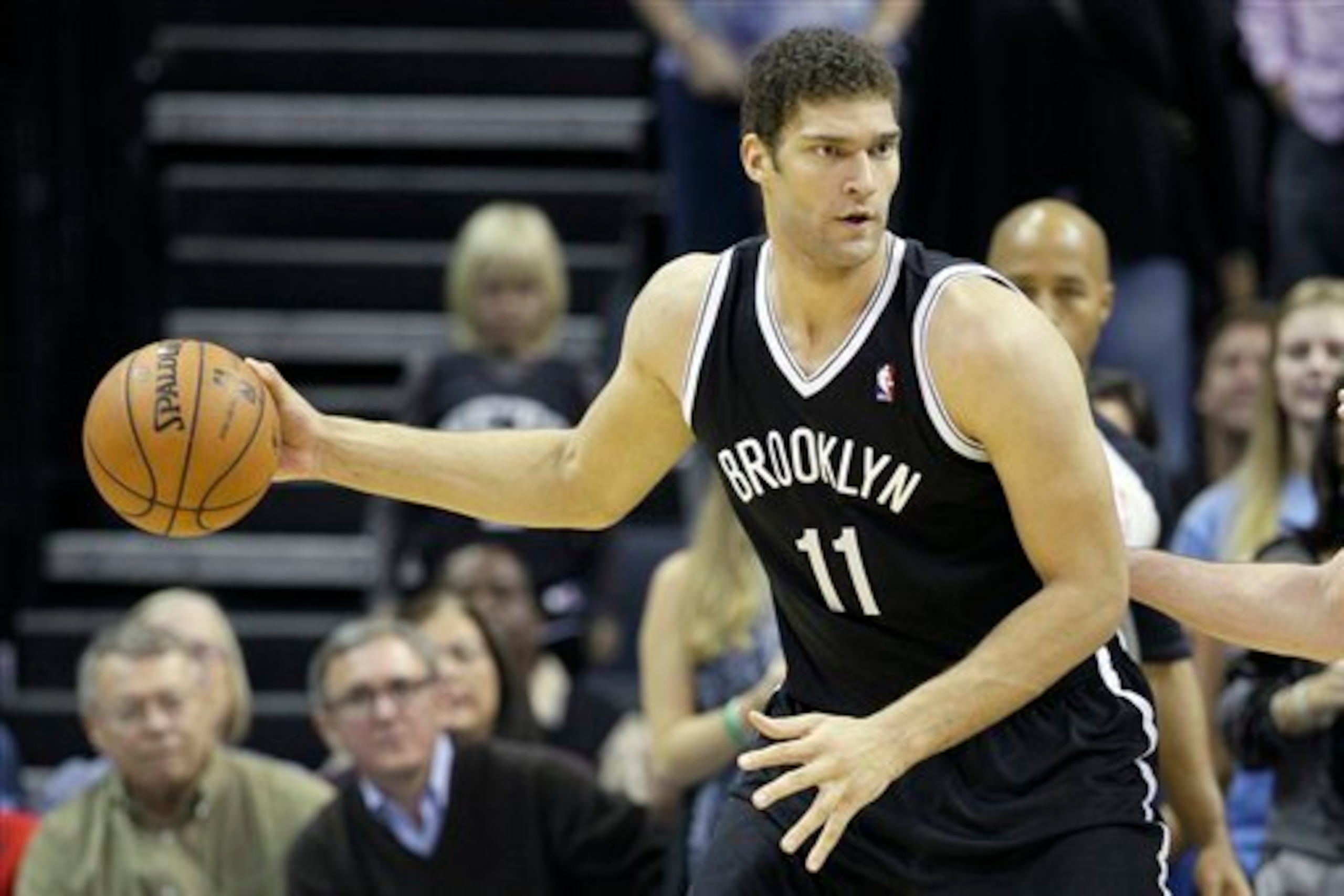
All-Star center Brook Lopez was lost for the season after suffering a broken foot (as first reported by ESPN’s Ohm Youngmisuk).
Point guard Deron Williams, it seemed, could barely stay on the floor.
Paul Pierce and Kevin Garnett, the team’s two big offseason signings, were looking and playing their age.
And Jason Kidd—ever the unflappable floor general through nearly two decades on the hardwood—looked lost and forlorn, frozen in a way his heads-up game seldom showed.
But then, slowly but surely, the Nets started turning it around.
Slowly but surely, the clogged and clumsy offense that defined the team’s first few months finally found its groove.
Slowly but surely, teammates—many of them enemies a mere half-a-year ago—began to trust one another.
In short: The Nets started playing like Jason Kidd.
The stats bear out Brooklyn’s newfound gestalt: Since the New Year, the team’s offensive and defensive efficiencies have basically flipped, from an ORtg and DRtg of 101.9 and 106.7, respectively, before January 1 to marks of 107.5 and 100 in the three weeks since.
The biggest reason for the Nets' success is they’re doing a much better job of moving the ball, as evidenced by the team’s heightened assist ratio (16.1 to 17.7) in that same span.
Couple that with the team’s glacier-slow pace (90.1 since January 1—the lowest in the league), you get a team practicing what its coach did as well as he preached it: sharing the basketball.
The feel-good phenomenon has been even more pronounced during the Nets’ last three games (all wins), with both their assists per game (30.7) and assist ratio (21.8) being tops in the league.
| Stretch | O Rating | D Rating | Assist Ratio | TS% |
| First 31 games | 101.9 | 106.7 | 16.3 | .538 |
| Last three games | 117.5 | 100.3 | 23 | .625 |
These trends, among others, have helped the Nets crack the top 10 in overall offensive efficiency, another category in which they’ve led the league over the last week.
Another key to Brooklyn’s success has been their emphasis on small-ball lineups. With Paul Pierce at power forward and Kevin Garnett at center, the Nets have recalibrated their offense to emphasize positional mismatches, better spacing and ball movement.
It’s the same approach Kidd helped spearhead while a member of the New York Knicks a season ago, when Mike Woodson used playing Carmelo Anthony at power forward to propel his team to the league’s third most efficient offense.
But even that only tells half the story. Over at The Brooklyn Game, Devin Kharpertian examined how the Nets have used a mix of "small ball" and "long ball" to flummox the opposition.
Of particular import has been the play of Garnett:
"His impact on the defensive end is almost too big for statistics to grasp, but let's give it a shot: since January 1st, the Nets have allowed opponents to score 107.2 points per 100 possessions with Garnett off the floor, and 87.9 points per 100 possessions with him on the floor.
"
Just how good is that?
"Indiana's league-best defense allows teams to score 92.8 points per 100 possessions. The Garnett-led Nets in 2014 are nearly a full five points better than that. Utah's league-worst defense clocks in at around 107.6 points per 100 possessions, just a hair below the Garnett-benched Nets.
In sum: with Kevin Garnett on the floor, the Nets make the league's best defense look average. With Garnett off the floor, the Nets look like the league's worst defense. It's that significant.
"
As Kharpertian susses out, the Nets have quietly become one of the most frighteningly versatile teams in the league.
Perhaps no player better epitomizes Brooklyn’s recent five-tool success better than Andrei Kirilenko.

Following a nagging back injury that kept the versatile forward out of action for two full months, Kirilenko’s return has dovetailed perfectly with Brooklyn’s recent resurgence.
His numbers might not pop off the page (5.6 points, 3.1 rebounds and 1.4 assists in just over 17 minutes per game), but Kirilenko’s multifaceted skill set has worked wonders on a second unit that, thanks to the team’s high-profile injuries, was struggling for an identity.
Indeed, cohesiveness and camaraderie have become such hallowed hallmarks that not even a perennial All-Star dares mess with it:
Following his most recent ankle ailment, Williams elected to come off the bench during Brooklyn’s two most recent wins, letting backup Shaun Livingston—who has conducted the offensive splendidly in Williams’ absence—remain at the reins for the time being.
Sounds like something a certain coach might have done back in the day.
All this is not to say that Jason Kidd deserves the lion’s share of praise for Brooklyn’s well-timed turnaround. Like any new coach, Kidd is very much still navigating his way through the trials and tribulations of trading Nikes for neckties and game-winning plays for grease boards.
First and foremost, Brooklyn's basketball renaissance is one of player trust yielding improved production—at both ends of the floor.
At the same time, you can’t criticize a guy for one approach while the team is losing, then withhold credit for that same approach when the tide finally starts to turn.
For good or ill, Jason Kidd’s strategy from the get-go was, at its core, to let his squad’s veteran voices set the team’s direction and agenda.

It didn’t look so smart when the team was reeling and their feel for one another was shaky. Truth be told, it might not look very smart come playoff time, when crunch-time decisions loom large and the weight of failure falls on fewer and fewer shoulders.
But so long as the wins keep piling up and the chemistry continues apace, the notion that Brooklyn’s fortunes exist in spite of Jason Kidd resonates only with those who say it or believe it by echo, and not because it’s true.
Because such insipid statements ignore a simple fact of today’s player-driven league.
That to truly succeed as a team, coaches must command the respect of their charges—instill in them the trust that you, the coach, aren’t there to take them where they need to go, but to show them how to get there.
If the Nets have any hope of making good on their owner’s gaudy gamble, it’ll be because they finally figured out where Jason Kidd fits best: riding shotgun with GPS in hand, making sure the guys in the driver's seat keep taking all the right turns.
All stats courtesy of NBA.com and current as of January 22, unless otherwise noted.

.jpg?w=2560 "Rams troll Jameis, Giants on social media")


.jpg?w=2560 "WWE Raw Live Grades 🔠")
.png?w=2560 "Davante's MONSTER MNF 🤯")
