

How CC Sabathia Can Fix What Went Wrong in Nightmare 2013 Season
Things went from bad to ugly for CC Sabathia in 2013.
In spite of logging 200 or more innings for the seventh straight season, the 33-year-old posted a disconcerting 4.78 ERA (4.10 FIP) and allowed a career-high 28 home runs.
Sabathia’s forgettable 2013 campaign also marked the third consecutive season in which the 13-year veteran endured a drop in velocity.
TOP NEWS

Playoff Predictions Entering Last Week 🔮

The Worst Player on Every Team of 2026 Season 😞
.png?w=2560 "MLB Power Rankings")
New Rankings with 1 Week Left 📊
Attempts to determine the cause of Sabathia’s struggles persisted throughout the regular season, with the more popular theories contending that the left-hander’s dismal performance stemmed from previous injuries or his offseason weight loss.
Though neither theory can be proved directly, they collectively help to hone in on the central problem with Sabathia: an ever-dropping arm slot and release point.
Impact of Decreased Velocity
As previously mentioned, Sabathia’s velocity dipped even further in 2013, as his average fastball of 91.3 mph (per FanGraphs) was more than 2.5 mph off his 2011 average of 93.9 mph. In fact, Sabathia’s velocity has been on the decline across his entire arsenal during that span.
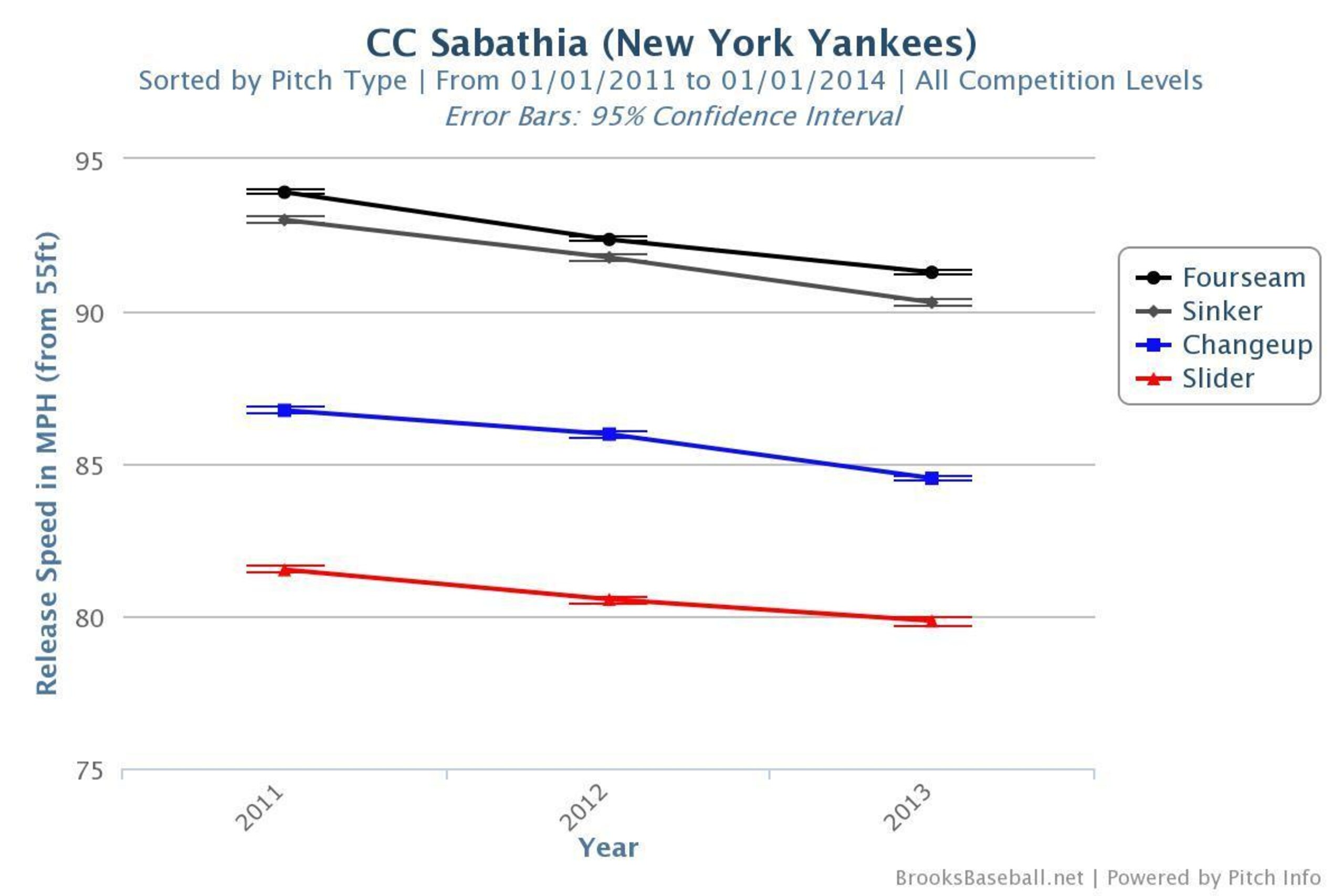
Though he’s always been known for his robust fastball, Sabathia traditionally has relied on his changeup and slider to generate whiffs. However, effectiveness of the left-hander’s secondary arsenal declined along with his velocity last season, as Sabathia registered the lowest swing-and-miss rates since 2008—when pitch data first became a thing—with both his changeup (15.38 percent) and slider (15.35 percent).
Additionally, Sabathia’s velocity issues also affected his approach. Without the extra giddy-up on his heater, he struggled to set up opposing hitters with sequencing as he did in previous years.
Essentially, the southpaw's lack of overpowering velocity and inability to expand the zone allowed hitters to adopt a more selective approach as the season progressed.
The Mechanics
Though injuries and weight loss may have had roles in Sabathia’s drop in velocity, the most obvious explanation relates to his arm slot.
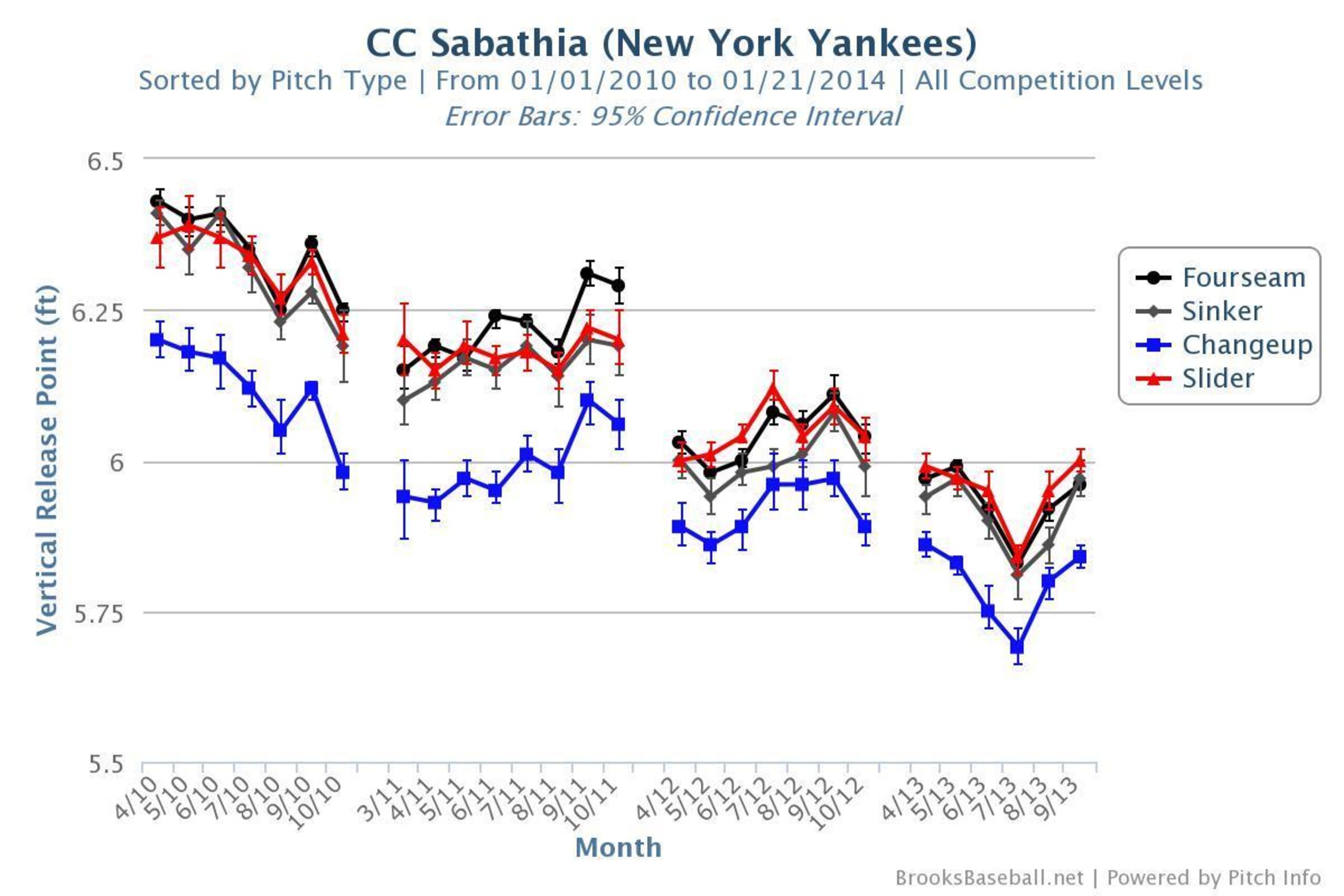
Sabathia’s arm slot has dropped in each of the last four seasons and prevented the 6’7” left-hander from consistently getting on top of the ball and creating a downhill plane. Additionally, the lowered arm slot also impeded his ability to achieve maximum extension toward the plate to create finish on his pitches.
Looking at Sabathia’s fastball arm slot specifically, we see that it was more than four inches lower in 2013 than it was to open the 2010 season. For pitchers, issues with repeating a consistent release point tend to manifest in the form of pitches left up in the zone and, in the major leagues, an unfavorable home run rate.
So, the fact that Sabathia posted a career-worst 0.99 HR/9 rate (home runs per nine innings) in 2012, followed by an even worse 1.19 HR/9 last season, speaks directly to the importance of his arm slot and release point.
For the sake of visualization, here’s what Sabathia’s fastball arm slot looked like in 2010 compared to 2013 (via MLB Advanced Media):
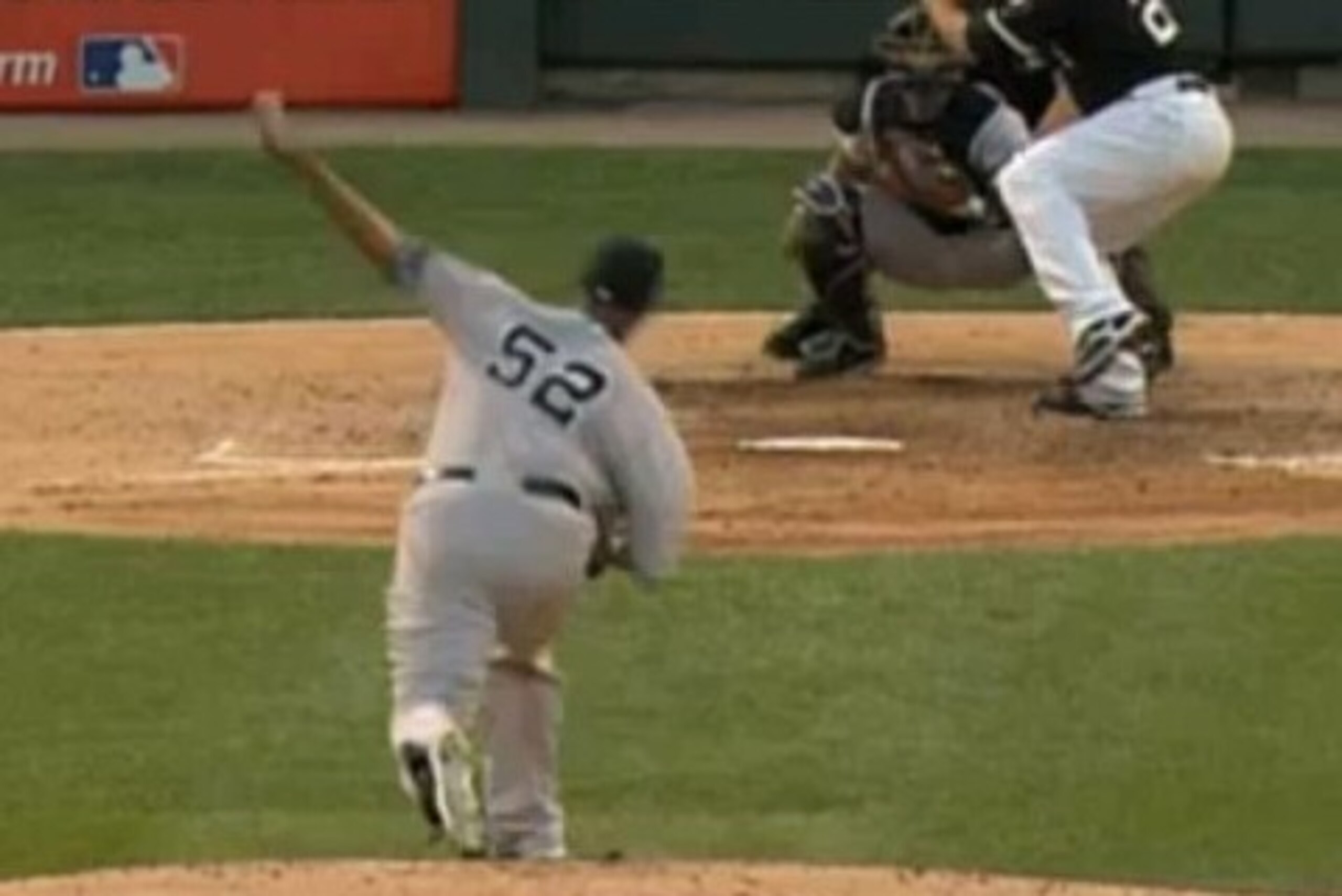
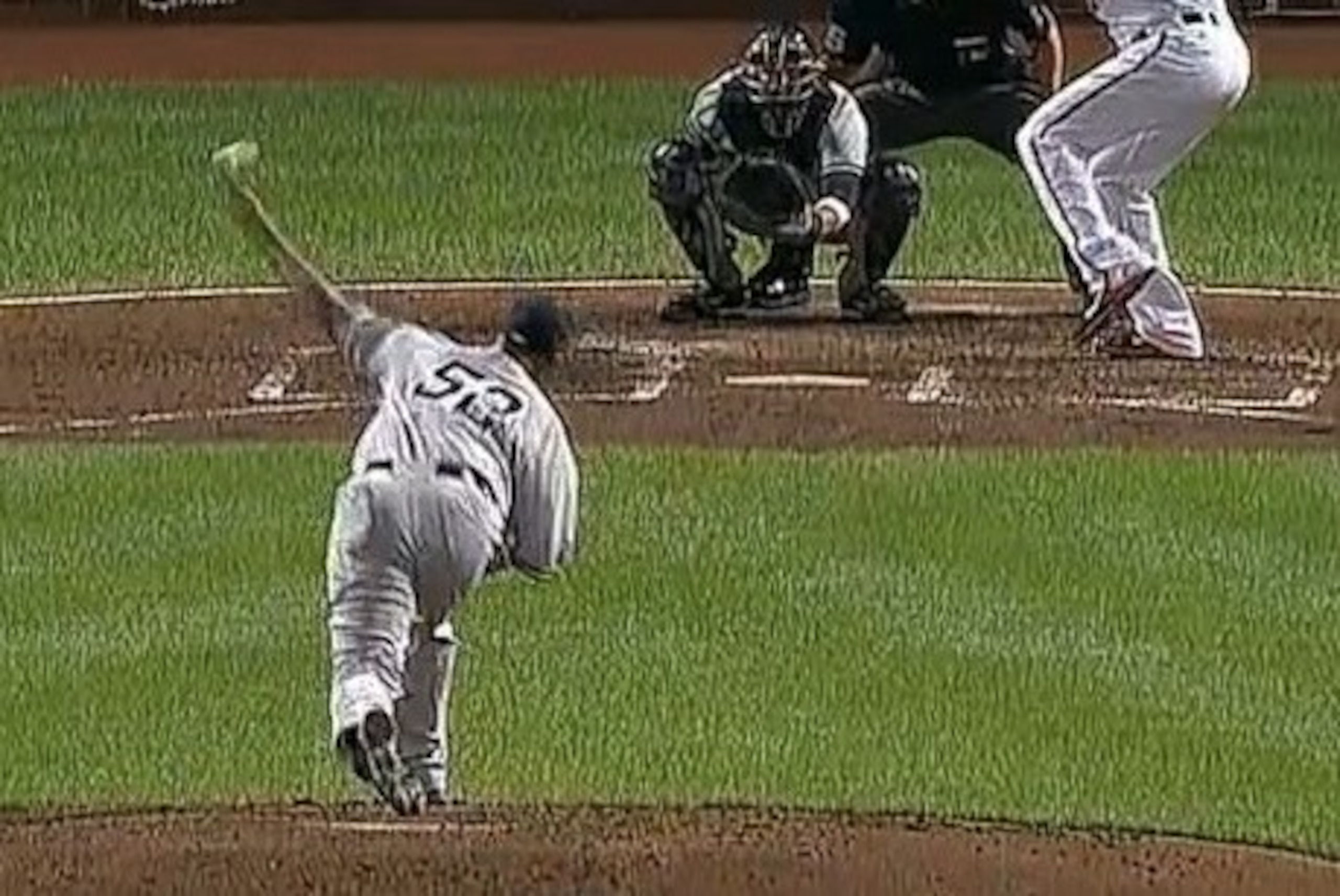
As you can see, the southpaw’s actual arm angle and head posture isn’t all that different. However, Sabathia’s tendency to commit too much weight to his front side last season prevented him from achieving a consistent release point and frequently caused his arm to drag behind his body—a red flag when it comes to predicting future pitcher injuries.
Furthermore, Sabathia’s inconsistently low release point seems to offer hitters a better look at the ball out of his hand and the confidence to track it deep into the zone. In 2013, the left-hander induced swings at a 40.63 percent clip, which marked a significant drop-off from 44 percent in 2012.
Is He Fixable?
Sabathia’s month-by-month release points from the 2013 season suggest that he was cognizant of the correlation between his arm slot and velocity.
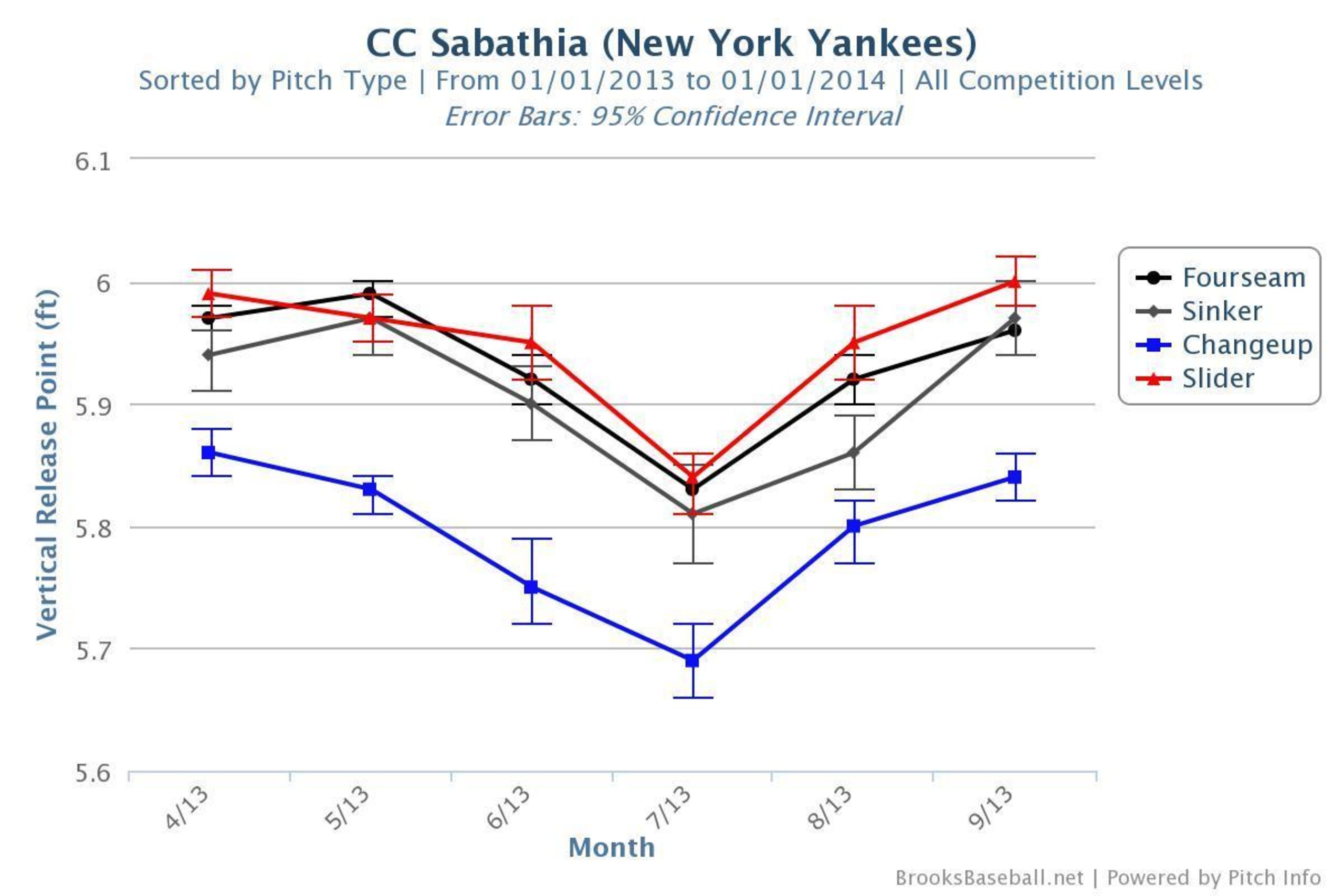
Though his release point steadily dropped during the first half of the season, Sabathia showed improvement after the All-Star break and finished the regular season working from a higher slot. However, that’s the extent of my optimism regarding the 33-year-old’s future, as the last four seasons paint a picture of a once-dominating ace on the decline.
Beyond the fact that Sabathia has been trending in the wrong direction on all fronts for several years, the deterioration and overall inconsistency of his arm slot portends a shoulder injury could be on the horizon—as is often the case with pitchers who make sudden changes to their mechanics during the season.
If Sabathia’s weight loss last winter did in fact play a part in his terrible 2013 campaign, then it’s hopefully a good thing the left-hander hasn’t shed any pounds this offseason.
However, that’s a very big if.

.jpg?w=2560 "Dart Believed to Have Sprained MCL")

.jpg?w=2560 "Rams troll Giants on social media")

.jpg?w=2560 "WWE Raw Live Grades 🔠")
.png?w=2560 "Davante's MONSTER MNF 🤯")


.png?w=2560 "McVay's Funny Travel Quote 🤣")