
Race in Racing: Debating NASCAR's Drive for Diversity
Here’s a question for you to ponder: What if four-time NASCAR Cup Champion Jeff Gordon wasn’t white?
Would he have the career success he does? Would he have the following he enjoys? Would it have taken a special program to get him where he is?
I ask this because lately I’ve really tried to figure out the whole race in racing issue, and I think it’s indicative of our society more than anything.
TOP NEWS
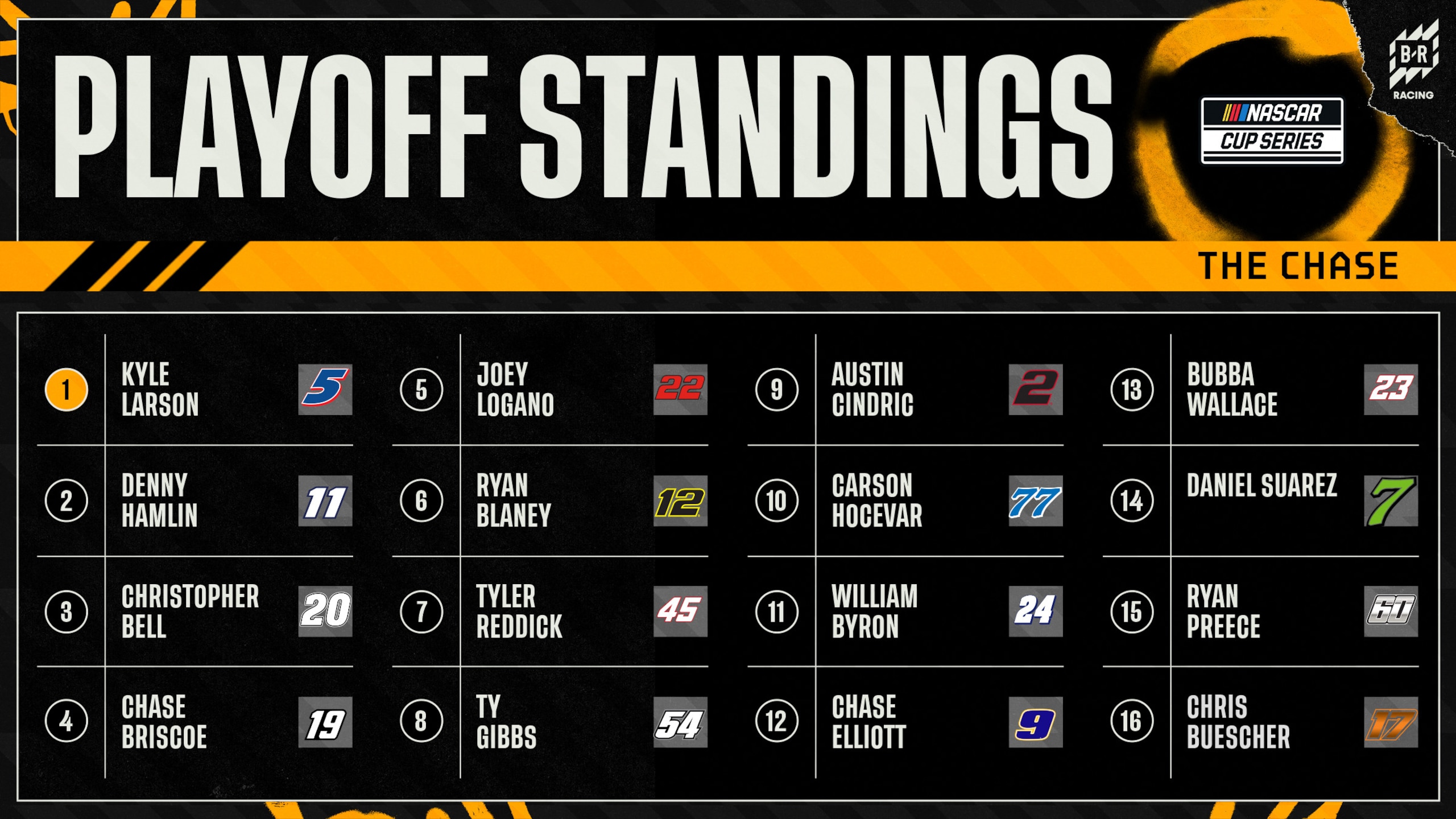
NASCAR Cup Playoffs Point Standings and Updated Schedule After 2026 Talladega Results

Geno Explains Wilson Exchange
.jpg?w=2560 "Chiefs Giants Football")
Mahomes Told Teammate to Leave Meeting
Race has been the topic du jour with the recent election here in the United States. And a underlying theme seemed to emerge: If you don’t vote for the minority, you’re a racist.
Really?
It couldn’t have anything to do with one’s take on politics? It couldn’t have anything to do with experience or voting record? It has to be the race of the candidate?
What’s this have to do with auto racing? Everything, when you examine the issue of race in racing.
Why aren’t there more minorities in attendance at racing events? Yes NASCAR grew up in a racially divided south. Yes there are still Stars and Bars waving in the infield. Yes there are still racial problems between people. But these are minimized in the haze of history and passage of time.
It was announced on January 14th that Max Siegel would leave Dale Earnhardt, Inc., where he was head of Global Operations, to run the Drive For Diversity (D4D) program at NASCAR. Siegel is arguably the highest-profile minority in the sport.
But what is NASCAR’s goal with Drive For Diversity?
Are they trying to attract new fans into the sport by giving them a person of like color or gender to root for? Everybody's money is green, so attracting new fans is good for business, but to me the deeper question is the motivation of being a fan.
I love racing because I love racing. You may love football because you love football, or hockey, or bull riding… You may have played the sport somewhere along the way, or taken a liking to it because a relative turned you on to it as a child.
What puzzles me is that it seems there's plenty of interest in cars, and in proving who's "best" in minority communities, but why not more fans at the track? Is the issue a lack of interest in the sport, or a lack of drivers of a certain skin color?
If the problem is being able to relate, in that one can relate to a driver or an athlete in some size, shape, or form, then I would suggest race car drivers should be as relatable to anyone in our country as a top-notch football (soccer) player is to Brazillians.
Then again look at Brazil’s rich history of producing top-notch racing drivers. And they reach the status of national hero in many cases.
Driving race cars isn’t cheap. Many of the greatest in the world, including Gordon, Michael Schumacher, and Ayrton Senna, started in go-karts. Kart racing isn’t inexpensive, but it’s not an unreachable goal - as reading Schumacher’s story would tell you.
A soccer ball is cheap, and you can play in the street – with or without shoes. It’s not like ice hockey – certainly not a sport popular in developing countries and areas. So I can understand why there’s not a glut of drivers from say, Ecuador.
But we Americans have something in common with the stars of the fast track – we all drive cars. And many of us have aspirations of racing, whether it’s to get to work on time, passing a slower driver, or just seeing how much we can push the speed limit: We can relate to race car drivers.
We like to drive, and at times we like to drive fast.
So NASCAR's Drive for Diversity program seems to be somewhat of a wash to me.
The NHRA would be a great example of this whole question. Has Antron Brown or Peggy Llewellyn (both black) attracted more minority or female fans to the sport?
Why didn’t blacks flock to the track to see NASCAR driver Bill Lester race?
If Bill Lester is to be an example, I would suggest he was a great role model for youth before he ever sized up a firesuit. He’s an intelligent, educated, and successful man in business. After doing all that he pursued his dream of racing.
For all those kids who looked up to Michael Vick, I’d submit to you that there are better mentors.
Again I ask, what is NASCAR’s goal with the D4D program? Get a minority or female driver into a ride? They’ve been there.
Or is the ultimate goal to get a minority or female in a ride and thus increase audience among minorities? In this time of political change, one may wonder why there is a desire for a minority to represent “minority” districts in Congress. The replacement of Barack Obama as Illinois’ junior senator was a prime example.
And this is where the issue starts to gel. Why don’t more minorities attend or watch auto racing? It’s no more or less expensive than any other professional sport, and is readily accessible on television.
Is the race of a racer important? Is the race of a quarterback, a policeman, or a politician? I don’t see it that way… but it seems apparent that to many it is.
I'd love to see more women and minorities involved in the sport, and hope that (though minimized here in the States) Lewis Hamilton's success in F1 will help bring an increase of minority interest in racing. I know children who want to be the next Danica Patrick, and so perhaps the presence of a capable and successful black driver in NASCAR would create a conduit for more interest in the minority community.
But if you’re a fan of someone just because their skin color matches your own, as opposed to an equal or more capable person of another color, race or sex, what’s that say about you?
Somebody please ‘splain that to me.
.jpg?w=2560 "Steelers Saints Football")
.jpg?w=2560 "AP Poll Top Five Week 9")


.jpg?w=2560 "Lamar Being Out Shocked Ravens")
.jpg?w=2560 "Raiders Could Start Mendoza")